Call for Actions

Intellectual and Developmental Disabilities in Nigeria, Stakeholders issued Key recommendation’s

At the recently held virtual Town Hall meeting of stakeholders’ convened by the Centre for Disability and Inclusion Africa, in Lagos Nigeria on March 26, 2025 2025. Stakeholders while calling for concerted and urgent efforts from everyone, jointly agreed on the following
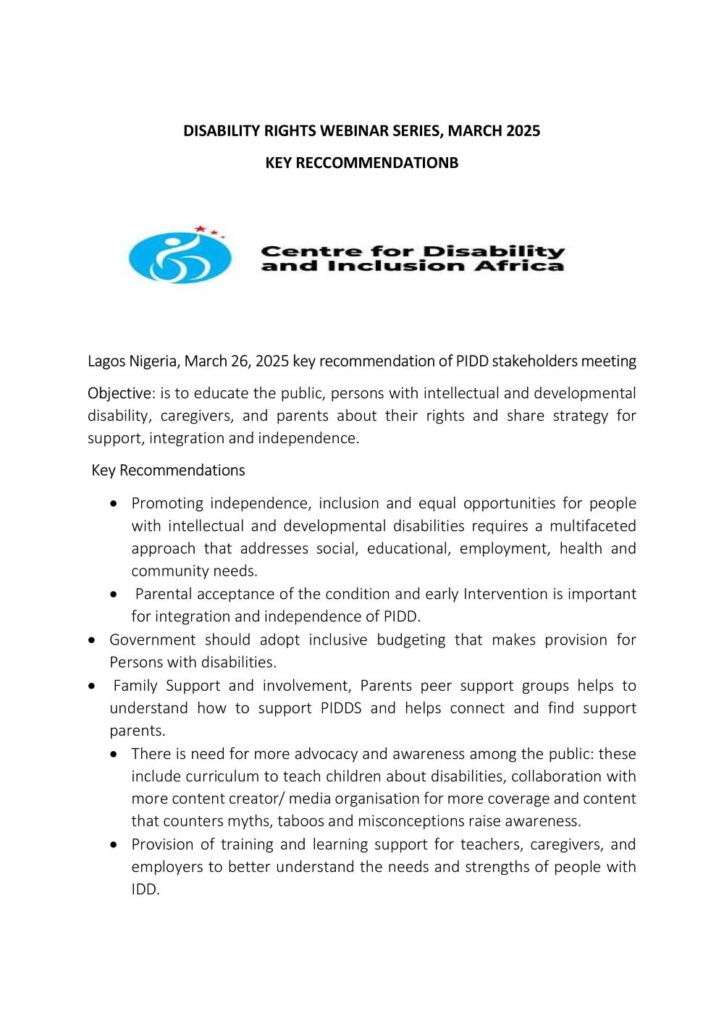
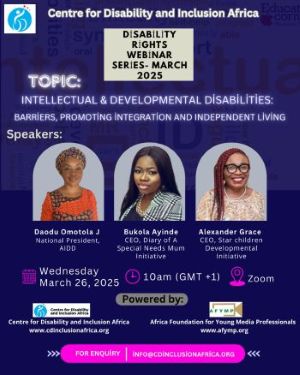
DISABILITY RIGHTS WEBINAR SERIES, MARCH 2025 

KEY RECCOMMENDATIONB

Lagos Nigeria, March 26, 2025 key recommendation of PIDD stakeholders meeting

Objective: is to educate the public, persons with intellectual and developmental disability, caregivers, and parents about their rights and share strategy for support, integration and independence.

 Key Recommendations

  • Promoting independence, inclusion and equal opportunities for people with intellectual and developmental disabilities requires a multifaceted approach that addresses social, educational, employment, health and community needs.
  •  Parental acceptance of the condition and early Intervention is important for integration and independence of PIDD.
  • Government should adopt inclusive budgeting that makes provision for Persons with disabilities.
  •  Family Support and involvement, Parents peer support groups helps to understand how to support PIDDS and helps connect and find support parents.
  • There is need for more advocacy and awareness among the public: these include curriculum to teach children about disabilities, collaboration with more content creator/ media organisation for more coverage and content that counters myths, taboos and misconceptions raise awareness.
  • Provision of training and learning support for teachers, caregivers, and employers to better understand the needs and strengths of people with IDD.
  • There is a need to push for laws that protect their rights and equal access to education, employment, quality healthcare, education, sexual rights etc.
  • Governments, development organisation must cater for the educational need of persons with intellectual and developmental disability and make reasonable accommodation whether through inclusive or integrated education.
  • Education plan must support individual needs.
  • There is a need for accessible infrastructure and community inclusion for PIDD
  • Economic empowerment, vocational training and business funding are necessary ingredient economic employment.
  •  Therapy is important, observation and assessment is needed for successful therapy.
  • Celebrating a few milestones, encourage and build resilience.
  •  Acceleration of action for require joint effort, policymakers must strategize to avoid PIDDs being lost in policies, collaborations must be forged.
  • Public Private partnership will go a long to facilitate investment for PIDDs like the Ekiti state model that lead to the creation of the First Public Therapy Centre

For enquiries:

Communications Officer

Centre for Disability and Inclusion Africa

www.cdinclusionafrica.org

email: info@cdinclsuionafrica.org
READ MORE
Call for Actions

For PIDD, it is still a long journey to Integration and inclusion

Despite the challenges faced by persons with Intellectual and Developmental Disabilities (limitation in cognitive function(IQ), adaptive behaviours such as everyday skills in communications, social interaction and self-care) and the fact that the disabilities can vary widely from severe to above average several challenges which affect individuals’ ability to learn and live independently, a major challenge comes from lack of awareness and full understanding from the society or family members with regards to what really count.

In Most cases, these often prevent true knowledge and empowerment of the Persons with Intellectual and Developmental Disabilities(PIDD) especially here in Nigeria and other developing countries.

While it is known that PIDD can have difficulties in problem solving, decision-making and learning new things but of more importance to note is that such individuals have unique strengths that can be tapped for a productive life.

A good point to note is that there are few differences between a person with Intellectual disabilities and Developmental disabilities even though they are always placed in the same cluster. Developmental disabilities can be an advanced milestone which can affect individual walking, talking and interacting socially. Often it manifests from childhood and continues till adult life.

Despite the above, a good grasp of issues and demands associated with PIDD can aid a better inclusion, integration and promote independent living of such people. The above and many others are some of the submissions made s by speakers and other stakeholders present at a virtual town hall meeting “Disability Rights and Webinar Series’’ which is a monthly event of Centre for Disabilities and Inclusions Africa tagged “Intellectual and Developmental Disabilities: Barriers, promoting integration and Independent living”

Grace Alexander Williams

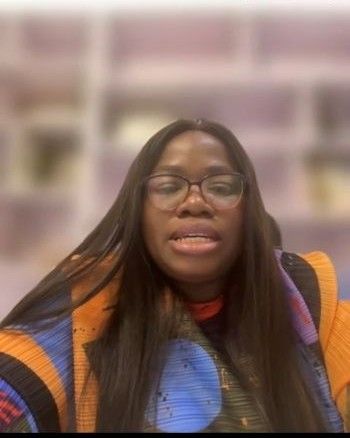
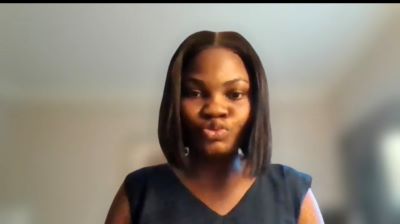
The first speaker, Grace Alexander after her introduction speech asked society to learn and understand PIDD if the society truly seeks integration. According to her “PIDD requires a multifaceted approach that cuts across education, social, employment and community needs” Furthermore “Access and rights should be accorded to PIDD” Grace Alexander mentioned.

Beyond the above, “Advocacy and awareness in several formats are essential if PIDD must live a fulfilling life” Said Grace Alexander.

Bukola Ayinde

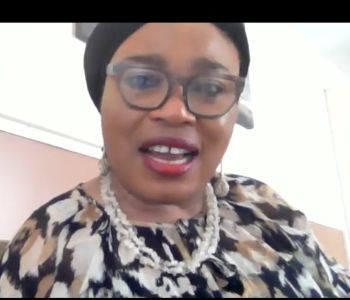
Bukola Ayinde, an advocate of PIDD and lead for Special Needs mum demanded more reasonable accommodation for PIDD and orientation of the society at large to make any meaningful progress. According to her “As a mum of special needs child-IDD. O have seen enough to say that Nigeria and many developing countries still have a long way to go”.

Daodu Omotola Joko, the national President of Association of Intellectual and Developmental Disabilities on her side believes that the knowledge gap still exists for many in differentiating between persons with Intellectual Disabilities and Developmental Disabilities even though they are both merged under the same cluster. “We must educate the society as well as policy drivers to push for knowledge sharing within the ecosystem’’.

Yetunde Salimon, a PIDD therapist on her part challenged therapists to be up and doing in the profession but more importantly, some need to upgrade their skills. “According to her, PIDD therapists are doing great work and it actually requires passion.  But continuous development will aid better value delivery for PIDD”.

Some of the participants in the two hall meeting, Mrs Agboola, who is the special Adviser to Ekiti State Governor, on Special education and Inclusion as well as   Hon Olanrewajiu Oladosu, Special Assistant to Osun State Governor made their personal contribution from the policy maker’s point of view. Beyond this, they brought goodwill messages and commend Centre for Disability and Inclusion Africa.

READ MORE
Albinism challenges in Nigeria

Albinism Challenges, Stakeholders offer key recommendations

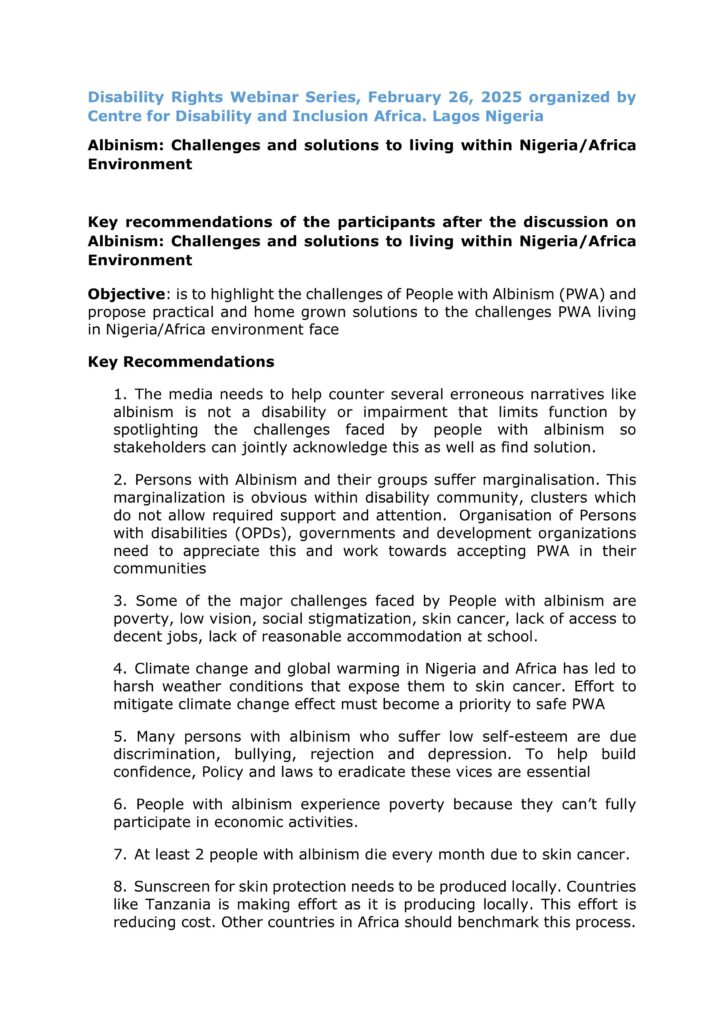
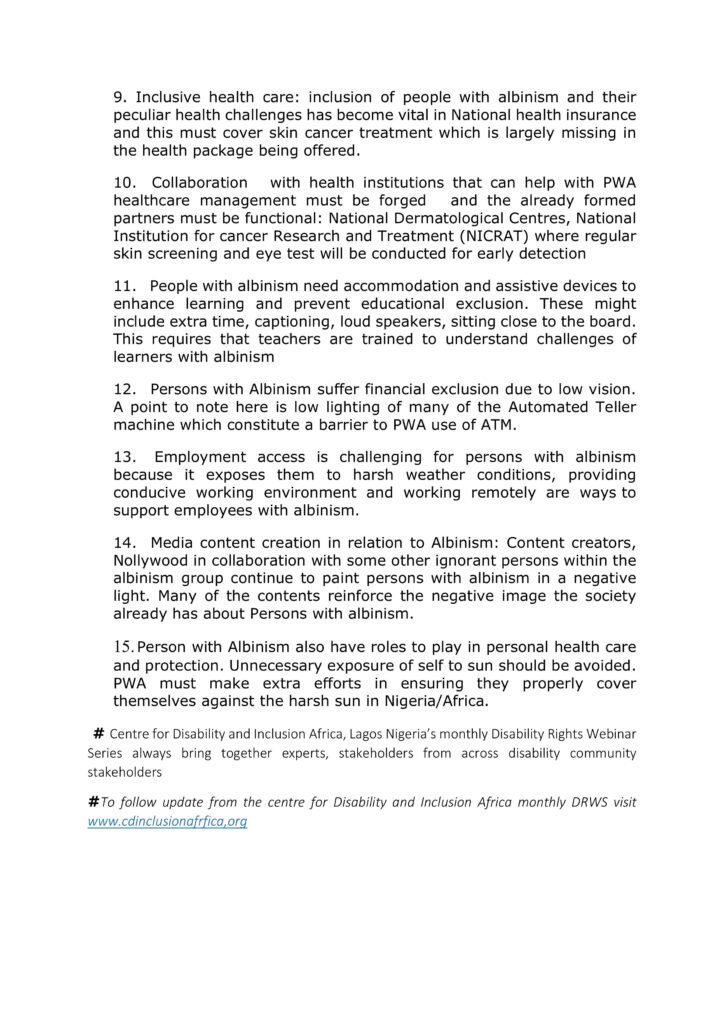
Albinism comes with different challenges and can be quite expensive to maintain. In many instances, rights of Persons with Albinism are being denied our of ignorance or a deliberate attempt.

At the centre for Disability and Inclusion Africa’s monthly Disability Rights Webinar Series which held on February 26, 2025. Stakeholders rose with key recommendations. Here below is the key issues raised

If youi prefer PDF format, please check this link https://www.linkedin.com/feed/update/urn:li:ugcPost:7304804919276929026/?actorCompanyId=104643128

READ MORE
Albinism challenges in Nigeria

Albinism challenges in Nigeria, Stakeholders raise concerns at CDIA event

“Albinism is a genetic condition that causes a lack of melanin, the pigment that gives colour to the skin, hair, and eyes. It can affect people of all races and genders”

In its monthly ‘Disability Rights Webinar Series’(DRWS) for February 2025, the focus of the centre’s discussion is on ‘Albinism: Challenges and Solutions of Living in Nigeria/Africa Environment’. This has become necessary as many persons with Albinism in Nigeria continue to suffer several humiliations, human rights abuse that bother on segregation, negative labelling. But more importantly, the associated health challenges of persons with Albinism took the centre stage in the discussion.

The February DRWS has four main speakers, Dr Bisi Bamishe, National President of Association of Albinism of Nigeria, Blessing Oladunjoye, Publisher of Bonews whose media organization is very passionate about persons with albinism, Sunday Smith, albumin advocate and Chairman Osun state Chapter of Albinism Association of Nigeria as well as Familusi Totunbo, an Ekiti state based Albinism Advocate.

Other persons who contributed to the discussion was Ishola Omotola, Women leader of Joint Association of Persons with Albinism, Osun State chapter as well as National Treasurer of Albinism Association of Nigeria

Welcoming the participants, Busola Oladunkoye, Program Officer of The centre emphasized the importance of the conversation and appreciated everyone who showed up for the meeting.

Taking the first session, Blessing Oladunjoye shared her experience covering several cases of Persons with Albinism health challenges which had claimed many of the lives challenged Government to show more commitment. “The cluster needs open show of support and not just speeches” Blessing Oladunjoye said.

Blessing Oladunjoye, Bonews

Sunday Aghanti Smith, who spoke on other issues like a need for concerted efforts to make living in Nigeria and Africa bearable for person with Albinism. Dr Bisi Bamishe on the other hand eulogized “Being a person with Albinism is costly to maintain, anytime io travel abroad, all my funds are expended on items that can sustain my life and not clothes”

Familusi Tokunbo on the other hand talked about basic school teachers’ awareness of challenges of pupils with Albinism. To him “My school teachers in basic level were not aware of associated challenges of eye-sight issue I faced and many times they punish me for not having updated class notes, Meanwhile I did not see what she wrote on the black board” For Familusi Tokunbo “If we mmust ensure decebt work for Persons with Albinism, remote work can be considered so as to prevent exposure to sun in Nigeria””

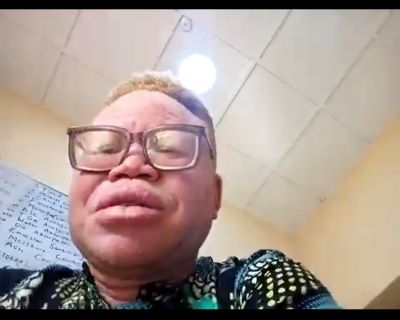
Familusi Tokunbo

On her part, one of Ishola Omotola’s concerns has to do with the movie industry helping to strengthen stereotypes and negative biases against persons with Albinism. To her, it is not only film and movie makers, skit and content creators are also part of the larger society that push negative narrative against the cluster

Ishola Omotola

Dr Bisi Omotal, on her part narrated several or her personal challenges as a Persons with Albinism and call on Government to quickly move from talk to action. She talked extensively of several ongoing initiatives of the association with cancer institute and several other Federal Government Agencies. to her, the earlier Nigeria find home grown solutions like other nations in Africa such as Tanzania among other the better it is for Persons with Albinism to live a decent life. Dr bisi Bamishe said “Albinism maintenance is not cheap, anytime i travel, I spend more or cream and other skin protective items than on clothes like any other person””

Dr Bisi Bamishe, National President, Albinism Association of Nigeria , speaking at the venet

READ MORE
#WheekchairNotLuggage

At CDIA January’s DRWS, experts call for sustainable efforts in behavioural change towards…

Centre for Disability and Inclusion Africa continues to use every platform to push for a better and inclusive society for all. Conversation and dialogue building with stakeholders remain one of the best ways to achieve meaningful progress.

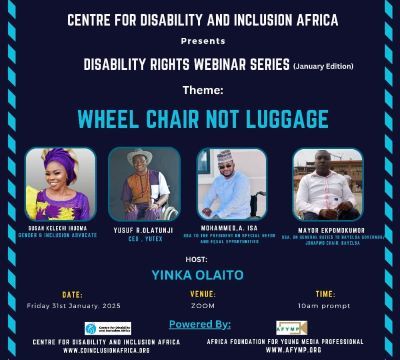
January 2025 edition of Disability Rights Webinar Series (DRWS) was organized to step up conversation around ongoing corporate campaigns aimed at combating rights abuses of persons with disabilities with specific references to Physically-challenged persons in Nigerian Society.

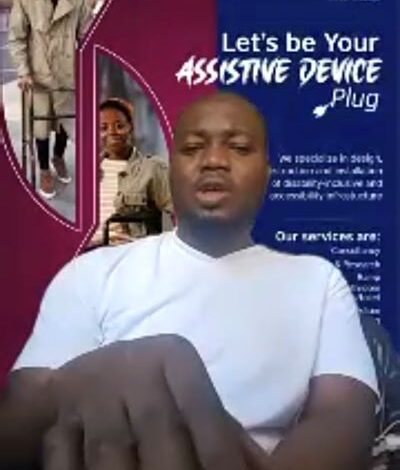
Yusuf Olatunji

The campaign- #WheelChairNotLuggage challenged behavioural and attitudinal acts directed at this cluster which over the years had remained a concern to everyone. While the campaign has enjoyed massively the support of the media as it has become viral, more conversations are still needed, coupled with other physical activities.

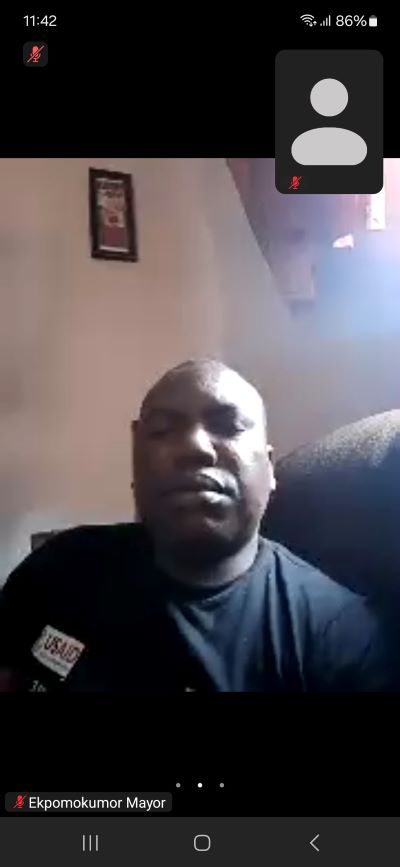
Comrade Mayor Ekpomomukor

The four speakers in this January webinar were Susan Ihuoma (gender and Inclusion Advocate), Yusuf Olatunji (Accessibility Expert), Mayor Ekpomomukor (Senior Special Assistant to Bayelsa State Governor on General Duties as well as Chairman, Bayelsa state Chapter of Joint Association of Persons with Disabilities) and Mohammed Abba Isa9Senior Special Assistant to the President on Special Needs and Equal Opportunities)

Susan Ihuoma

A common and resounding echo that was reinforced by all the speakers was that there is need for behavioural change and stakeholders’ orientation, especially public transport operators. More importantly it was agreed that government and policy makers need to do more than they are currently offering.

Listen to the full conversation below

READ MORE
Inclusion demands

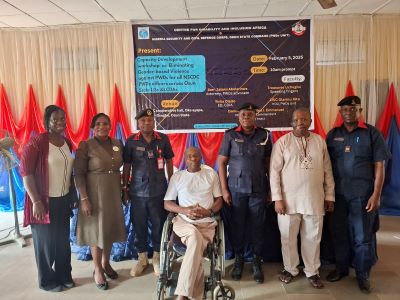
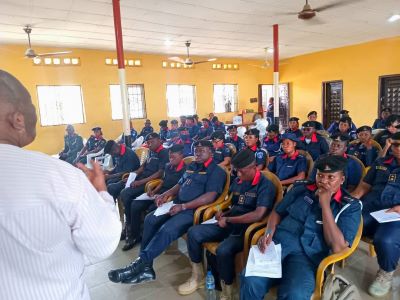
CDIA empowers 77 Nigeria Security and Civil Defence Corps PWDS Unit members

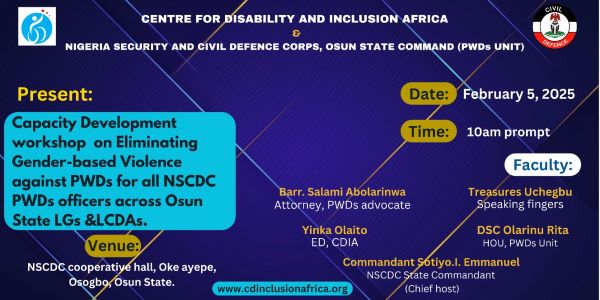
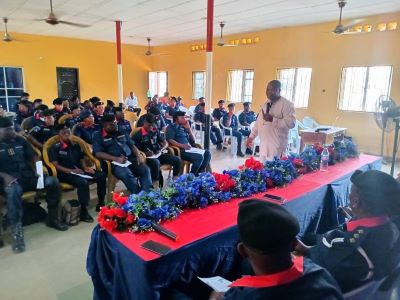
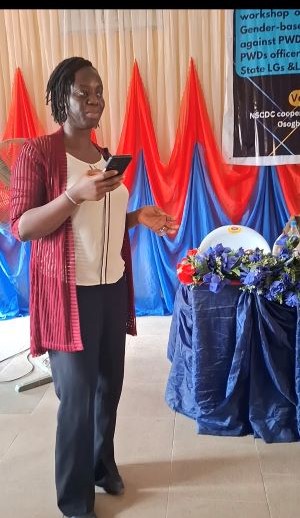
Centre for Disability and Inclusion Africa (CDIA) held a one-day capacity development workshop for Osun State Command of Nigerian Safety Civil Defense Corps (NSCDC) PWDs Unit officers on Eliminating gender based violence against Person with Disabilities (PWDs).

The training which took held on Wednesday, 5th of February at the NSCDC co-operative thrift Hall Oke-Ayepe, Osun state, had in attendance experts and advocates in the disability field as faculties such as, Yinka Olaito(E.D CDIA), Treasures Uchegbu and Barrister Salami Abolarinwa who joined via zoom.

While Opening the workshop, the representative of NSCDC state Commandant, Commandant Sotiyo I. Emmanuel appreciated the CDIA team for such a huge contribution to the state’s Officers. According to him “We honour such a huge sacrifice from CDIA as we are aware this is not funded but a commitment to make a change””. The Commandant then charged his officers to “Pay attention to the knowledge to be shared

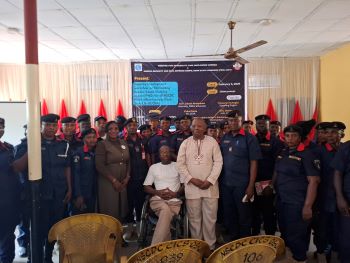
NSCDC Osun State Commandant representative, State head of training, state’s head of PWDs unit and CDIA team

The head of the PWDs Unit in the state’s Command DSC Rita Olarinu, also commended CDIA team for coming to Osogbo for the capacity Development workshop.

Yinka Olaito took the first session of the lecture titled “Strengthening Inclusive Society Through Disability Knowledge” Yinka Olaito explained the different types of disabilities and their categories.  He also stated there are 7 recognized clusters of persons with disabilities in Nigeria namely; The physically challenged, Albino, Dwarf, Visually impaired, hearing impaired, Intellectually challenged and Speech impairment. 

He also talked about the discrimination against PWDs and terms that should be used and not be used. For example, we should avoid the use of words like deaf and dumb or should call a Visually impaired person blind. Then as officers, when attending to PWDs,  they should describe who they are as a person as well as a warm person 

Cross section of some of the participating Officers

n his second lecture titled” Introduction to Gender Based Violence (GBV), Yinka olaito explained the different kinds of gender based violence where he listed psychological violence, physical violence, sexual violence amongst other.  Also stating the causes of GBV such as poverty, conflict and crisis and so on.

Yinka Olaito noted that Gender Based Violence is on the rise especially against PWDs but many cases are not reported because of getting justice.  He charged officers to make sure people get justice whenever cases are reported and not shun them up. Because when the victims don’t get justice, it creates more room for oppression.

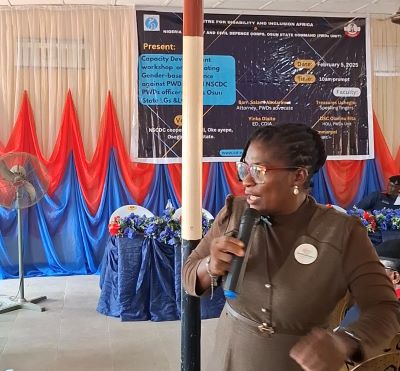
Treasures Uchegbu took the third session. The lecture was titled; Gender-Based Violence Against Person with Disabilities”” She made it clear during the lecture that women with disabilities are the major victims of GBV. From sexual harassment, forced marriage, Rape and psychological violence. 

Treasures explained that when women/girls with disabilities encounter any of these forms of GBVs, many of them never get justice.  When a person with disability reports a rape case, they get responses like ” you should thank God someone slept with you” and this makes them more vulnerable to their oppressors and also put the victim into depression. She highlighted that some women with disabilities are forced into marriages they do not want because their parents feel “they are doing them a favour.

Treasures stated during the lecture that PWDs have a mind and rights of their own and they shouldn’t be seen as lesser humans and their opinions should be respected.

Treasures Uchegbu

At the end she urged officers to give attention to PWDs and communicate with them often. She also shared a sign language booklet to participants of the workshop.

Legal Framework and Best Practices for Promoting and Enforcing PWDs’ Rights session was  taken virtually by Barr. Salami Abolarinwa. He shared extensively on the laws guiding the rights of PWDs and legal procedures around it.

Busola Oladotun, the project officer for CDIA explained the policies for PWDs

Busola Oladotun

During the questions and answers session, one of the participants asked that in a case where a Visually impaired person is the victim of GBV, how can we be sure he/she recognizes the oppressor? Yinka Olaito answered that most Visually impaired person’s uses their sense of smell to Identify people.

Closing the workshop, DSC. Olarinu Rita who is the Head of Unit for the PWDs desk NSCDC Osun State thanked the CDIA team for the eye opening workshop. She acknowledged that there were things she got to know for the first time through the workshop and she assured that officers are going to make sure they will be zero tolerance for Gender Based violence in each of their districts.

The 77 Officers who participated in the trade were selected from all the 33 Local Governments and LCDAs across Osun State.

READ MORE
#WheekchairNotLuggage

CDIA to support Osun State Bureau of Persons with Disabilities with….

The journey of inclusive society is a long walk to freedom. Almost all the states within South West in Nigeria now have its own state’s Disability Laws. The challenge of Ogun state’s Disability Acts is still a concerned to all as the state has something it can refer to as Disability Acts since 2017 but we believe quite a lot of grey areas in the Laws remain a concern and therefore we cannot wholeheartedly say Ogun Disability Acts is really what it is.

Anyway for Osun State, which recently joined others in enacting state’s Disability Laws in 2024, can be said to be on the right course. Unlike many other states where long delay in setting up implementation processes. Osun state in the less than a year had started full implementation of the law, within six months, Osun state Bureau of Persons with Disabilities had been established with the appointment of an Executive Secretary- Ayobami Ayotunde, and other key officers are now in place.

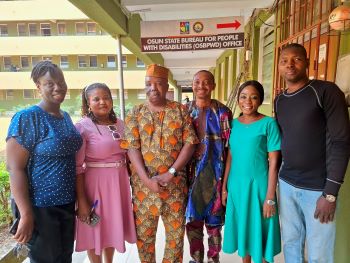
  • An operational office has also been created for the Bureau within Ministry of Finance. Even though the office is yet to be fully equipped so as to allow full operations but at least the office offer a take-off place of operation. As a sign of readiness to commence full action, the Agency request a policy and collaborative meeting with the Centre for Disability and Inclusion Africa on Tuesday 4th February, 2025 at its office in Osogbo Osun State.

At the meeting, while welcoming CDIA team, Mrs Jumoke Femi-Ojetola, a senior staff pf the Agency said “’It is our pleasure to have your team tin our office. It shows your commitment to the Disability ecosystem”.

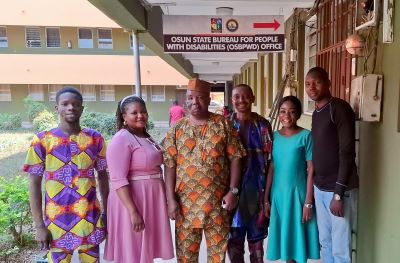
CDIA team and OSun state Bureau of Persons with Disability Agency

The Executive Secretary, Aypbami Oyetunde on his part praise CDIA for its commitment to Disability Inclusion matters across Nigeria and Africa as the organization’s work speaks for it. According to Ayotunde “It is our pleasure to meet within your team as we look forward to partnership and collaboration which can help push our corporate objective forwards”.

He also called on CDIA to keep giving necessary support through capacity development and other useful collaborations especially at this early stage of the Bureau when it has no funding which we hope to secure form the Governor soon.”

While responding, Yinka Olaito, Executive Director of CDIA, praised the speed at which the implementation of the Disability Bills in Osun state implementation process is going. Having a commission set in place with eight months after enactment of the Bill is praise worthy. “We are happy at the speed Disability Bills in Osun state is moving and this is commendable” Yinka Olaito said.

On possible collaborations and support Yinka Olaito said “As much we are also NGO with limited funding, what we are sure is that we will support the Agency with in the area of capacity Development, knowledge management and information sharing as well as in guidance in the area of operational, corporate governance system which help the Bureau to be properly positioned to get required attention from other global development Agencies and support organization”

READ MORE
#WheekchairNotLuggage

CDIA and other Stakeholders issued a communique on “Wheel Chair Not Luggage

Communique issued at the end of Wheel Chair Not Luggage Stakeholders meeting/Webinar with the theme: Wheel Chair Not Luggage which held on Friday 31st January, 2025

Preamble

The challenges of Persons with disabilities in Nigeria are huge. Abuse of their rights are most prevalent and there seems to be no sustainable efforts to stem this. The focus of the stakeholders for this meeting was narrowed down to challenges faced by physical-mobility individuals especially those who use wheel chairs. The meeting had in attendance, Government officials, Organization of Persons with disabilities organisations, member of different media houses, Persons with disabilities among others

Objective: is to promote the freedom of movement of wheelchair users, counter the misinformation about wheelchair being a luggage instead of being mobility aid, highlight the challenges associated with a using wheelchair and come up with solutions that will enhance the accessibility and mobility of wheelchairs. 

Key Resolutions

  • Wheelchairs are mobility aid and should never be considered as luggage by transport operators whether as a matter of ignorance, due to misinformation or negative societal perception Transport operators must provide reasonable accommodation for wheelchair users in their service delivery. Wheelchair mobility gives users independence, confidence and sense of participation. To  an wheelchair user this mobility equipment gives opportunity to  go work, study, and leadership opportunities.
  • Accessibility of physical facilities whether public or private facilities is a key component of an inclusive society.
  • Mobility challenges for wheelchair users can be classified into upstream challenges (manufacturer/design challenges, comfort) and downstream challenges are challenges associated with non-compliance with accessibility code and universal design.
  •  The discrimination Against Persons with Disabilities (Prohibition) Act (2018) is a major milestone in attaining a disability inclusive society. Wheelchair use by anyone who needs it is backed in the law DAPDA 2018
  •  There is a need for wheelchair users to unite and organised themselves to sensitize and engage with major stakeholders in the Nigerian transport system such as the ministries of transportation, NUTRW for advocacy and public reorientation.
  •  There is a need for continuous re- orientation and public   sensitization for wheelchairs users’ community and the general public.
  • Continuous advocacy will drive empathy, knowledge in service delivery among transport service operators.
  • There is a need to push for policy change which prioritizes accessible infrastructures, universal designs and address gaps that allow wheelchair to be treated as aid not luggage.
  • There is a need to train transport service providers on disability, inclusion
  • There is a need for political will and finance to prioritize mainstreaming disability inclusion.
  • Major stakeholders in public transportation should be part of this conversation.
  • Behavioural change materials can be used to sensitize public road transporters and advocacy material should be translated into local languages.
READ MORE
#WheekchairNotLuggage

#WheelChairnotluggage Campaign Report on Radio Nigeria, to host a webinar…

The centre continues to push its campaign on #WheelchairnotLuggage across the nation with the support of many media houses. Have you listened to #WheelChairNotLuggage #CampaignReport on Radio Nigeria headquarters Abuja here is it if you missed it . you can listen to it her

The Centre will also host a webinar on January 31, 2025. The conversations will have goodwill messages from Mr Abdul, national Chair of Spinal cord Association of Nigeria as well as Mr Rilwan Muhamed who is the National Cluster President of Physical-Mobility cluster among other four frontline speakers who are:

Mohammed Abba isa, Senior Special Assistant to the President on Special Needs and Equal opportunities

MAyor Ekpomokumor- Senior Special Assistant to Bayelsa State Governor and KONAWPD Chair of Bayelsa State

Keleci Ihuoma- Gender and Inclusion Advocate

Yiusuf R Olatunji- Accessibility Expert

READ MORE
#WheekchairNotLuggage

#WheelChairnotluggage Campaign on Radio stations

For campaign to be successful, the channels used are essential. In its push for a change or orientation against human rights abuses against physically-challenge persons in Nigeria with regards those who use wheel chair among them, #WheelchairNotluggage was launched after to challenge some of the abuses here.

The campaign had enjoyed massive media attention as over ten print media houses had published different stories around the campaign as well as over three Radio stations with cumulative direct and indirect reach of over 25 million people across Nigeria.

We have therefore showcased about three of this campaign on  four  Radio  stations which include Radio Nigeria one in Abuja, Vision 92.1 FM Abuja and now Citizen FM Abuja.

Some of the things we emphasized is creation of specialized courts where Disability inclusion related offences can be tried for accelerated hearing

Happy listening

Vision FM Abuja

Citizen FM Abuja

Fresh FM Ibadan

READ MORE