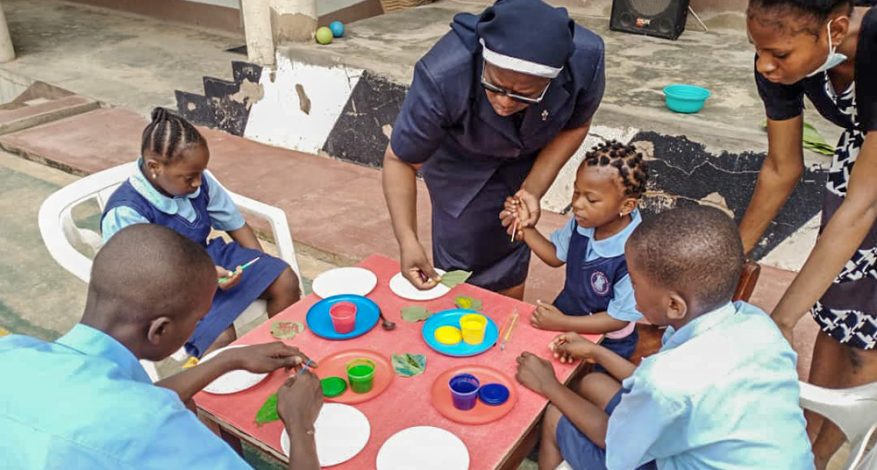
Nigeria Education Policy

The Urgent Need for Inclusive Education

A nation’s progress is ultimately measured by how well it develops the potential of all its citizens, not just the privileged or the visible. As the global economy becomes more knowledge-driven and competitive, every country must harness its full human capital to remain relevant. Yet in Nigeria, millions of people   particularly persons with disabilities remain on the margins of the education system, cut off from opportunities that could transform not only their lives but the nation’s future.

This is not merely a policy gap. It is a moral, social, and economic emergency. Across communities, many persons with disabilities continue to face barriers that go far beyond physical limitations. Too often, the challenge is not disability itself, but society’s response to it. Children stay home because classrooms are inaccessible. Young people withdraw because they are stigmatized. Families struggle because schools lack basic accommodations. In many cases, the message spoken or unspoken  is painfully clear: “You do not belong here.”

The consequences are profound.

When learners with disabilities cannot access education, their confidence erodes, their talents remain hidden, and their economic independence becomes harder to achieve. Families, in turn, shoulder avoidable financial and emotional strain. Society loses innovators, professionals, entrepreneurs, and leaders whose contributions could strengthen national development.

Exclusion is not a victimless oversight. It is a national loss.

Reports over the years have consistently highlighted a troubling reality: a vast majority of schools and training centres lack essential accessibility features. Ramps, adaptive learning tools, assistive technologies, and inclusive teaching strategies remain the exception rather than the norm. For many learners, the obstacle is not the curriculum but the doorway, not the lesson but the environment.

This is why inclusive education is not an optional reform or a charitable gesture. It is justice in practice.

Inclusive education recognizes that learners are diverse — in ability, learning style, pace, and need. It ensures that all students learn together in environments designed to support difference rather than punish it. Properly implemented, it benefits everyone. Learners with disabilities gain confidence, skills, and social integration. Other students develop empathy, collaboration skills, and a deeper understanding of human diversity. Schools become more innovative. Communities become more cohesive.

Inclusion strengthens society as a whole.

Importantly, Nigeria is not operating in a vacuum. The country is a signatory to frameworks championed by the United Nations, including the United Nations Convention on the Rights of Persons with Disabilities, which affirms education as a fundamental right. National disability legislation echoes similar commitments. On paper, the principles are clear. In practice, however, progress remains uneven and painfully slow.

Declarations do not change lives. Implementation does.

If inclusive education is to move from rhetoric to reality, three priorities are unavoidable. First, infrastructure must become non-negotiable. Schools cannot claim to be centres of learning while physically excluding students. Accessibility features and inclusive learning materials must be embedded in planning, funding, and regulation not treated as afterthoughts.

Second, teacher preparation must evolve. Educators are the backbone of inclusion. Without adequate training in adaptive instruction, differentiated learning, and classroom diversity, even well-intentioned policies will falter. Third, societal attitudes must shift. Stigma, myths, and harmful cultural assumptions continue to discourage enrolment and participation. Communities must actively reject narratives that equate disability with inability.

Nigeria’s development ambitions  economic growth, innovation, social stability cannot be achieved while a significant portion of the population remains excluded from foundational opportunities. A country that sidelines millions of citizens is not merely being unjust; it is undermining its own future. Inclusive education is not about accommodating a minority. It is about unlocking national potential.

The urgency is clear. The benefits are undeniable. The responsibility is collective. Inclusive education in Nigeria cannot wait. Delay deepens inequality. Action expands possibility. The choice before us is simple: build a society that works for everyone, or accept the cost of leaving millions behind. History will judge which path we chose.

N.B The Article was culled from  Nigeria Grassroot News  Online newspaper

#Kingsley Ndem is a Special Education student and disability inclusion advocate based in Nigeria.
READ MORE
From Access to Engagement in inclusive Education

From Access to Engagement: Why Inclusive Education Needs a Rethink

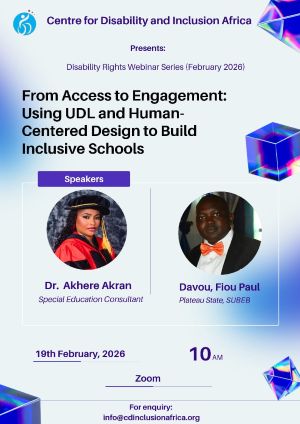
Inclusive education is often discussed in terms of infrastructure, enrolment, and policy commitments. But what happens after learners with disabilities enter the classroom? Do they feel seen, supported, and meaningfully engaged? These critical questions shaped a recent session in the Disability Rights Webinar Series hosted by the Centre for Disability and Inclusion Africa (CDIA), which convened educators, policymakers, and disability advocates to examine a deeper, more practical vision of inclusion.

Held virtually on 19 February 2026, the webinar, themed “From Access to Engagement: Using Universal Design for Learning (UDL) and Human-Centered Design (HCD) for Inclusive Education,” focused on bridging a persistent gap in Nigeria’s education landscape: the difference between providing access and ensuring genuine participation.

Why Access Alone Is Not Enough

Despite growing policy recognition of inclusive education in Nigeria, many learners with disabilities continue to face barriers that limit not only entry into schools but their ability to thrive within them. Challenges such as overcrowded classrooms, insufficient teacher preparation, rigid curricula, and entrenched social attitudes often undermine well-intentioned inclusion efforts.

A recurring concern during the webinar was that inclusion is still too frequently framed as a matter of accommodations reactive measures applied after difficulties emerge rather than proactive design. This mindset, participants agreed, risks creating environments where learners are present but not fully engaged.

Inclusion as a Mindset and Leadership Issue

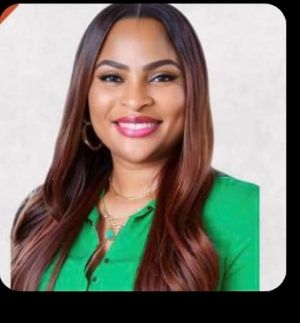
One of the session’s most compelling insights came from Dr. Mariam Akhere Akran, a special educator and diversity strategist, who challenged common assumptions about inclusive education. She argued that inclusion is not primarily a financial problem but a question of mindset, leadership, and intentional design.

Dr Mariam Akhere Akran

Viewing disability as a form of human diversity rather than deficit, she explained, fundamentally shifts how educators approach teaching and learning. When teachers prioritise empathy, psychological safety, and flexibility, classrooms become more responsive to all learners — not just those with identified disabilities.

This perspective also counters the widespread belief that inclusion is inherently expensive. Many inclusive practices, she noted, involve low-cost adjustments in lesson planning, communication, and student engagement strategies rather than major structural investments.

Universal Design for Learning: Planning for Variability

Central to the discussion was Universal Design for Learning (UDL), presented as a framework for anticipating learner variability from the outset. Instead of designing lessons for an “average” student, UDL encourages educators to recognise that learners differ in how they engage with information, process concepts, and express understanding.

The webinar highlighted three foundational UDL principles:

  • Multiple Means of Engagement – Supporting motivation and sustained participation
  • Multiple Means of Representation – Delivering content in varied formats
  • Multiple Means of Action and Expression – Allowing diverse ways to demonstrate learning

Participants were encouraged to see UDL not as an add-on technique but as a design philosophy embedded at the planning stage of teaching.

Moving from Physical Access to Meaningful Engagement

PAul Davou Fiou

While physical accessibility and enrolment remain vital, speakers emphasized that these measures alone do not define inclusion. Paul Davou Fiou, representing the Special Education Unit of the Plateau State Universal Basic Education Board, observed that many initiatives still focus narrowly on getting learners into schools without sufficiently addressing classroom participation and learning outcomes. Access without engagement, he stressed, can inadvertently reproduce exclusion within the classroom itself. True inclusion requires adaptable curricula, interactive teaching methods, and deliberate attention to learner agency.

Human-Centered Design: Designing With Learners

Complementing UDL, Human-Centered Design (HCD) was introduced as an approach that prioritises the lived experiences of learners and families. Rather than importing generic solutions, HCD advocates context-sensitive strategies shaped by local realities. This includes actively incorporating student and parent voices into curriculum development and policy processes  an especially important consideration in contexts where stigma, trauma, or cultural misconceptions influence educational experiences.

Addressing Systemic Barriers

Importantly, the conversation framed many obstacles to inclusion as systemic rather than individual failures. Overcrowded classrooms, limited teacher training, and weak policy implementation mechanisms were recognised as structural issues requiring coordinated responses.

To this end, participants explored strategic priorities such as integrating Universal Design principles into curriculum reform, strengthening teacher training institutions, establishing cross-sector design teams, and reinforcing accountability systems.

From Dialogue to Action

Beyond knowledge sharing, the webinar fostered robust engagement among participants, reflecting a growing appetite for practical, scalable solutions. Increased awareness of UDL and HCD concepts, coupled with strong multi-stakeholder dialogue, marked key outcomes of the session.

A Broader Vision for Inclusion

The discussions ultimately pointed toward the need for a coherent national inclusion framework one that aligns policy, pedagogy, and governance while embedding monitoring and evaluation mechanisms to track real-world impact.

Inclusive education, as underscored throughout the webinar, is not simply about removing barriers to entry. It is about designing learning environments where every student can participate, contribute, and succeed. As CDIA continues to convene conversations at the intersection of disability rights and development, one message stands clear: sustainable inclusion begins not at the school gate, but at the heart of how we design learning itself.

Read Full Report here or https://www.linkedin.com/feed/update/urn:li:ugcPost:7430249982064029696/?actorCompanyId=104643128

READ MORE
Call for Actions

CDIA organizes Inclusive education and disability awareness, protection workshops

The Centre for Disability and Inclusion Africa has announced its programs for the week of May 26-30may, 2025.

As part of its intentionality to create an inclusive, transformative and sustainable society that embraces all, the Centre continues to create necessary changes the society must embrace. In some instances, our activities are focused on stepping up conversation around a major issue and sometimes, there must be deliberate investment in capacity building of selected actors within the society responsible for upholding such units.

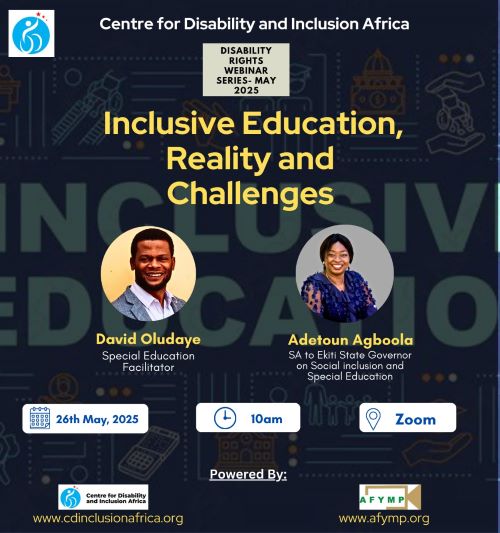
On Monday 26th May, 2025, the Centre’s Disability Rights Webinar Serie Monthly webinar will be held virtually and the focus this time around is “Inclusive Education, Reality and Challenges “

For some time, the argument around inclusive education has gained attention as many continue to view this as seemingly impossible. Meanwhile with pilot initiatives in the Northern Nigeria by another international development organization, we have seen this is actually possible if we have the strong will to make it work

The conversation will be led by two experts, Adetoun Agboola, who is the Special Adviser to Ekiti State Governor on Social Inclusion and Special Education. The second speaker is Oludaye David, a special Education facilitator with years of experience in the field.

The meeting will have leaders of organizations of Persons with Disabilities, Policy makers, parents, and other ecosystem members. The recording will be shared on the organization’s Youtube channel for those who may likely miss the session.

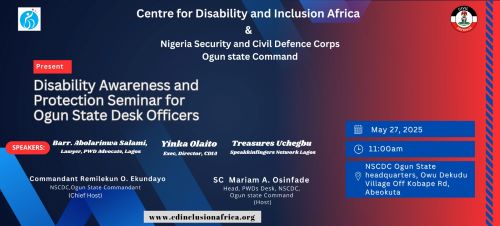
The Centre’s activity will move to Abeokuta Ogun State on Tuesday 27th May, 2025. As a result of our field work and survey, it is very clear to us that many securities, para military organization’s personnel saddled with the responsibility of protecting Persons with Disabilities have very limited knowledge of disability inclusion issues and therefore they are incapacitated in many cases when required actions are needed or when there is call for justice. In February 2025 the Centre had trained about 77 desk Officers of the Osun state command of Nigeria Security and Civil Defence Corps and the impact has been encouraging.

To strengthen and help position these officers’ better, the Centre in Conjunction with Ogun State command will embark on this for free.

We ask that you do not miss the opportunity in making these changes with us. Do donate or fund some of our activities. We are just a mail/call away.

READ MORE
Inclusion in Nigeria

Promoting Inclusive Education for Children with Disabilities in Nigeria

To reach real peace in the world, we will have to begin with the children.” – Mahatma Gandhi.

This quote is just one of many quotes that denotes how imperative it is for children to have access to education in order to have a promising and fortified future.

However, in Nigeria today, education is embroiled in loads of challenges and many children are being denied access to a good education due to the narratives surrounding its effectiveness. This is especially so for children with disabilities. Educational system in Nigeria is one of the less funded sectors and this has shattered the hope of good and affordable education for children in Nigeria.

If Nigerian children, especially the ones with disabilities, must ascend a promising future in the educational sector, inclusiveness as well as access must be prioritized.

Inclusive education upholds the famous theme “education for all” because it promotes equality in giving good and quality education to children. It bridges the gap that causes disparities in giving good education to the abilities and disabilities and makes them equal. This ideology has to be promoted to make the disabled contribute their quota to the growth of humanity and have a sense of belonging. Inclusive education is creating a school environment that is accepting and supportive of all children regardless of their disabilities or abilities.

If Inclusive education will work, Nigeria government must:

Create awareness and sensitization about disability issues: Inclusive education can be promoted in diverse ways. This is the best way to effectively bridge the disparities between children with disabilities and those with none. To do this right, one of the ways is to create awareness and sensitization about disability issues. In a stereotypical society where people are quick to backlash or talk down on people with disabilities, inclusive education can’t be promoted or utilized effectively.

Value of inclusive education must form the core of sensitization and awareness. This must be the central message and must be hammered consistently. Reorientation of teachers and every stakeholder must be given priority. Effective channels of disseminating information must reach the teachers, parents, school administrators, and students.  The channels for disseminating information regarding the importance of inclusive education can be through seminars, training, flyers, radio, television newspapers, etc.

Special education curriculum: for the students, the government can introduce special education subjects into the curriculum for primary and secondary students so they are able to communicate with and appreciate children with special needs or with disabilities. A change of orientation that disabilities are not mostly contagious messages should be spread to ease the tension of ignorant parents. The belief system that promotes disabilities is contagious may work against inclusive education. Radio jingles, drama, television shows in different languages should be encouraged.

-The use of inclusive teaching methods: Teaching methods always differ based on the type of students but this can change by using inclusive teaching which accommodates all ranges of students. A focus on teaching strategies which are engaging, interactive and provide multiple ways for students to demonstrate their understanding will help a lot.

Another teaching method that can also help here is known as Differentiated Instruction (DI). Here, teachers will give different instructions to students in the class based on their strengths and meeting the individual needs of students. This will require teaching methods to be the same but assessment and evaluation can be varied based on the specific situation of the students. This is because the level of understanding may differ.  For children with no disabilities, a fusion of simple and complex assessment may apply but for braille users, simple assessment should be introduced at first. This will help in promoting inclusive education in Africa.

Recruitment of qualified and well-equipped teachers: We must acknowledge education is crucial. Teachers do have a great role to play here.

If Nigerians are determined to promote inclusive, good and quality education, the right kind of teachers have to be recruited. Inclusive education can become an integral part of education if the teacher can at least communicate with every student through a form each can comprehend. At least even if this is at the basic level. This may require a level of overhauling the present educational courses at the higher institution levels. Those in the class already can do well with some training.

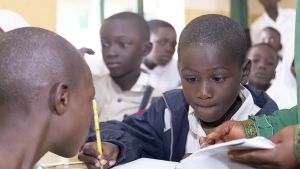
Photo credit: Smile project

READ MORE