Inclusive Hiring: The Competitive Advantage Modern Workplaces Can’t Ignore
Building an inclusive workforce is no longer a matter of corporate social responsibility it is a business imperative and a human rights obligation. As organizations navigate the future of work, creating equitable employment opportunities for persons with disabilities (PwDs) is essential to building resilient, innovative, and diverse workplaces.
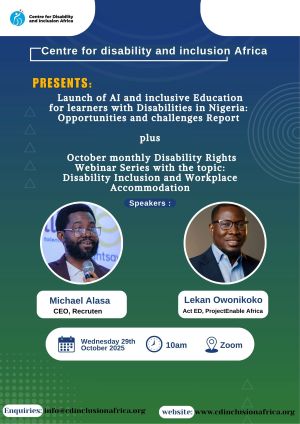
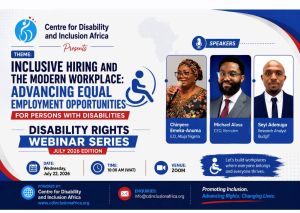
This was the central focus of the July edition of the Centre for Disability and Inclusion Africa (CDIA) Disability Rights Webinar Series, which convened policymakers, employers, development partners, advocates, and persons with lived experience to explore practical pathways toward disability-inclusive employment in Nigeria.
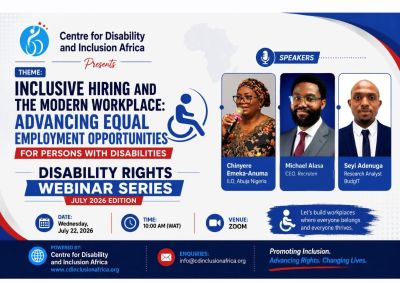
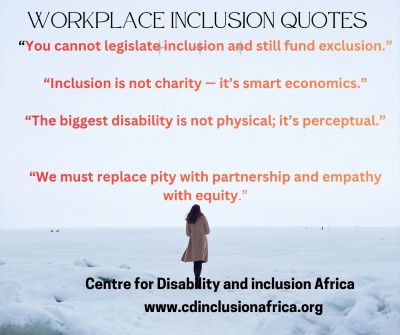
Opening the session, CDIA reaffirmed its commitment to fostering dialogue that holds governments, employers, and institutions accountable while promoting policies that guarantee equal opportunities for all. The webinar underscored a simple but powerful message: inclusion is not charity—it is good governance, sound business, and social justice.
Delivering the keynote presentation, Mrs. Chinyere Emeka-Anoma of the International Labour Organization (ILO) Nigeria Country Office examined the global and national frameworks driving disability inclusion in employment. She highlighted the ILO’s role in promoting inclusive labour standards through international conventions, policy guidance, and technical support while acknowledging Nigeria’s progress with the Discrimination Against Persons with Disabilities (Prohibition) Act, 2018, and the establishment of the National Commission for Persons with Disabilities.
However, she noted that legislation alone is insufficient without effective implementation. Persistent barriers—including inaccessible infrastructure, workplace stigma, weak enforcement mechanisms, and limited disability-disaggregated data—continue to hinder equal employment opportunities. She also advocated for Nigeria’s ratification of ILO Convention 159 on Vocational Rehabilitation and Employment of Persons with Disabilities to further strengthen the country’s commitment to inclusive labour practices.
From the employer’s perspective, HR consultant Michael Alasa challenged organizations to rethink recruitment processes through the lens of accessibility and equity. He emphasized that inclusive hiring is fundamentally a capability decision, not an act of goodwill.
Michael outlined practical strategies for employers, including writing accessible job advertisements, removing bias from recruitment systems, providing reasonable accommodations during interviews, ensuring recruitment technology is accessible, and using structured, competency-based assessments. He encouraged organizations to conduct end-to-end audits of their recruitment processes, establish partnerships with disability organizations to widen talent pipelines, and track inclusion metrics at leadership level to drive accountability.
Adding a powerful personal perspective, Seyi Adenuga, Research and Policy Analyst at BudgIT and a person with lived experience, highlighted the intersection between disability inclusion, public budgeting, and employment. She revealed that despite persons with disabilities representing an estimated 15 percent of Nigeria’s population, budget allocations targeted at disability inclusion remain disproportionately low, with implementation gaps further limiting impact.
Seyi announced commitments to translate budget analysis documents into Braille and other accessible formats, monitor disability-related budget implementation quarterly, advocate for the full implementation of the 5 percent employment quota for persons with disabilities in public institutions, and expand remote work skills training in areas such as graphic design and video editing. She also proposed fellowship opportunities to amplify the voices and research contributions of persons with disabilities.
The interactive discussion that followed reinforced a recurring theme: the greatest barriers to inclusion are often systemic rather than individual. Participants called for stronger enforcement of disability legislation, greater awareness among HR professionals, accessible workplaces, and a shift in organizational culture that recognizes disability inclusion as a strategic advantage.
At CDIA, we believe that meaningful inclusion requires collective action. Governments must enforce existing laws. Employers must intentionally remove barriers to employment. Development partners must continue supporting inclusive policies and capacity building. Together, these efforts can transform workplaces into environments where talent not disability—defines opportunity.
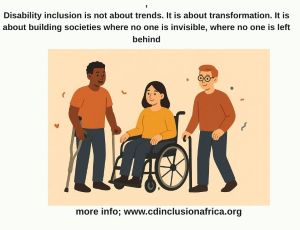
Creating an inclusive workplace is not simply about opening doors; it is about ensuring that once those doors are open, everyone has an equal opportunity to thrive.
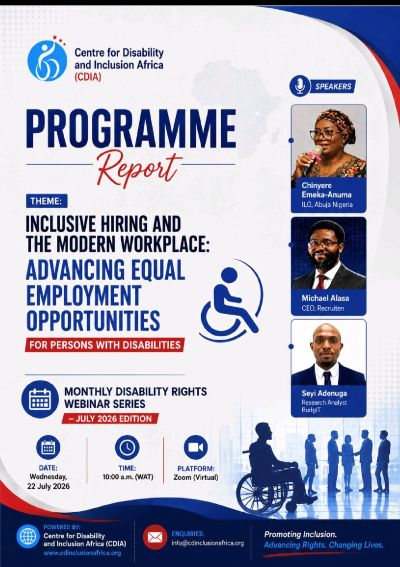
Read full report here or click this link https://www.linkedin.com/feed/update/urn:li:activity:7485680499429052417/