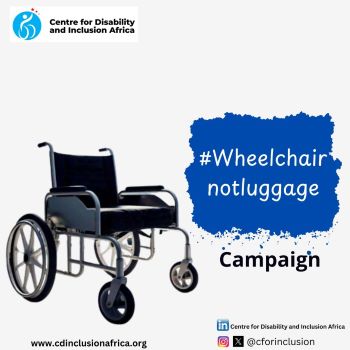
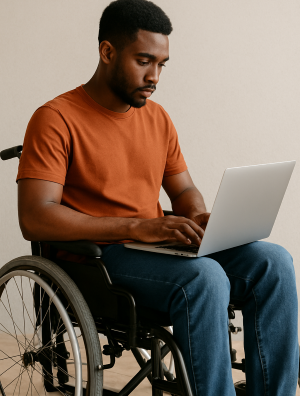
Centre for Disability and Inclusion Africa has launched an important campaign which is aimed at eliminating human right abuses targeted at many mobility-challenged persons in Nigeria. The campaign, tagged ‘WheelChairNotLuggage’.is passionate appeal and demand for reorientation, change of behaviours of transporters, especially public buses, cars drivers who had over the years continued to abuse the right of mobility-challenged persons across the nation. The abuses of these rights range from unwillingness to transport these identified persons, inhuman treatment when they do as well as additional charges drivers attached to carriage of wheelchairs when they eventually agreed to transport them.
The Executive Director of the Centre for Disability and Inclusion Africa, Yinka Olaito, at the launching affirmed this campaign is long overdue as many persons with mobility challenges and who result to use of Wheel Chairs had for long suffered in silence various abuses in this regards from public transporters: buses, cars as well as Airline operators, many of these are ignorant or are just purely mischievous. This must come to an end.
According to Yinka Olaito “The Nigeria’s Discrimination Against Persons with Disabilities Law 2018 was explicitly clear about such abuses and inhuman treatment against anyone based on body structure. Wheelchair is a personal mobility item and not a luggage, refusing to board a person who uses a wheelchair or treating the wheelchair as luggage is illegal and can be a criminal offence if found guilty by law”.
Yinka Olaito called on leaders of every recognized transport Associations in Nigeria to call members into order henceforth. Also Yinka Olaito called on every stakeholder in the disability inclusion ecosystem to raise their voices against this injustice as there is no equity if a section of Nigeria continued to be maltreated openly.
The launching of the campaign is the first step in this order as many other activities will follow in the coming months until full compliance is noted.
Some ignorant members of the society believe there is a difference between Inclusive rights and Human rights. They often think Inclusive rights should be separated and distinct from human rights.
The issue is that persons with disabilities are human and so there should be no dichotomy between inclusive rights and human rights.
Based on this, our Executive Director, Yinka Olaito, was on AIT morning flagship program “Kaakaki” on Friday 13th December, 2024 to share his opinion.
He was on the show with Abuja Branch Chairperson of FIDA that same day, but his opinion alone was shared here. Happy listening to the conversation.
#Inclusiverights must be seen and acknowledged as #Humanrights and accorded such regard. Our ED @Yinkaolaito on @AIT_Online shared on #Kaakaki program. Here is
As part of the centre’s advocacy drive to ensure no one is left behind, there is constant engagement at local and state levels with different stakeholders: Policy, government, disability ecosystem among many.
Ogun state has been one of the states in the South West Nigeria that passed Disability law early. As far back as 2017, the law had been signed into law even before the Discrimination Against Persons with Disabilities Acts 2018 was passed.
But unfortunately, the law had gathered dust on the shelf of the few who have access to it. Bo efforts had been made to implement it. Due to a concern of ours, we managed to get a copy of this law and we did discover it can be called an outdated law with several gaps in between. The above informed the organization to hold an event around this to mark International day of Persons with Disabilities.
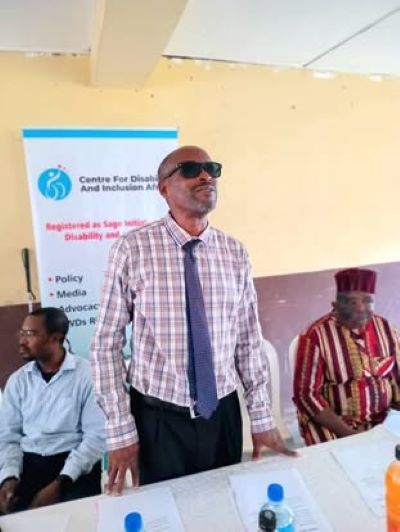
Dr Michael, Ogun State JONAPWD chair welcome address
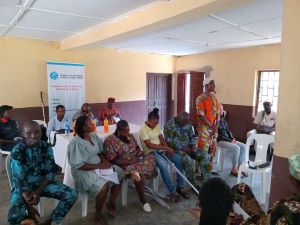
The theme of the event “Ogun State Disability law review, a conversation on way forward” brought together several actors and stakeholders within the disability inclusion ecosystem in the state. All the cluster leaders within the state were fully represented in the event as they shared woes after woes of stigmatization, exclusion, stereotypes, abuses of many kinds.
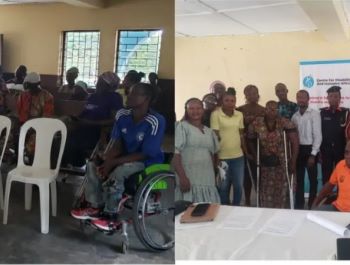
Cluster leaders during Panel/Sharing session
The event has a keynote address which examines the present law and the challenges it possesses to inclusion in this age. The welcome address was done by the state chairman of Joint Associations of Persons with Disabilities in the state, Dr Michael Elobor, who believed “The continuous neglect of PWDs in the state needs urgent attention.
The keynote Speaker, Yinka Olaito, who is the Executive Director of the centre, pointed out some gaps in the 2017 Ogun state disability law.
The lacuna includes the ambiguity, vagueness and unenforceable quality of the 2017 Ogun State Disability Law on housing, employment, health Provision, education, Transportation and inclusive procurement.
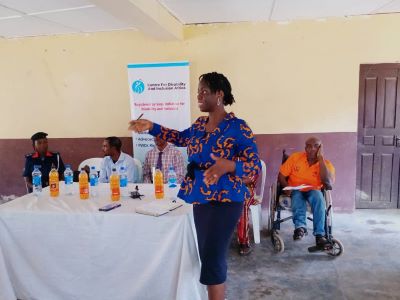
A represntative of cluster lead for Intellectual disabilities clsuster (Mrs. Abiodun) Sharing level of neglect for the clsuter
Cluster
The law showed the ignorance of the lawmaker as there was no proper categorization of disabilities and impairments(Clusters). The intellectual disability and challenges of people with albinism.
Disability Agency
The law made no mention of any agency. Though a subtle mention of çommission’ without real definition was included. In many instances, the Ministry of Women Affairs and Social Development is saddled with an oversight function of a possible trust fund to be created for Persons with Disabilities in the state.
Punitive measure and affirmative actions
The law was not explicit on clear process of getting justice
Punishment in some cases were in some cases too light or too harsh.
After Yinka Olaito’s speech, representatives of each cluster heads: Albinism, National Association of the Blind, Deaf, Intellectual Disabilities, Dwarf, Physical impaired, Persons with Leprosy shared experiences.
Ope, a PIDD believes making Sign Language compulsory can help in bridging the gaps
Recommendation
He proposed the establishment of special courts that can speed up investigation, prosecute violators of the provision.
Nigeria Local Disability Inclusion Policy
This policy will push for accountability of disability and Inclusion matters in local Government Governance.
Barriers and Challenges
Each cluster began to identify peculiar challenges and barriers in their cluster.
blind: unemployment, lack of braille, inaccessible transportation, insufficient school for the blind.
Persons with Albinism: stigmatization and lack of skin care creams
Persons with Leprosy: Stigmatization reinforced by cultural myths and stereotypes, lack of treatment.
Physical Disability: expensive transportation, extra cost for wheelchair, expensive medical care as a result of bedsore, difficulty in attending school due to inaccessible school building and discrimination of student with disability, difficulty in getting accessible houses as landlord reject persons with physical disabilities, Females suffer rape and sexual violence, health facility and rebuilding in accessible.
Centre’s program officer, Busola
Intellectual Disability Cluster: Lack of awareness about intellectual disability, expensive healthcare due to lack of health insurance and unavailability of trained health workers due to migration, unemployment, Job loss due to care for children with intellectual disability, Lack of specialized school for children with intellectual disability in ogun State.
Deaf Cluster: Communication barrier and lack of interpreter at the hospital, lack of teachers, discrimination during employment processes.
Political Exclusion: PwDs are excluded from standing as political aspirants
The event held at Justice Fati Lami Recreation Centre for the Disabled, Oke- Ilewo Abeokuta Ogun state
On Saturday December 7, 2024. Our executive director was invited by a group of young journalists who were going through a six-month fellowship put together by the Liberalist centre with the aim of empowering the fellows on how to cover issues around liberty and freedom across the Continent. The topic he addressed was: “Inclusivity and marginalization in Africa, way forward for an inclusive society”,
Below are highlights of his presentation.
Way Forward? To where
To move forward, it is essential to know where we are coming from and where we are going. So an assessment of present reality will help us to know where we are going and tools we need to get there.
According to Yinka Olaito “The available evidence indicates wide gaps persist and the level of equalities continue to be so wide between the ‘have and have nots’. The global north is managing the gap while poverty still persists in the global south””
To assess the marginalization gap, we must take a critical look at these three ways
1.Poverty- Which is beyond money in the pocket but more of a social oppression. This also has three levers that strengthens i:
a quality of education.
B health.
C housing
Then the second place to look when you think of marginalization is:
3; Institutional injustice: structures that creates barriers in opportunities and resources: gender pay gap (why are we doing same thing but there is different pay and also justice for the common man: police
To address marginalization and build inclusive society, Yinka Olaito suggested few ways forward where media/journalists can help:
I -Readiness to dismantle systemic barriers and cultivating a society that values the dignity and equality of every individual, irrespective of their background.
Ii -Calling and demanding for policies that foster inclusion
Iii -Following up to ensure implementation
Iv -Holding accountable those who fail
V- we must praise efforts
vi- Know your angle: Do not be jack of all trade. Focus on a sector
vii- Media must help speed up conversation and collaborative efforts
Final thought
Without an inclusive society that allows maximum utilization of each sector’s voices or capacities, our world cannot enjoy even development
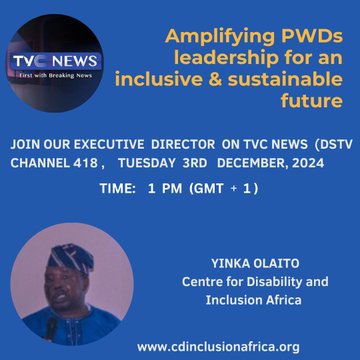
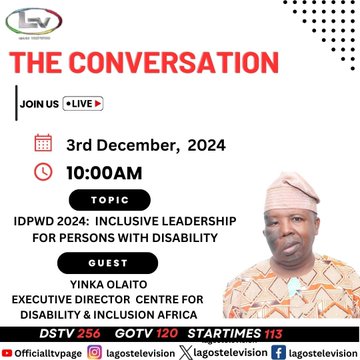
On International Day of Persons with Disabilities 2024, Our Executive Director annexed the power of several media platforms (traditional and Online) to amplify the message of the year’s theme. He had discussions, interviews on two prominent Television stations and two Radio stations that transmit several waves/frequency. His message across the platforms centre on:
–
Challenges with why Persons with Disabilities on how living independently may be impossible for now
There is an urgent need to address this as we know:
-Six years away from the deadline for achieving the Sustainable Development Goals (SDGs), the Disability and Development Report 2024 indicates that persons with disabilities are often being left behind.
-6 years after DAPDA Acts. We are still far away
Remarkable progress in making laws, mandating equal access to education, monitoring of bilateral aid dedicated to disability inclusion.
UN Disability and reporting 2024 Report affirmed where we are: 30% insufficient progress in SDGs. 14% we missed the point,
To combat the challenges, he offered few solutions
-Self-awareness of persons with disability is very low. This is a product negative, stereotypical attitude of people
-low or zero education
-in accessible environment and technology
-inefficient Policy implementation
–On implementation and shortcomings of discrimination Against Persons with Disabilities Act (DAPDA) 2018
Lack of implementation- most building still not accessible, failure to comply with health insurance, education, transportation demands
Intellectual disabilities cluster is technically not covered
No commensurate punishment
Agency 0NCPWD) not properly funded to be effective
Way forward and possible solution to Disability law implementation
Build collaborative funnel that will make it work
-lead by example in inclusion activities
-Ensure laws are properly implemented
-Empower stakeholders
-Private organization should get involve inclusive and sustainable inclusion principles
There are several factors which can identify an ableist or an ableist organizations. Some are actually promoting this without knowing. Listen to this broadcast to know
There is no gainsaying that over a billion population counts. The capacity of this population is immeasurable as we have the best of creative geniuses among them. Unfortunately, the global south that has the majority of this population continues to be indifferent about their total integration into the society.
While it is on record that governments, political leaders in the global south had signed different charters created to protect the rights of persons with disabilities. In addition, some also have state and national laws documented to ensure inclusion of this population. But the general outlook does not show much has been accomplished in proper integration of the population. Charity model, continues to be the very notable model that is being applied at the detriment of human rights model that can speed up efforts.
As a concerned organization, we are continuously in the forefront of stepping up conversation around disability and inclusion issues. We do know, the dream of achieving an inclusive society in the global south may take a long while, that is why we refused to give up, we have developed collaborative efforts with other stakeholders across the continent that are yielding fruit so we can move faster.
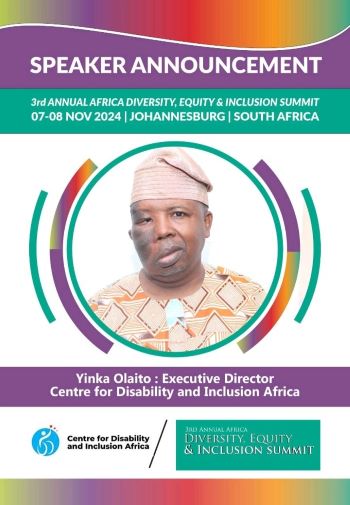
African Diversity, Equity and Inclusion conference is a yearly event put together by African Insights to raise conversation around disability and inclusion matters in Africa. Our Executive director, again this year joined other speakers in Johannesburg South Africa between November 7-8, 2024.
Yinka Olaito spoke on the topic “Role of policy, leadership in ensuring a disability inclusive society”. Yinka Olaito began by acknowledging the fact that some African countries are truly making efforts just that those efforts are at snail speed which does not run at the present reality the society demands. Yinka said “it is critical to incorporate disability inclusion policies and strategies in all spheres of the society for sustainable and inclusive socio-economic development”.
But to achieve this, there is a constant need for leaders, and leadership to make sure there is enough will to scale through all the processes that can make that work. In terms of leaders., parents and close family must show good leadership in the way they care and talk to persons with disabilities. They need to build confidence in them from home. An impaired person needs love and like every other person, they thrive in an atmosphere of love.
Apart from home front leadership needs, policy makers, governments at various levels need to be courageous in challenging stereotypes, myths as well as follow through the demands of all the laws and protocol that will be mutually beneficial leading to an inclusive society all can be proud of.
The absence of the above has shown in the level of mammoth challenges persons with disabilities face in our society.
True leaders should not be afraid of failure as they may not get it right once. A strong passion for learning, unlearning and relearning what works along the line will guarantee a better society we all desired.
From home, work places, schools, health and legislative environments, conscientious efforts must be made if we must all enjoy the benefits of a sustainable and inclusive development in our societies.
Right policies that will give access to equal economic opportunities and resources need leaders who are focused and determined to bring changes. Yinka said “We all know that statistics out there have shown that society gets better when it fully maximizes the potential of everyone, the disabled communities have the best of creative and innovative individuals with sound opportunities to make the changes we desire. I n his final remark, Yinka Olaito challenged everyone who has a voice to continuously speak up for a disability-friendly environment
Society does not benefit, but is thrown into darkness if the media only amplifies the stereotypes. When Journalists do their job, the society is better off. But when Journalists exemplify ignorance, the society will suffer. Hence there is a need for journalists and broadcasters to constantly upskill their knowledge.
“Journalists have a role as purveyor of the truth. A society without journalists will wallow in darkness and people will be uninformed. To ensure a society free of biases, knowledge should unearth every form of stereotypes and ensure only the truth is communicated”.
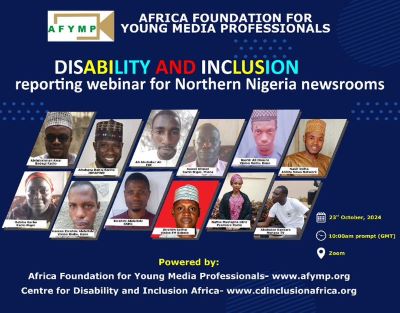
Above and many others were the thoughts shared by Africa Foundation for Young media professionals as well as Centre for Disability and Inclusion Africa’s executive director in a webinar jointly organization for selected newsrooms from Northern Nigeria tagged “Disability and Inclusion reporting for Northern Newsrooms”.
The Journey into the joint hosting of the webinar began when a request was sent by one of the training participants sent a mail to the two organizations g=having followed the passion and leading role the two organizations had been playing in ensuring journalists/broadcasters become better informed in this area of journalism.
Prior to now the common observation in many situations had been misunderstanding as well as lack of appropriate knowledge in many of the newsrooms involved. The impact of this is shown in the coverage of the issue. Many of the reports read had a way of reinforcing stereotypes on Language use in the reports showed no level of professionalism on the part of the reporters.
In her opening remark, Busola Oladotun, the program officer of the organization charged the participants to pay close attention to the information they were about to be exposed to as it has capacity to make the difference in their reportage.
Taking the participants through the process of “Why disability and inclusion reporting?” Yinka Olaito explained some of the reasons why many journalists did not pay attention to this important aspect of journalism. To Yinka Olaito “Up till date many journalists continue to assume the number of persons with disabilities are insignificant which does not require any close attention”.
With facts and figures, Yinka explained the negative effect of overlooking inclusion in a society and charged the participants to understand a need to be deliberate so as not to strengthen stereotype or misinformation about disability and inclusion. “Journalists must prioritise knowledge so as to combat every form of stereotypes among other issues” Yinka encouraged.
Participants expressed their gratitude during the feedback session. “This is the first time; I am exposed to this kind of the knowledge” One of the participants said. Another participant who was worried about some newsrooms which refused to be inclusive and will not hire a trained journalist with disabilities wanted to know what legal action should be taken?
In his reply, Yinka Olaito said, why that may sound discriminatory, newsroom leadership must be given enough time as many of them may still be clueless about the issue. A conversation must be stepped up, which one of the duties Africa Foundation for Young Media Professionals as well as Centre for Disability and Inclusion Africa continue to advocate for.
Towards summit of the future summit in New York, knowing we would not be able to attend, Our Executive Director made a clarion call on the world leaders: starting from United Nations Secretary –General Antonio Guterres and other national leaders who would be attending to pay critical attention to issue of Disability and inclusion.
Having gone through the agenda and we saw far reaching decisions were to be made on several issues, our call was focused on disability and inclusion. On Sunday September 22, 2024, a declaration and pact, 66-page document was released. Some of the decisions, commitments that have significant value for disability and inclusion are highlighted below. This we believe if executed will ensure a future for all
The need for full and equal participation of persons with disabilities in all aspects of life, from decision-making processes to the workplace.
-A strong commitment to making digital technologies accessible and affordable for everyone. If executed it will ensure no one is left behind in the digital age.
-A decision was made to increase investments in assistive technologies, empowerment of people with disabilities and a commitment to ensure they thrive independently in the society.
-There is a commitment to have a special focus on youth with disabilities, continually equip them with the tools, resources, and opportunities which can lead to a fulfilled life for them.
The message is clear: inclusion and accessibility are not optional—they are essential for a sustainable, equitable future.
Reading through the pages, we are glad to see the whole world moving towards a future where everyone has a voice, and no one is left behind. We do hope these will move from paper documents into action. Cheers to the disability and inclusion community. But at the national and local levels, we all have a duty to put pressures on every actor to accelerate action towards realizations of commitment made,
Persons with disabilities in Nigeria and especially, women with disabilities face a lot of social and institutional challenges. While Nigeria had signed various international charters of rights of persons with disabilities and had actually enacted Discrimination Against Persons with Disabilities Acts 2018 with over 75% of its state governments enacted disability laws within the states, nothing much had changed.
A major problem facing implementation of the laws is the absence of data. While efforts are being made by various stakeholders to ensure accurate data are made available for planning, the speed of this is still snail-speed.
Many women with disabilities continue to suffer untold hardship when it comes to proper planning and assessing sexual reproductive health needs. Governments at every level seem to be missing the mark when it comes to inclusive health, a major part of a sustainable and inclusive society.
More than ever before, if Nigeria will meet the global demand of an inclusive and sustainable society, there is an urgent need for more publicity, awareness creation, sensitization, lobbying and full implementation of the national and state disability laws as well as their full domestication. To push for this, our ED, Yinka Olaito was on Wave FM 91.7 Portharcourt Nigeria on Wednesday July 31, 2024 during the Radio’s news segment from 6am, 12noon and 5pm
Here are some of things he emphasized
#Disabilitydata#Inclusion#Womenwithdisabilities#Sexualreproductivehealth The absence of credible and reliable data is a source of worry for persons with disabilities, (PWDs), in Nigeria.
In an interview on #Wave91.7fm Portharcourt as, the Executive Director of Centre for Disability and Inclusion Africa, I emphasized that the lack of data worsens hardships for individuals with disabilities in the country.
2. He urged proper data collection and documentation of persons with disabilities to plan and support inclusive development.
3-He also urged stakeholders involved in sustainable development to prioritize inclusivity by completely addressing the needs of individuals with disabilities.
4. He stressed that policymakers remain unaware of how to effectively plan and implement inclusive smart cities, worsening the challenges faced by PWDs, especially women with disabilities