Digital Apartheid: Nigeria’s Visually-Impaired Left Behind
When registered nurse Uche Olivia Moujekwu was denied exam accommodations at the Federal Neuropsychiatric School in Enugu, her story exploded across Nigerian social media. #JusticeforUcheOlivia trended. News outlets covered it. Disability advocates mobilised.
But when Esther lost a scholarship because an inaccessible website forced her to ask for help, and that helper made a mistake, nobody knew. No hashtag. No outrage. No justice.
This is the difference between visible and invisible exclusion. Physical barriers can be filmed, shared, and spark movements while digital barriers, the ones that lock 1.3 million blind Nigerians out of websites every single day, happen in silence.
The data showed that 73 strategic Nigerian websites fail blind users, revealing systematic exclusion across government, media, and civil society. But numbers alone cannot convey what it means to live within this digital darkness, to wake up each morning knowing that the platforms structuring modern life were built without you in mind.
These are the voices of four visually-impaired Nigerians, a business owner, a disability rights advocate, a young professional, and a counsellor-entrepreneur, who navigate a digital world that refuses to see them.
The Email She Never Knew: Philomina’s JAMB Ordeal
Ukwueze Ifeanyi Philomina is a counsellor and entrepreneur who has been technically blind for most of her life. Her JAMB experience isn’t just frustrating it’s proof that bad design can quietly wreck a blind person’s future. “When I wrote JAMB, they asked for an email. I tried to do it myself,” she says. “But TalkBack doesn’t read everything.”
Key fields showed up as blank “edit boxes.” Navigation was invisible. The system didn’t just fail her it shut her out. After hours of trying, she did what many visually-impaired Nigerians are forced to do: she handed over control. “The person helping me used his own email,” she recalls. “It felt like a quick fix. It seemed fine.” It wasn’t. She got her result. She gained admission. Life moved on until graduation. “We checked the JAMB matriculation list. My name wasn’t there. I was shocked.”
Her entire academic record was tied to someone else’s email. That person was gone. So was access. “He gave me three different emails. None worked. I was locked out. Completely.”
A shortcut forced by inaccessible design came back years later—nearly costing her graduation. This wasn’t about performance. It was about design failure. The system forced dependency. Dependency created risk. And that risk almost erased her progress. To fix it, Philomina had to physically visit a JAMB office multiple times. What others do in minutes on a phone took days of stress, explanations, and bureaucracy.
And the pattern doesn’t end there.
On the NIMC platform, helpers misspelled her name. On recruitment portals, her screen reader pushed her forward only for the system to reset and wipe everything. Same story. Every time: Inaccessible design to Forced dependency to Systemic vulnerability and Real loss. Philomina’s story isn’t rare. It’s the system working exactly as designed.
The Scholarship Lost to a Wrong Date: Esther’s Story
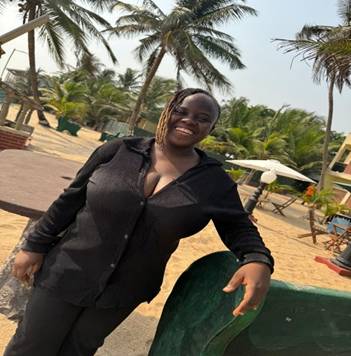
Adams Esther
. Esther has been visually impaired for 21 years. In the last six years, she’s built and sustained her own wristwatch business independent, capable, thriving. But her encounter with the NCDMB Foundation scholarship reveals a brutal reality: inaccessible design doesn’t just frustrate—it disqualifies. “When I was in 200 level, I qualified for the scholarship,” she says. “I tried to fill the form myself. But I couldn’t. I had to give it to someone else.” The portal was a dead end unlabeled fields, broken date pickers, screen reader chaos. Independence wasn’t possible.
So she trusted someone. “Unknown to me, the person entered a wrong date,” she says. “Imagine. They told me I was qualified, but there were errors and I lost it.” One wrong date. One invisible mistake. One opportunity gone not because she failed, but because the system did. Today, Esther depends on sighted help for over half her digital life banking, shopping, applications handing over her phone, her passwords, her privacy.
“It makes me feel like my dignity is reduced,” she says. “I want to live like everyone else. But giving people my phone—it feels like my privacy is constantly invaded.”
Then it happened again. She prepared everything for a grant—essay ready, documents complete. But the upload button wouldn’t work with VoiceOver. Again, she had to hand over control. “The person submitted it without my consent,” she says. “I didn’t even get to review it.” Her application went out unfinished. Not because she couldn’t do it—but because the system wouldn’t let her. This is what inaccessible design does: it doesn’t just exclude—it erases.
“Create With Us, Not For Us”: Oluwakemi’s Call to Action
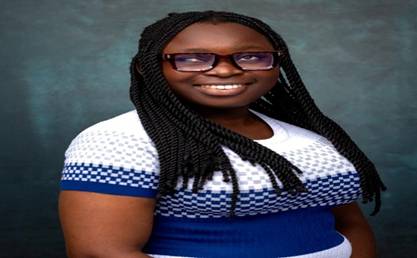
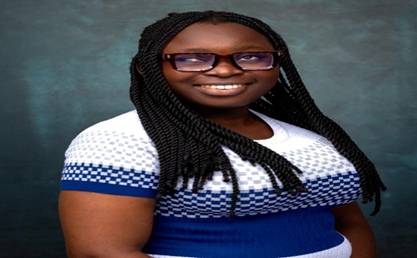
Oluwakemi Odusanya
Oluwakemi Odusanya has lived with visual impairment for 20 years. She’s a disability inclusion advocate. A broadcast professional. A voice for participation. Yet a government portal (INEC) had erased her vote. In 2022, she tried to get a new PVC. The INEC platform demanded face verification. “I tried… I could not do it.” That was it. No workaround. No alternative. No vote. “That’s why I did not participate in the last election.” A system built for citizens locked one out completely. The irony isn’t subtle. It’s systemic. The same exclusion follows her into everyday life.
Experience with PiggyVest
She downloads PiggyVest. It doesn’t just fail it vanishes. “It becomes silent. Not clickable. I had to delete it.” For others, it’s a savings app. For her, it’s nothing. The mobile app, where Nigeria actually lives shuts her out. Silence becomes denial.
Then her CIPM exam.
The CIPM test platform is another story? Inaccessible. The solution? A human reader had to be provided. The problem? The reader couldn’t read. “The person… cannot even pronounce the signs and symbols. “in this situation, she’s not just taking an exam, she had to simultaneously decode someone else’s confusion. The problem was compounded because she can’t use her own screen reader. This challenge might result to her answers being flagged as fraud. Invariably this isn’t just assessment but a major obstruction and by extension an exclusion.
Her fix is blunt: “Create with us. Not for us.” Accessibility isn’t expensive. Neglect is. “If you include us from the start, it’s easy. It’s when you remember us at the end that it becomes costly.”
The Zoom Incident
Esther forgets to mute during a class. Her dog starts barking. People shout: mute yourself. She can’t find the button. “I had to switch off my phone to leave.” What could have been a one-second tap for others became a full shutdown for her. That is a huge gap in the design.
Banking As Visually-Impaired is terror
Philomina opens a banking app. Silence. “The screen reader just stops talking.” As some of the apps features made it inactive. No voice. No access. No control. So she faces a choice: stay locked out or hand over her financial life. PINs. Balances. Transactions. “When it’s money, you only call someone you trust… otherwise, it’s risky.” Privacy becomes a privilege. Even when apps improve, they punish speed. OTP codes expire before she can navigate back. “Swipe, swipe… by the time you return, it says timed out.” Security works for some. For her, it blocks.
What Accessibility Actually Means?
Ask what they want, and the answers are simple. “Better productivity.” “Independence.” “Speed.” Not extras. Just basics. They already work. Build. Study. Contribute. But slower. Harder. Limited. Not by blindness, but by design. “We are getting things done,” Esther says, “but not as great as it should be.” For Philomina, it comes down to one thing: “You must finish what you start… or go find someone.” Accessibility changes that. It doesn’t just improve experience. It restores control.