
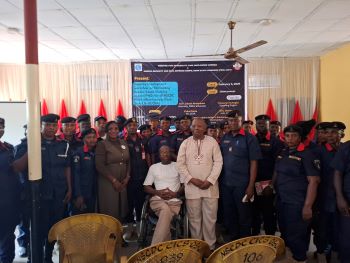
CDIA empowers 77 Nigeria Security and Civil Defence Corps PWDS Unit members
Centre for Disability and Inclusion Africa (CDIA) held a one-day capacity development workshop for Osun State Command of Nigerian Safety Civil Defense Corps (NSCDC) PWDs Unit officers on Eliminating gender based violence against Person with Disabilities (PWDs).
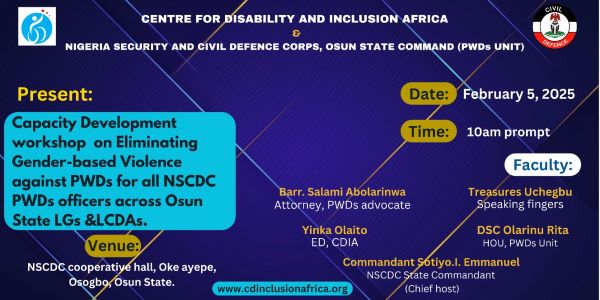
The training which took held on Wednesday, 5th of February at the NSCDC co-operative thrift Hall Oke-Ayepe, Osun state, had in attendance experts and advocates in the disability field as faculties such as, Yinka Olaito(E.D CDIA), Treasures Uchegbu and Barrister Salami Abolarinwa who joined via zoom.
While Opening the workshop, the representative of NSCDC state Commandant, Commandant Sotiyo I. Emmanuel appreciated the CDIA team for such a huge contribution to the state’s Officers. According to him “We honour such a huge sacrifice from CDIA as we are aware this is not funded but a commitment to make a change””. The Commandant then charged his officers to “Pay attention to the knowledge to be shared
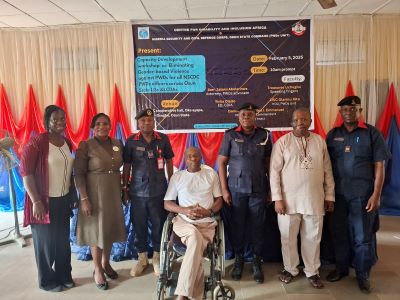
NSCDC Osun State Commandant representative, State head of training, state’s head of PWDs unit and CDIA team
The head of the PWDs Unit in the state’s Command DSC Rita Olarinu, also commended CDIA team for coming to Osogbo for the capacity Development workshop.
Yinka Olaito took the first session of the lecture titled “Strengthening Inclusive Society Through Disability Knowledge” Yinka Olaito explained the different types of disabilities and their categories. He also stated there are 7 recognized clusters of persons with disabilities in Nigeria namely; The physically challenged, Albino, Dwarf, Visually impaired, hearing impaired, Intellectually challenged and Speech impairment.
He also talked about the discrimination against PWDs and terms that should be used and not be used. For example, we should avoid the use of words like deaf and dumb or should call a Visually impaired person blind. Then as officers, when attending to PWDs, they should describe who they are as a person as well as a warm person
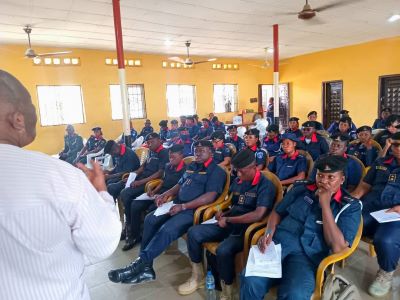
Cross section of some of the participating Officers
n his second lecture titled” Introduction to Gender Based Violence (GBV), Yinka olaito explained the different kinds of gender based violence where he listed psychological violence, physical violence, sexual violence amongst other. Also stating the causes of GBV such as poverty, conflict and crisis and so on.
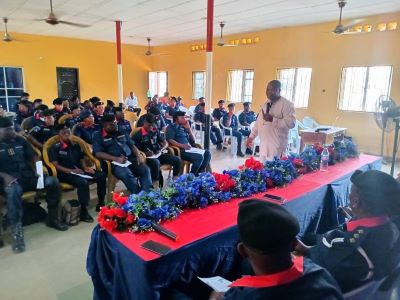
Yinka Olaito noted that Gender Based Violence is on the rise especially against PWDs but many cases are not reported because of getting justice. He charged officers to make sure people get justice whenever cases are reported and not shun them up. Because when the victims don’t get justice, it creates more room for oppression.
Treasures Uchegbu took the third session. The lecture was titled; Gender-Based Violence Against Person with Disabilities”” She made it clear during the lecture that women with disabilities are the major victims of GBV. From sexual harassment, forced marriage, Rape and psychological violence.
Treasures explained that when women/girls with disabilities encounter any of these forms of GBVs, many of them never get justice. When a person with disability reports a rape case, they get responses like ” you should thank God someone slept with you” and this makes them more vulnerable to their oppressors and also put the victim into depression. She highlighted that some women with disabilities are forced into marriages they do not want because their parents feel “they are doing them a favour.
Treasures stated during the lecture that PWDs have a mind and rights of their own and they shouldn’t be seen as lesser humans and their opinions should be respected.
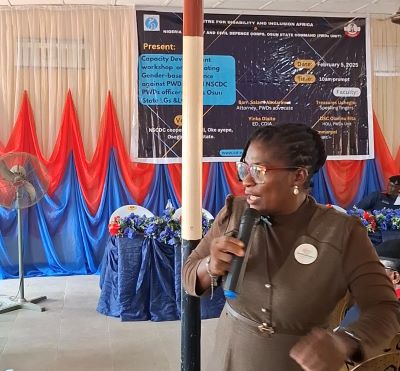
Treasures Uchegbu
At the end she urged officers to give attention to PWDs and communicate with them often. She also shared a sign language booklet to participants of the workshop.
Legal Framework and Best Practices for Promoting and Enforcing PWDs’ Rights session was taken virtually by Barr. Salami Abolarinwa. He shared extensively on the laws guiding the rights of PWDs and legal procedures around it.
Busola Oladotun, the project officer for CDIA explained the policies for PWDs
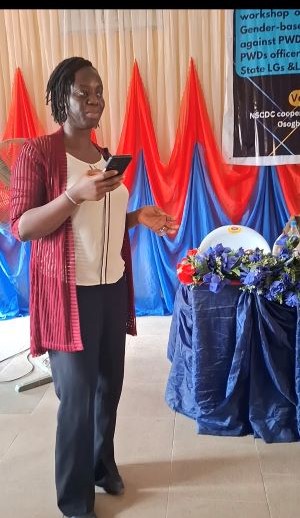
Busola Oladotun
During the questions and answers session, one of the participants asked that in a case where a Visually impaired person is the victim of GBV, how can we be sure he/she recognizes the oppressor? Yinka Olaito answered that most Visually impaired person’s uses their sense of smell to Identify people.
Closing the workshop, DSC. Olarinu Rita who is the Head of Unit for the PWDs desk NSCDC Osun State thanked the CDIA team for the eye opening workshop. She acknowledged that there were things she got to know for the first time through the workshop and she assured that officers are going to make sure they will be zero tolerance for Gender Based violence in each of their districts.
The 77 Officers who participated in the trade were selected from all the 33 Local Governments and LCDAs across Osun State.