International Sign Language Day 2025: Yinka Olaito Calls on Stakeholders to Move Beyond Legal Frameworks”

“While policy and legal framework are good, no one has moved faster with these two- leg approach. We have witnessed promulgation of several legal frameworks and policies, yet we have not seen the kind of speed we all anticipated. To move faster we need more than legal frameworks and policies, we need community involvement, engagement, input and continuous collaboration as well as commitment to make anything work”.
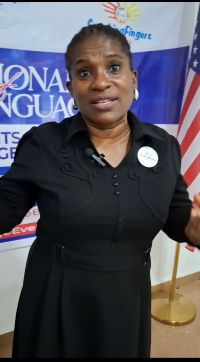
Treasures Uchegbu, ED, SpeakingFingers Network

Above and many other thoughts were shared by Yinka Olaito, Executive Director of the Centre for Disability and Inclusion Africa on International Sign Language Day 2025. Yinka Olaito emphasized the above at the event to commemorate International Sign Languages Day 2025 organized by United Nations Information Centre Nigeria in collaboration with SpeakingFingers Network led by Mrs Treasures Uchegbu in Lagos Nigeria on September 23, 2025.
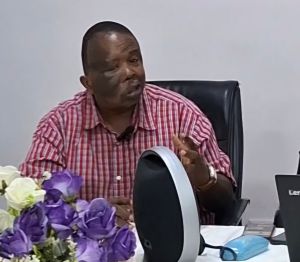
Yinka olaito speaking at the event

In her opening and welcome speech, the leader of United Nations Disability Strategy group, Mrs Wunmi Laolu Akande, of United Nations Populations Fund Disability and inclusion unit, emphasized the importance of the day and efforts of the United Nations group in Nigeria “As UN bodies, we prioritize and celebrate the uniqueness of the Sign language as a means of communication for the deaf hence a day is dedicated to celebrate this.” Beyond this, the importance of Sign language as human rights informed the theme for this year’s celebration “No Human Rights Without Sign Language Rights”

The Co-Convener, Mrs Treasures Uchegbu charged the audience to always show their intentionality about bridging the gap of communications so that no one is left behind. “As an individual, I began my journey into Deaf inclusion when I met a 21 year old lady, who is deaf and had HIV without support. From there we have helped shape several lives in the course of our journey”.

Beyond the greetings and goodwill messages from strategic stakeholders, a major part of the event is a panel session that brought experts within the ecosystem together to step up conversations on the theme of the day. The panel include Mrs Adenike oyetunde-Lawal, the General Manager of Lagos State office of Disability Affairs {LASODA)

In her presentation, Adenike believes “Government is doing its best to translate Sign language into official languages” Adenike also noted that we must also acknowledge it is “Sign languages’ with variant and therefore the onus lies on all of the stakeholders. In her conclusion Adenike believes “ Sign Language will soon become one of the official languages in Nigeria and that if she has all the power, such action will be stepped up”.

Another panelist, Mrs Ruth Adejumo, who has lived experience and  a mother of a child with hearing impairment charged government and the entire disability inclusion community to do more than lips service as many children with hearing impairment continued to be ostracized n without adequate provision for their needs in term of language and communication.

Beyond this Mrs Adejumo also charged parents of hearing impairment to be intentional about Sign language learning so they can be integrated into the family system and the society at large. “ We need more than tokenism to move faster, everyone must be involved.
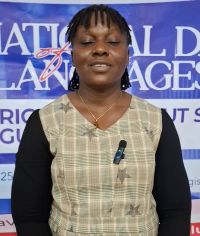
Adesuwa oyerinde

Other dignitaries at the event include Mrs Adesua Oyerinde, head of Sign language unity of Daystar Christian Centre, President of Association of Sign Language interpreters of Nigeria, Lagos State chapter- Mr Sodeinde olubowale among others
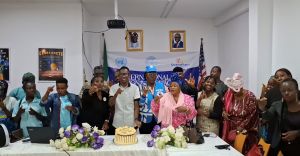
Some of the participants at the vent

The international Sign language event was organized in hybrid format so that participants can join across the nation as well as to accommodate the United Nations System participant 
READ MORE

CDIA launches DEI-HUB

The Centre for Disability and Inclusion Africa with is overarching goal  to build or create  an inclusive African society where persons with disabilities fully enjoy their inherent rights, participate equitably in civic life, and are represented fairly in media and public policies has launched a new service for the Disability and inclusion ecosystem called DEI-HUB. The Centre for Disability and Inclusion Africa has been recently named Africa leading Disability Inclusion Nonprofit

DEIHUB is set to be a leading Africa-based Diversity, Equity, and Inclusion (DEI) advisory and consulting service unit aimed at  helping organizations build inclusive workplaces that drive innovation and growth. DEIHUB will  blend global best practices with deep African insights to deliver tailored training, strategic advisory, and culture transformation programs. DEIHUB is simple: to unlock Africa’s full potential by turning diversity into a competitive advantage for individuals and organizations across the continent.

The executive Director of the centre, Yinka Olaito while announcing this project said “It is our delight to help build structure and systems for individuals and forward looking organization which prioritizes diversity, equity and inclusion but lack the technicality of making such work”. Yinka Olaito while sharing also made the it clear that “Disability Inclusion is a core development issue no one wants to overlook as it effects can be highly detrimental.

DEIHUB is poised to offer the following helps to organizations across Nigeria and the continent.       Strategic DEI Advisory, it will do this by offering guide  to leadership teams to embed diversity and equity into their core strategies.   Tailored Training Programs: From unconscious bias to inclusive leadership, our sessions are designed to shift mindsets and behaviors.

DEIHUB will also offer Organizational Culture Transformation. Through this it will help organizations create inclusive systems, policies, and cultures that drive innovation and sustainable growth.

The uniqueness of this project under Centre for Disability and Inclusion Africa is that it offers only African Context, Global Standards, evidence-Based Approach as well impact-Driven, measurable and transformative change and sustainable inclusion

culled from NigeriagrAssrootnews,com

READ MORE
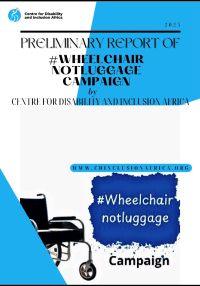
#WheekchairNotLuggage

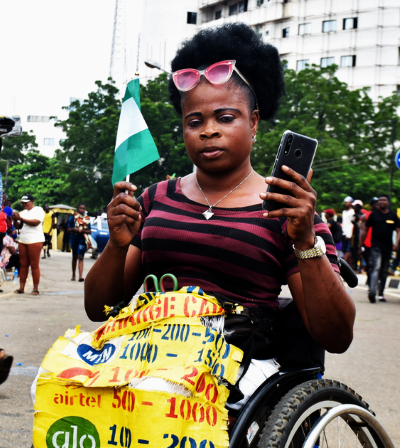
CDIA launches preliminary report on #WheelchairnotLuggagecampaign

As part of its commitment to protect rights abuses of persons with disabilities in Nigeria, with a special focus on physical-mobility cluster who are wheelchair users, The Centre for Disability and Inclusion Africa had officially launched its preliminary on its national campaign launched in January 2025 tagged #Wheelchairnotluggage.

As our community will recall the major essence of the campaign is he campaign seeks to confront ongoing human rights abuses experienced by individuals with mobility challenges, particularly those using wheelchairs. Core Issues Addressed CDIA highlights widespread discriminatory practices in Nigeria’s transport sector, including: Refusals to transport wheelchair users. Inhumane treatment by transport personnel. Extra fees charged for wheelchairs, as though they were baggage.

The legal foundation of the campaign was centered around The campaign anchors itself in Nigeria’s Discrimination Against Persons with Disabilities (Prohibition) Act, 2018, which clearly prohibits such discrimination CDIA’s Executive Director, Yinka Olaito, emphasized: “A wheelchair is a personal mobility aid, not luggage… Refusing to transport someone with a wheelchair or treating it as excess baggage is a violation of their rights, and offenders may face criminal charges.”

While the campaign is still ongoing, you may want to read present key outcomes as well as future outlook of the campaign in this link. Besides, we still ask that you support the campaign next action steps/activities

READ MORE
Diversity, Equity and Inclusion strategy

DEI? How strategic are you?

The global challenges around Diversity, Equity and Inclusion(DEI) may seem strong because of the position of USA on the issue. The truth is DEI remains the best choice if we must not leave close to 2 billion individuals behind. Truly, the ecosystem is not perfect but how many systems in our world are?

The problem lies in how inclusion is often performed. Many institutions showcase token gestures: a one-day awareness event, a picture of a wheelchair user on a brochure, or a social media campaign during commemorative days.

These efforts may win applause, but they rarely dismantle the barriers that matter: physical, digital, economic, and attitudinal. Real disability inclusion is not cosmetic. It is structural. It means accessible buildings, equitable hiring practices, adaptive technology in classrooms and workplaces, and policies that place persons with disabilities at the center of development, not at the margins.

And let’s be clear: inclusion is not charity. It is justice. Persons with disabilities are not asking for sympathy; they are demanding fairness. They bring skills, perspectives, and creativity that enrich societies and economies.

Research shows that companies that employ and support persons with disabilities are more innovative, productive, and resilient. Inclusion is not just the right thing to do. it’s the smart thing to do.

When disability is treated as a “special” issue or a trendy hashtag, we trivialize decades of advocacy and struggle. Persons with disabilities have fought for recognition, legal protection, and dignity.

To reduce their struggle to a fad is insulting. The real test of a just society is not how it treats its most privileged citizens, but how it ensures equity for those most excluded.

This is why leaders in business, government, and civil society must stop seeing disability inclusion as optional. It is not an afterthought. It is not a nice-to-have. It is a non-negotiable. Every ramp built, every policy enforced, every inclusive curriculum adopted, and every barrier removed is a step toward justice long overdue.

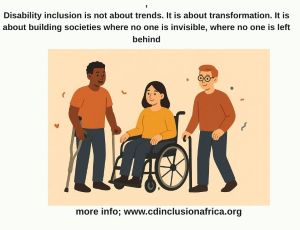
Disability inclusion is not about trends. It is about transformation. It is about building societies where no one is invisible, where no one is left behind. The question is simple: will we continue treating inclusion as fashion or will we finally make it our foundation?

READ MORE
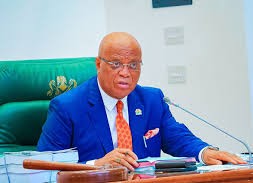
Akwa Ibom State governor promoting Disability Inclusion

Disability Inclusion promotion cannot succeed except…

Promoting Disability inclusion must be preceded with intentionality and goal.Championing inclusion means more than acknowledging diversity. it requires actively building a fair and equitable environment where every individual feels valued, supported, and empowered to contribute fully. This commitment is demonstrated through intentional actions such as challenging biases, raising awareness, setting clear DEI goals, promoting diverse representation, offering mentorship opportunities, and ensuring accessible systems and practices.

When organizations champion inclusion, they not only foster higher employee engagement and stronger performance, but also unlock greater creativity, drive innovation, and contribute to a more equitable society by attracting and retaining diverse talent.

Strategies for leading inclusion crusade

Championing inclusion rests on several core principles. The first is advocacy, which involves actively promoting the value of diversity, equity, and inclusion (DEI) in both policies and practices. Equally important is awareness and education, where individuals and organizations commit to building awareness about the importance of inclusion and educating others on the many dimensions of diversity.

Another principle is fostering a culture of belonging creating environments where everyone feels safe, respected, and encouraged to share their unique perspectives and experiences. Finally, it is essential to emphasize equity over equality, ensuring that opportunities and outcomes are fair. This approach recognizes that people may require different forms of support to succeed.

What others can learn and do about championing Inclusion To champion inclusion effectively, individuals and organizations must translate principles into action. To start with, individuals must learn to challenge biases when you noticed discriminatory behavior, be bold to question long-held assumptions about diversity. This may be impossible if an individual does not have a balanced and diverse perspectives of what diversity really means. It takes a mind that actively solicit and embrace different viewpoints that can enrich decision-making. Read full story here

READ MORE
Inclusion demands

Shamed, silenced and Denied: PWD Women Struggle for Dignity in Healthcare

Statistics have shown about 18 million out of 35 million persons with Disabilities are women. This number is huge but the daily challenges and discrimination faced by these women are varied. Several abuses and indignity against them are perpetrated and covered up.

A unique need and rights of every woman is health care irrespective of their body structure and class. Unfortunately, Nigerian Women with disabilities like every other country in Africa continue to suffer untold indignity and prejudices when it comes to health care service. The healthcare system is filled with shame, discrimination. Many are left behind, unseen and unheard as they daily struggle to access health care.

This is a pathetic story that needs urgent attention. Read full story here as they are crying out for attention

READ MORE

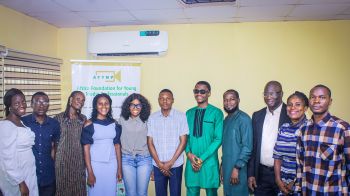
CDIA hosts Disability and Inclusion reporting Media fellowship

For disability inclusion issues to be mainstreamed properly and shared effectively with every stakeholder, the media, especially the Journalism industry must play a major role in ensuring right information that shatters stereotypes, wrong beliefs, biases, prejudices etc are daily addressed so the public can be informed. 

As an organization, we had noticed a perceived knowledge gap in this area hence the need to organize this yearly fellowship with the Professionals, a pan Africa media industry skills development nonprofit recently named as 2025 Leading pioneers in media industry Development in Africa, has become imperative.

This yearly media fellowship has been running for four years consecutively and it is jointly organized for early and mid -level journalists, broadcasters selected from various newsrooms across Africa.

This year selected only 16 participants who are broadcasters, print and online journalists from various newsrooms across Africa. The outcome and excitement were palpable among the delegates as they leave the initial intensive one day workshop that usually kickstart the 3-4 months fellowships where participants go through training, virtual mentoring and story publishing sessions

One of the participants, Wahab Hussain said ” I have attended several trainings in the past but sincerely speaking, this is one oi the best… this is not just a workshop, but a reminder or further information on what we had known. This is is an entire world that is very concerning…. no one should be left behind, very unique” Hannah Omokafe said “it is an honoured to be part of this” Salmon Rukaya Eniola said ” i walked into the training thinking I had good understanding of disability, I walked out with a broader , deeper and a more humans len,s understanding that inclusion is not about ticking the box or a pith party”

READ MORE
CDIA Impact Story

CDIA named Disability Inclusion NPO of the year in Africa for 2025

The Centre for disability and Inclusion Africa has been named  leading Disability Inclusion Nonprofit in  Africa for 2025

Iin a press release by the global organization behind the award- Acquisition International, United kingdom, the organization congratulates all the organizations that made up its 2025 winner lists after a rigorous process

According to the award coordinator, Melissa Bremall, Acquisition International’s winners are each deserving winners of their recognition. Melissa Bramall commented on the success of this unsung heroes as they are featured in the prestigious Non-Profit Awards winners list and publication. Melissa shared: “We’re proud to recognise those who play a part in improving this world and the lives of our fellow beings. It’s such an honour to celebrate their successes and learn from their stories. Congratulations again.”

The executive Director of the centre, Yinka Olaito, believes that the organization behind this keenly contested and global award is sincere and goal oriented in its mission. This 2025 is the fifth edition of a keen, open and very thorough process in making decisions with regards to  its selection of the finalists drawn from hundreds of thousands of nonprofits across the globe every year.

On what this award means to the center for Disability and Inclusion Africa, Yinka affirmed “This is an affirmation of the center’s activities and commitment to see Africa continent becoming totally inclusive as well as a sustainable development driven continent”

The organization will continue to be dogged in its drive to be goal driven with the support of its stakeholders. Yinka Olaito then used the occasion to ask the disability inclusion ecosystem to remain resolute despite global budget cuts and withdrawal if we hope to sustain the changes already made. “No one says this is going to be easy, those who still believe in an inclusive society must be more determined by hanging in there” Yinka Olaito said

About The Award

Acquisition International is excited to announce the return of the Non-Profit Organisation Awards in 2025 for a fifth consecutive year!

This prestigious programme is designed to honour and celebrate the exceptional work carried out by non-profit organisations worldwide. From local grassroots charities to large international foundations, these awards shine a spotlight on those who dedicate themselves to improving lives, fostering positive change, and advancing social good.

With a dynamic and ever-evolving global landscape, the non-profit sector continues to play a vital role in addressing pressing issues, such as poverty alleviation, healthcare access, education, and environmental conservation.

The global non-profit industry is vast, with more than 10 million organisations operating across various categories, including humanitarian aid, environmental advocacy, cultural promotion, health services, education, and social welfare. In recent years, the sector has experienced significant growth, driven by rising awareness of social issues, increased funding opportunities, and technological advancements.

According to the Nonprofit Finance Fund, 75% of non-profits have reported increased demand for their services, reflecting their growing importance in modern society. The global charitable giving market alone is projected to exceed $500 billion by 2026, underscoring the sector’s expanding reach and influence. Looking ahead, the non-profit sector is poised for further growth, with key trends shaping its future. 

READ MORE
Disability and Entrepreneurship

Perspective on Business Ownership for Entrepreneurs with Disabilities

Stepping into the world of entrepreneurship is a thrilling leap, but for people with disabilities, it’s often layered with both promise and pressure. The challenges of navigating a world that isn’t always built with accessibility in mind can make business ownership feel like an uphill climb. Yet, for those ready to shape their own path, the rewards are often deeply personal and culturally resonant. Building something from the ground up as a disabled entrepreneur isn’t just about income—it’s about autonomy, identity, and refusing to be boxed in by other people’s limited perceptions.

Let Passion, Not Permission, Lead the Way

Too often, disabled individuals are steered into roles or jobs that others think are “suitable” rather than fulfilling. Starting a business is a declaration that passion matters more than permission. Whether it’s a love for design, food, writing, or tech, a business rooted in genuine interest is far more likely to succeed. When that passion is allowed to breathe without outside limitations, it becomes a force that can sustain momentum during slow months and tough moments.

Design the Business Around Your Life—Not the Other Way Around

One of the most overlooked advantages of owning a business as a person with a disability is the ability to create a structure that respects personal needs. That might mean building a flexible schedule, choosing remote-first operations, or shaping a physical workspace that actually works. Rather than fitting into a pre-made mold, the business can be shaped to honor the body, energy levels, and rhythms that already exist. This approach isn’t about compromise—it’s about honoring reality while still pushing for ambition.

Build with a Brand in mind

Before a single product is sold or a service offered, the logo speaks for the business—and it needs to speak clearly. A strong, well-crafted logo acts as a visual handshake, instantly communicating the brand’s tone, values, and style. It sticks in people’s minds, builds familiarity over time, and helps carve out a recognizable identity in crowded markets. Using a free logo creator can streamline the process, offering polished templates and the ability to tweak fonts and colors until the logo truly reflects the business’s unique vision.

Avoid Building in Isolation

Even the most driven entrepreneur can hit a wall without a support system. For disabled business owners, isolation can happen fast—especially when networking events, workshops, or industry meetups aren’t built for everyone. That’s why it helps to tap into disability-focused entrepreneur networks, mentorship circles, or even social media communities that understand the stakes. These aren’t just places to vent; they’re spaces where strategies are shared, wins are celebrated, and setbacks are met with practical advice.

Don’t Fall for the Trap of Overcomplication

There’s a temptation to feel like everything must be perfect or sophisticated right out the gate—especially when societal expectations are already low or biased. But starting small, staying lean, and iterating based on what works is usually the smarter play. The truth is, businesses rarely succeed because they launched with polish; they succeed because they solved a problem well and adjusted when needed. Clarity beats complexity, especially in the early days when energy is limited and every task feels heavier.

Celebrate Creative Workarounds as Strengths, Not Shortcuts

In disability culture, innovation is survival. That same resourcefulness translates seamlessly into business when it’s recognized as a strength rather than a side effect. Finding alternative ways to communicate, deliver services, or connect with customers isn’t cutting corners—it’s showing how creativity can level the playing field. When these approaches are embraced instead of hidden, they become part of the business’s unique fingerprint.

Entrepreneurship isn’t a one-size-fits-all story, and that’s the point. For disabled individuals ready to own their narrative, the journey isn’t about mimicking traditional business routes—it’s about creating something that reflects their truth. Along the way, there will be risks, yes—but also pride, growth, and a chance to reimagine what success can look like. There’s no need to wait for permission. The door to possibility is already open.

Bailey Qualtz sends in this from Parentresourcegroup

Explore the transformative work of the Centre for Disability and Inclusion Africa and join us in advocating for a more inclusive and sustainable society across Africa.

Photo credit: UnilagSun.

READ MORE
Inclusion in Nigeria

Disability Inclusion, media role

Knowing the role media plays in shaping the society and acting as the watchdog of it, the Centre for Disability and inclusion plays premium on ensuring the knowledge gap of the media (journalists and broadcasters) across Africa about disability inclusion is bridged.

As a commitment to this, the Centre in collaboration with Africa Foundation for Young media Professionals runs a media fellowship- Disability and inclusion reporting. The media fellowship yearly selects about 20 media professionals across Africa, especially the early careers, which for us is strategic in positioning for the future.

The media fellowship always runs for 3-4 months. The process begins with a call for applications which is followed by a rigorous selection process where only the best are selected. Those who scale through this process begin their journey with intensive workshops where experts in the inclusive media space and how to use media to mainstream disability issues serve as faculty and mentors for the period that the fellowship will last.

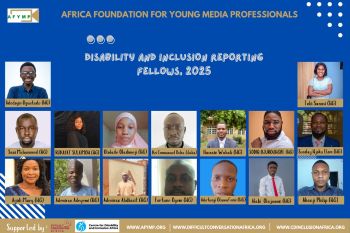
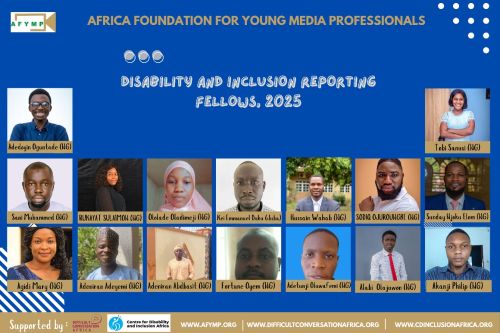
Based on the above, we are happy to announce those who are successful and will be  part of the 2025 cohort. The initial fellowship workshop will be held from July 8, 2025 and the fellowship will run till November. In between participants will also be involved in story publishing and mainstreaming disability related issues(Policy, promotion of PWDs human rights etc)

READ MORE