centre for disability and Inclusion Africa Executive director wins award

Leading Inclusion, Inspiring Change: CDIA’s ED  Wins National Award

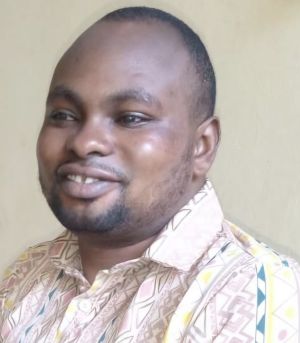
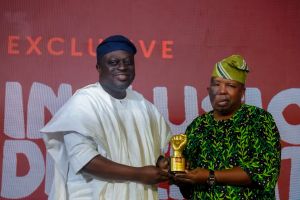
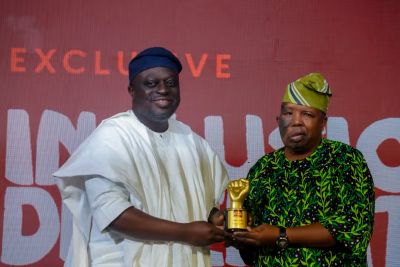
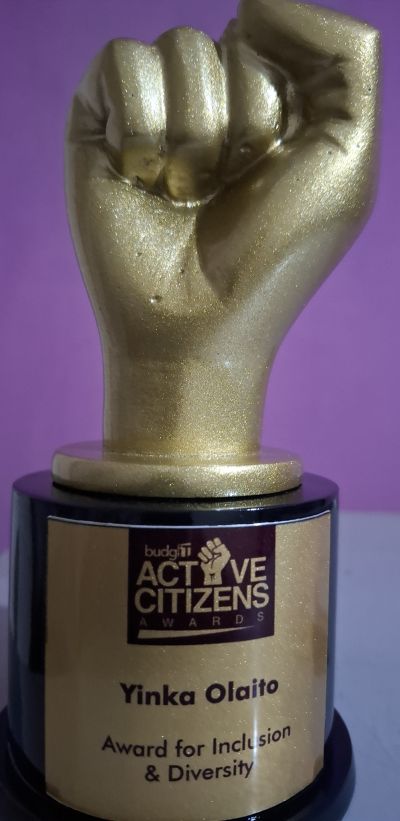
The Centre for Disability and Inclusion Africa (CDIA) proudly celebrates the recognition of its Executive Director, Yinka Olaito, as the recipient of the Inclusion and Diversity Award at the Active Citizens Awards 2026, organised by BudgIT and CivicHive.

The annual Active Citizens Awards recognise individuals and organisations whose work advances accountability, civic participation and democratic governance in Nigeria. Through the awards, BudgIT and CivicHive honour changemakers whose leadership and impact are driving positive social transformation across governance, advocacy, community development and citizen engagement.

Yinka Olaito’s recognition reflects decades of dedicated leadership in advancing disability inclusion, accessibility and equal opportunities for persons with disabilities across Africa. As Executive Director of the Centre for Disability and Inclusion Africa, he has championed inclusive policies, strengthened institutional capacity, fostered strategic partnerships and advocated for the full participation of persons with disabilities in every aspect of society.

Receiving the Inclusion and Diversity Award underscores both his personal commitment and the collective efforts of the CDIA team, partners and the disability community in promoting an Africa where diversity is valued and inclusion is embedded in public policy, development programmes and organisational practice.

Speaking on the recognition, Yinka Olaito expressed gratitude to the organisers, the judging panel and everyone who has supported the disability inclusion movement.

“This recognition belongs to the entire disability community, our partners and advocates who continue to challenge barriers and expand opportunities for inclusion. It strengthens our resolve to keep working towards a society where every person, regardless of ability, can participate fully and equally.”

The 2026 Active Citizens Awards celebrated excellence across several categories. Keturah Sahmmah received the Oby Ezekwesili Award for Women’s Advocacy, while Oluyemi Orija was recognised with the Community Service Award. Jake Epelle won the Disability Rights/Empowerment Award, and Olusegun Elemo received the Award for Civic Activism (Policy Reform and Governance).
Other recipients included Anthony Adejuwon, who received the Climate Change Activism Award; Nonye Soludo, honoured with the Health Activism Award; Omoregie Osakpolor, recognised for Art for Activism; Sterling Bank, which received the Corporate Award for Civic Investments; and Dipo Fasina, honoured with the Hall of Fame Award for Civic Activism. Investigative journalist and Founder of the Foundation for Investigative Journalism (FIJ), Fisayo Soyombo, was named Active Citizen of the Year, while Chinagorom Ugwu emerged winner of the Solutions Journalism Award.

The awards also recognised outstanding finalists across each category, highlighting the growing community of Nigerians committed to strengthening civic engagement, promoting transparency and accountability, protecting human rights and delivering sustainable social impact.

For the Centre for Disability and Inclusion Africa, this recognition serves as an important affirmation of the organisation’s mission to build inclusive societies where persons with disabilities enjoy equal rights, opportunities and participation. It reinforces CDIA’s commitment to collaborating with governments, civil society, development partners and the private sector to advance disability-inclusive development across Africa.

The Centre for Disability and Inclusion Africa congratulates all the winners, finalists and organisers of the Active Citizens Awards 2026 for celebrating leadership, innovation and service to society. Together, these changemakers demonstrate that inclusive development and active citizenship remain essential to building a more just, equitable and prosperous Nigeria.
READ MORE
Inclusion demands

Inclusive Hiring: The Competitive Advantage Modern Workplaces Can’t Ignore

Building an inclusive workforce is no longer a matter of corporate social responsibility it is a business imperative and a human rights obligation. As organizations navigate the future of work, creating equitable employment opportunities for persons with disabilities (PwDs) is essential to building resilient, innovative, and diverse workplaces.

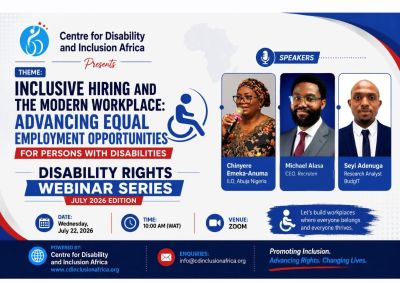
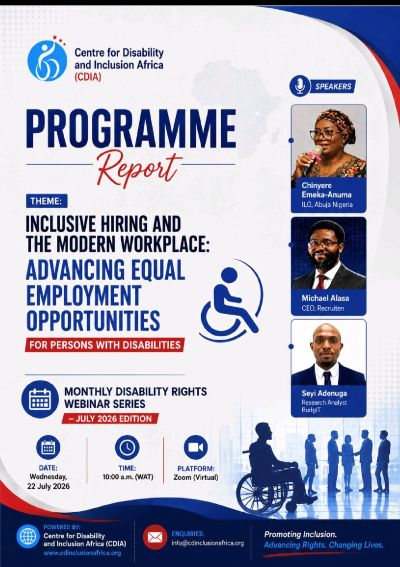
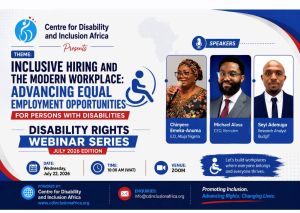
This was the central focus of the July edition of the Centre for Disability and Inclusion Africa (CDIA) Disability Rights Webinar Series, which convened policymakers, employers, development partners, advocates, and persons with lived experience to explore practical pathways toward disability-inclusive employment in Nigeria.

Opening the session, CDIA reaffirmed its commitment to fostering dialogue that holds governments, employers, and institutions accountable while promoting policies that guarantee equal opportunities for all. The webinar underscored a simple but powerful message: inclusion is not charity—it is good governance, sound business, and social justice.

Delivering the keynote presentation, Mrs. Chinyere Emeka-Anoma of the International Labour Organization (ILO) Nigeria Country Office examined the global and national frameworks driving disability inclusion in employment. She highlighted the ILO’s role in promoting inclusive labour standards through international conventions, policy guidance, and technical support while acknowledging Nigeria’s progress with the Discrimination Against Persons with Disabilities (Prohibition) Act, 2018, and the establishment of the National Commission for Persons with Disabilities.

However, she noted that legislation alone is insufficient without effective implementation. Persistent barriers—including inaccessible infrastructure, workplace stigma, weak enforcement mechanisms, and limited disability-disaggregated data—continue to hinder equal employment opportunities. She also advocated for Nigeria’s ratification of ILO Convention 159 on Vocational Rehabilitation and Employment of Persons with Disabilities to further strengthen the country’s commitment to inclusive labour practices.

From the employer’s perspective, HR consultant Michael Alasa challenged organizations to rethink recruitment processes through the lens of accessibility and equity. He emphasized that inclusive hiring is fundamentally a capability decision, not an act of goodwill.

Michael outlined practical strategies for employers, including writing accessible job advertisements, removing bias from recruitment systems, providing reasonable accommodations during interviews, ensuring recruitment technology is accessible, and using structured, competency-based assessments. He encouraged organizations to conduct end-to-end audits of their recruitment processes, establish partnerships with disability organizations to widen talent pipelines, and track inclusion metrics at leadership level to drive accountability.

Adding a powerful personal perspective, Seyi Adenuga, Research and Policy Analyst at BudgIT and a person with lived experience, highlighted the intersection between disability inclusion, public budgeting, and employment. She revealed that despite persons with disabilities representing an estimated 15 percent of Nigeria’s population, budget allocations targeted at disability inclusion remain disproportionately low, with implementation gaps further limiting impact.

Seyi announced commitments to translate budget analysis documents into Braille and other accessible formats, monitor disability-related budget implementation quarterly, advocate for the full implementation of the 5 percent employment quota for persons with disabilities in public institutions, and expand remote work skills training in areas such as graphic design and video editing. She also proposed fellowship opportunities to amplify the voices and research contributions of persons with disabilities.

The interactive discussion that followed reinforced a recurring theme: the greatest barriers to inclusion are often systemic rather than individual. Participants called for stronger enforcement of disability legislation, greater awareness among HR professionals, accessible workplaces, and a shift in organizational culture that recognizes disability inclusion as a strategic advantage.

At CDIA, we believe that meaningful inclusion requires collective action. Governments must enforce existing laws. Employers must intentionally remove barriers to employment. Development partners must continue supporting inclusive policies and capacity building. Together, these efforts can transform workplaces into environments where talent not disability—defines opportunity.

Creating an inclusive workplace is not simply about opening doors; it is about ensuring that once those doors are open, everyone has an equal opportunity to thrive.

Read full report here or click this link https://www.linkedin.com/feed/update/urn:li:activity:7485680499429052417/

READ MORE
Sexual Reproductive health Rights Of Women in Nigeria

CDIA Advances conversation around SRHR of Women with Disabilities in Nigeria  

Advancing Sexual and Reproductive Health Rights for Women with Disabilities in Nigeria: CDIA hosts International Journalist, researcher, Niamh Ní Hoireabhaird

The Centre for Disability and Inclusion Africa (CDIA) recently welcomed Irish researcher and journalist Niamh Ní Hoireabhaird to discuss the challenges, opportunities, and policy priorities for improving sexual and reproductive health (SRH) services for women with disabilities in Nigeria.

Strengthening the Conversation on Disability-Inclusive Healthcare

At the Centre for Disability and Inclusion Africa (CDIA), we believe that achieving disability inclusion requires more than policy commitments—it demands meaningful conversations, collaborative research, and sustained advocacy that place the voices of persons with disabilities at the centre of decision-making.

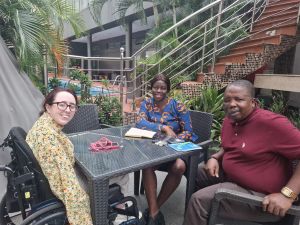
As part of our commitment to advancing disability rights in Africa, CDIA recently hosted internationally recognised Irish researcher and journalist Niamh Ní Hoireabhaird for an insightful discussion on sexual and reproductive health rights (SRHR) for women with disabilities in Nigeria. CDIA also arranged three women with disabilities to have an extensive interviews about their experiences, abuses and possible solutions and way forward

The meeting provided an important opportunity to exchange perspectives on the realities facing women with disabilities, identify gaps in healthcare delivery, and explore how research, media, and advocacy can work together to promote more inclusive health systems.

Why Sexual and Reproductive Health Rights Matter

Despite growing attention to disability inclusion, many women and girls with disabilities in Nigeria continue to encounter significant barriers when accessing sexual and reproductive healthcare. These include inaccessible health facilities, limited access to disability-friendly information, communication challenges, negative attitudes from healthcare providers, and widespread misconceptions about the sexuality and reproductive choices of persons with disabilities.

These barriers contribute to unequal access to essential health services and often exclude women with disabilities from programmes and policies designed to improve maternal health, family planning, and reproductive wellbeing.

Niam with CDIA team

At CDIA, we recognise that ensuring equal access to sexual and reproductive health services is fundamental to achieving the rights, dignity, and full participation of women with disabilities in society.

The Role of Research and Media in Driving Change

Our discussion with Niamh Ní Hoireabhaird highlighted the importance of evidence-based research and responsible journalism in shaping public understanding of disability rights.

Research provides the evidence needed to influence policy reforms, while journalism helps amplify lived experiences that are too often overlooked. Together, they create opportunities to challenge harmful stereotypes, encourage informed public dialogue, and promote accountability among institutions responsible for delivering inclusive healthcare.

The conversation also reinforced an important principle: women with disabilities must be recognised not merely as beneficiaries of development programmes, but as leaders, experts, and advocates whose lived experiences should inform research, policy, and service delivery.

Building Partnerships for Inclusive Health Systems

CDIA remains committed to working with researchers, journalists, healthcare professionals, development partners, organisations of persons with disabilities, and policymakers to strengthen disability-inclusive healthcare across Nigeria and Africa.

International collaborations such as this foster knowledge exchange, generate evidence for advocacy, and support the development of policies that respond to the realities faced by women with disabilities.

As conversations around disability inclusion continue to evolve globally, partnerships that bridge research, media, and advocacy will remain essential in advancing equitable healthcare systems that leave no one behind.

Looking Ahead

The Centre for Disability and Inclusion Africa appreciates the opportunity to engage with Niamh Ní Hoireabhaird and values her interest in understanding the experiences of women with disabilities in Nigeria.

Together, through research, collaboration, and sustained advocacy, we can help create a future where every woman with a disability enjoys equal access to comprehensive, accessible, and respectful sexual and reproductive healthcare.

At CDIA, we will continue to champion inclusive policies, amplify the voices of persons with disabilities, and work with partners across Africa and beyond to ensure that disability inclusion remains central to health and development.

READ MORE
#JusticeforUcheCampaign

The Closure. Impact of the #JusticeforUche Campaign

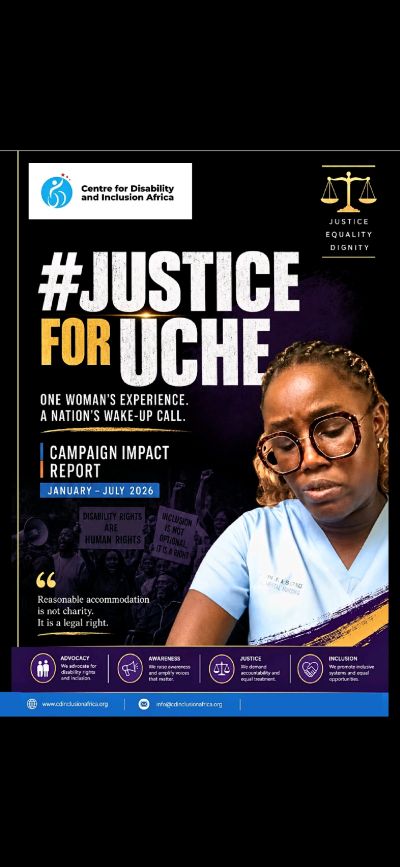
The Centre for Disability and Inclusion with mixed feelings is bringing a closure to #JusticeforUcheCampaign. Between January and June 2026, the Centre for Disability and Inclusion Africa (CDIA) led the #JusticeforUche campaign, a strategic advocacy initiative that transformed the experience of one visually impaired nurse into a nationwide conversation on disability rights, institutional accountability, and inclusive education in Nigeria.

The campaign was launched after Uche Olivia, a registered nurse with visual impairment, publicly alleged that she was denied reasonable accommodation during an entrance examination for a post-basic mental health nursing programme. Her account highlighted a challenge faced by many persons with disabilities: exclusion from educational and professional opportunities due to inaccessible systems and practices.

CDIA responded by positioning the issue not as an isolated grievance, but as a broader human rights concern linked to the Discrimination Against Persons with Disabilities (Prohibition) Act in Nigeria. The campaign sought to demand justice for Uche, raise public awareness of the legal obligation to provide reasonable accommodation, influence institutional reform, and mobilise citizens, disability organisations, media stakeholders, and policymakers around the cause of inclusion.

The campaign achieved significant visibility and engagement. More than 14 million stakeholders were reached, generating over 40 million impressions across media platforms. An estimated 96% of frontline media houses in Nigeria provided coverage, including national newspapers, online publications, radio stations, and television networks across the South and West of the country. This extensive coverage amplified the campaign’s message and contributed to its rapid spread across digital platforms.

@uchey_olivia

#tiktokviraltrending #viraltiktokvideo #visualimpairment #disabilitytiktok #discrimination the sad thing about fighting for a particular cause in Nigeria, is the fact that as long as it doesn’t have a direct effect on other Nigerians, they do not care if the system gets fixed. But they also forget that, people are one mistake, one carelessness, and one failed system away from becoming persons with disability.

♬ original sound – Uchey_Olivia
@uchey_olivia

#tiktokviraltrending #viraltiktokvideo #visualimpairment #disabilitytiktok #discrimination I was discriminated against and refused, reasonable accommodation as a person living with disability, during an examination in a city in Nigeria. I tried to seek for Justice and this is the story on how far it has been. At the end of the day, in Nigeria, if you want to fight a bad system, you have to first fight your fellow Nigerian. It has been a sad experience.

♬ original sound – Uchey_Olivia

As public attention intensified, the Forum of Lawyers with Disabilities became involved and indicated readiness to pursue legal action against the institution at the centre of the allegations The FederalNeuoro-Psyschaitric Post Basic Mental Health Nursing School Enugu.

 This development prompted efforts toward a noted lobbying effort to appease to the victim through direct engagement with the victim which was turned down.. However, the legal process was later complicated by the withdrawal of a key witness and Uche’s subsequent admission to an academic programme outside Nigeria, which affected the prospects for court proceedings.

Despite these challenges, the campaign delivered important outcomes. It significantly increased national awareness of disability discrimination and the importance of reasonable accommodation. Through coordinated media engagement, opinion articles, interviews, and digital storytelling, the narrative shifted from sympathy for an individual to a demand for systemic reform. The hashtag #JusticeforUcheOlivia became a rallying point for disability advocates and citizens who shared similar experiences and called for institutional accountability.

The campaign also strengthened the public understanding that disability inclusion is fundamentally a rights issue, not a charity initiative. It provided an evidence-based platform for engaging policymakers and educational institutions on compliance with disability legislation and reinforced CDIA’s position as a leading voice for disability policy, advocacy, and inclusive media in Africa.

Several lessons emerged from the campaign, including the need for stronger institutional responsiveness, sustained coalition-building, and closer examination of barriers that may discourage witnesses and vulnerable individuals from pursuing justice.

Read full report here or click this link https://www.linkedin.com/feed/update/urn:li:activity:7484961742993940480/

Overall, #JusticeforUche stands as a powerful example of how strategic communications and advocacy can elevate a single voice into a movement for national reflection and reform. While long-term policy outcomes are still evolving, the campaign has already made a meaningful contribution to advancing disability inclusion and reinforcing the principle that equal opportunity requires accessible systems, reasonable accommodation, and accountable institutions.

READ MORE
How media can promote Invisble Disabilities issues

Invisible Disabilities, Media Must Drive Inclusion for the Society Through Responsible Journalism

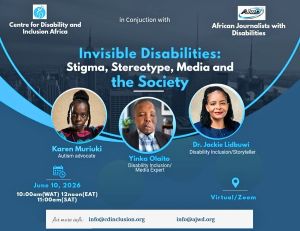
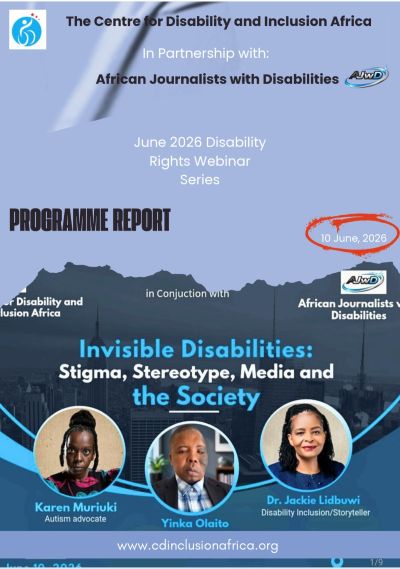
The Centre for Disability and Inclusion Africa (CDIA), in collaboration with African Journalists with Disabilities (AJWD), convened a powerful edition of its monthly Disability Rights Webinar Series titled “Invisible Disabilities, Stigma, Stereotypes, Media, and Society.” The session brought together media professionals, disability advocates, and lived experience experts to deepen understanding of invisible disabilities and the critical role of journalism in shaping inclusive narratives across Africa.

Invisible disabilities—such as autism, fibromyalgia, chronic pain conditions, autoimmune diseases, and mental health-related conditions—took centre stage in the discussion. Speakers emphasized that these conditions are often misunderstood, misclassified, or entirely overlooked because they are not immediately visible, despite significantly impacting daily living, education, employment, and social participation.

Opening the session, Yinka Olaito, Executive Director of CDIA and Africa Lead of AJWD, underscored a persistent gap in media reporting on disability. He noted that many invisible disabilities are wrongly grouped under broad intellectual disability categories, calling for more nuanced, informed, and respectful reporting. He highlighted that “not all disabilities are visible,” and stressed that over 66% of chronic conditions fall within invisible categories, including neurodivergence (such as autism and ADHD), chronic pain disorders, autoimmune diseases, and mental health conditions. He further emphasized the media’s responsibility to educate the public, challenge misconceptions, promote empathy, and influence inclusive policy and societal attitudes.

Olaitao also highlighted the power of storytelling platforms such as documentaries, podcasts, video essays, and personal blogs in amplifying lived experiences. He called for urgent action to amplify authentic voices, challenge stereotypes, promote accessibility, and embed disability rights within everyday journalism.

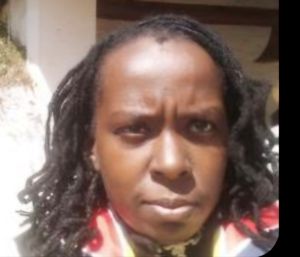
Karen Muriuki, an autistic self-advocate from Kenya, delivered a compelling presentation on disability etiquette in journalism. She called for mandatory disability awareness training in mainstream media houses, stressing that harmful language and misrepresentation continue to fuel stigma. Karen emphasized that autism and other neurodivergent conditions are often wrongly framed as medical defects rather than dimensions of human diversity, reinforcing exclusion in society and the workplace.

She advocated for structured training on appropriate language use, respectful reporting, and deeper understanding of hidden disabilities to ensure dignified representation in media narratives.

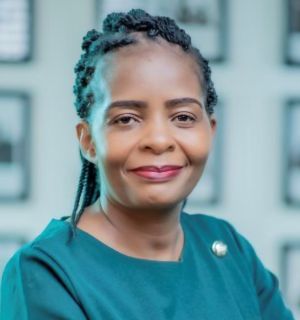
Dr. Jacqueline Lidubwi, a disability media and strategic communications expert, highlighted the transformative role of journalism in shaping public perception and policy. She noted that media professionals “hold the pen that shapes societal reality,” warning that stereotypes in reporting can create systemic barriers for persons with disabilities. She emphasized the need to move beyond tokenistic or pity-based storytelling towards human-centered narratives that reflect dignity, rights, and everyday lived experiences.

Dr. Lidubwi further urged media institutions to adopt inclusive newsroom structures and ensure representation of journalists with disabilities within editorial processes. She also highlighted the psychological burden placed on persons with invisible disabilities who are often forced to repeatedly validate their lived experiences.

The webinar was introduced by Busola Oladotun of CDIA, who welcomed participants to this special edition of the series, noting its alignment with global autism awareness advocacy and broader disability inclusion goals.

Collectively, the speakers reinforced a shared message: media is a powerful driver of inclusion. When used responsibly, it can dismantle stereotypes, amplify marginalized voices, and advance disability rights. However, when misused, it reinforces exclusion and invisibility.

The Centre for Disability and Inclusion Africa reaffirmed its commitment to working with journalists, advocates, and institutions to promote ethical, informed, and inclusive disability reporting across the continent.

If you missed or June 2026 Disability Right Webinar series, read full report here

https://www.linkedin.com/feed/update/urn:li:ugcPost:7477372898454859776/?actorCompanyId=104643128

READ MORE
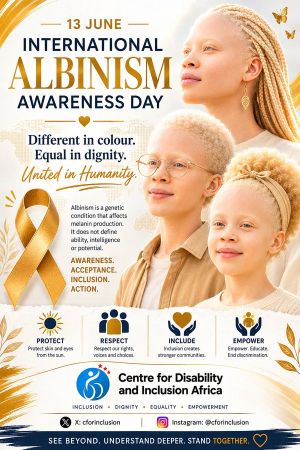
Albinism Awareness Campaign by Centre for Disability and Inclusion Africa

Different in Colour, Equal in Dignity: Ending Stigma Around Albinism

Every year, World Albinism Awareness Week provides an important opportunity to promote understanding, challenge harmful stereotypes, and reaffirm the rights and dignity of persons with albinism. At the Centre for Disability and Inclusion Africa (CDIA), we join the global community in celebrating diversity and advocating for a society where every individual, regardless of skin colour or genetic condition, is valued, respected, and included.

Understanding Albinism

Albinism is a rare, non-contagious genetic condition present from birth. It occurs when an individual inherits specific genetic traits from both parents, resulting in reduced or absent melanin production in the skin, hair, and eyes. Melanin is the pigment responsible for colouring these features and providing some protection against the sun’s ultraviolet rays.

Albinism affects people of all races and ethnic backgrounds and occurs equally among males and females worldwide. Contrary to common misconceptions, albinism is neither a disease nor a curse. It is simply a genetic condition that forms part of the rich diversity of the human family.

Many persons with albinism also experience visual impairments due to reduced pigmentation in the eyes, making access to appropriate eye care services and educational support essential.

Health Challenges and the Need for Protection

The absence of sufficient melanin presents unique health challenges. Persons with albinism are particularly vulnerable to sun damage and face a significantly increased risk of developing skin cancer if preventive measures are not taken. Many also experience sensitivity to bright light and varying degrees of visual impairment.

Simple but essential interventions can dramatically improve quality of life. These include regular use of sunscreen, protective clothing, sunglasses, routine skin examinations, and access to specialized eye care services.

Unfortunately, many persons with albinism across Africa still lack access to these life-saving resources. Limited healthcare access, poverty, and inadequate public awareness continue to place many individuals at unnecessary risk. Ensuring access to healthcare is not a privilege—it is a fundamental human right.

Confronting Stigma and Promoting Mental Wellbeing

While health concerns are significant, social barriers often present equally serious challenges. Across many communities, persons with albinism continue to face stigma, discrimination, bullying, and exclusion.

Children with albinism may encounter mockery in schools, while adults often experience prejudice in workplaces and communities. Persistent myths and harmful stereotypes can lead to social isolation and reduced opportunities for education, employment, and participation in public life.

The emotional and psychological impact of these experiences should not be underestimated. Hurtful comments and so-called “harmless jokes” can leave lasting scars on self-esteem and mental wellbeing. Building inclusive communities requires more than awareness; it demands empathy, respect, and deliberate action to ensure everyone feels valued and accepted.

Breaking Myths with Facts

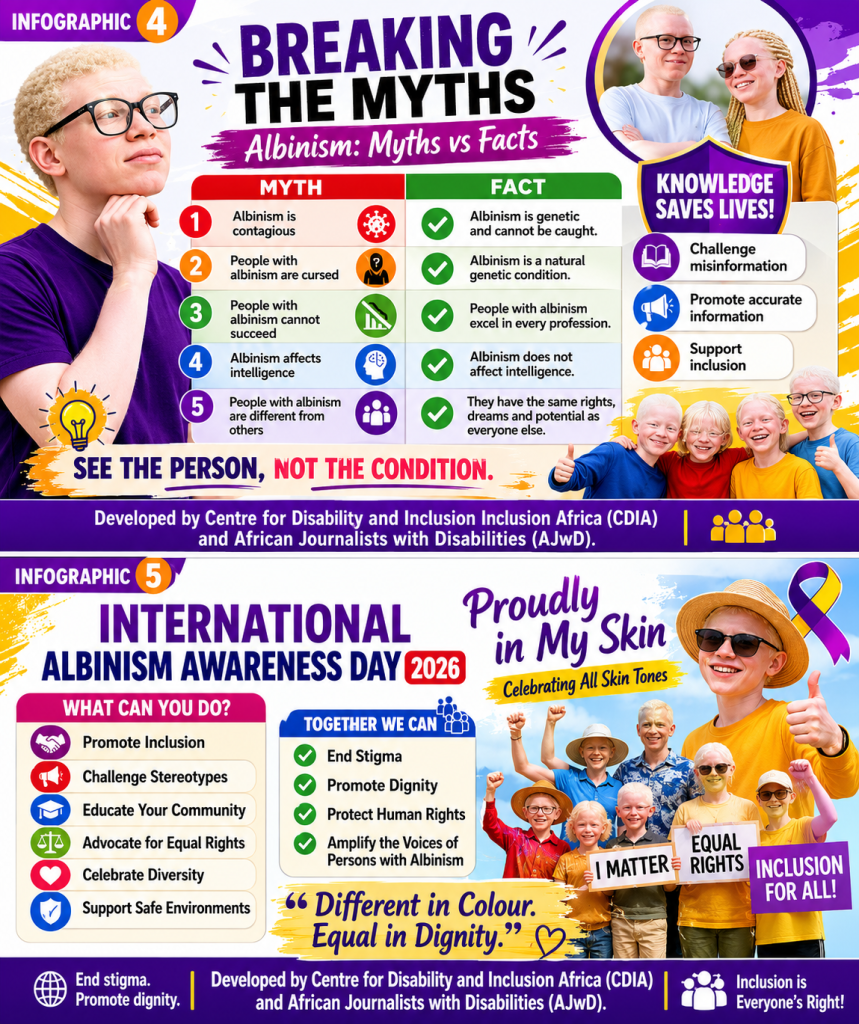
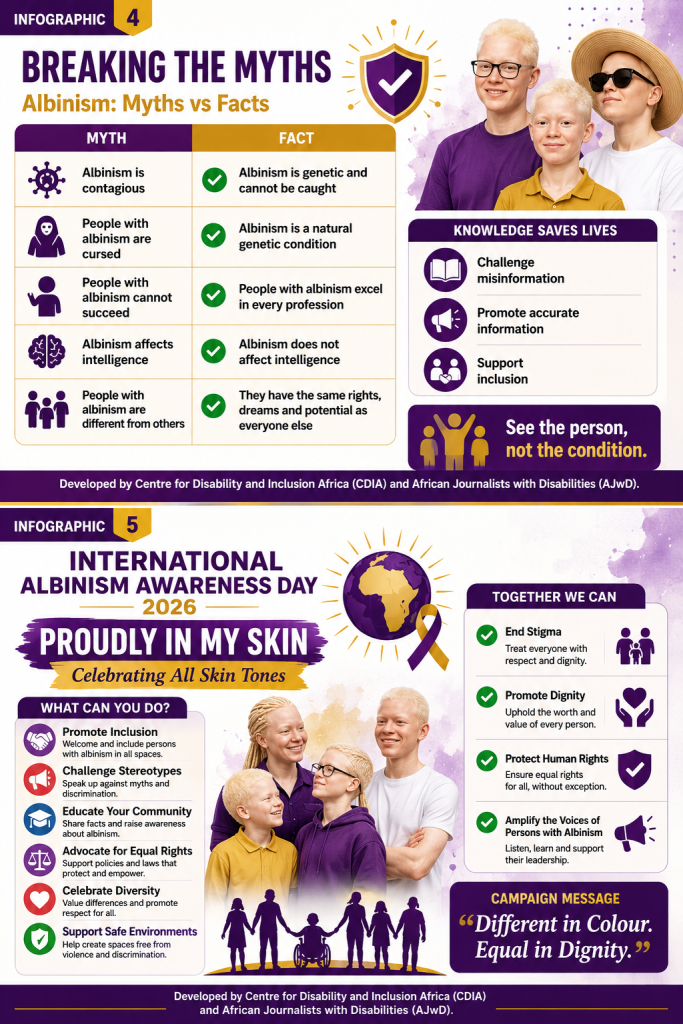
One of the most effective ways to combat discrimination is through education. Albinism is not contagious. It cannot be transmitted through contact. It is not a curse, a punishment, or a sign of supernatural influence.

Persons with albinism possess the same intelligence, talents, aspirations, and potential as anyone else. Across Africa and around the world, they are thriving as professionals, entrepreneurs, academics, artists, advocates, and leaders.

When communities replace myths with facts, they create safer and more inclusive environments where individuals can flourish and contribute their full potential.

A Call to Action

As we commemorate World Albinism Awareness Week, we encourage governments, educational institutions, healthcare providers, employers, civil society organizations, and community leaders to strengthen efforts that protect and promote the rights of persons with albinism.

Each of us has a role to play. We can challenge stereotypes, educate our communities, advocate for equal rights, support safe environments, and celebrate human diversity in all its forms.

At the Centre for Disability and Inclusion Africa (CDIA), we remain committed to advancing inclusion, dignity, and equal opportunities for all persons with disabilities, including persons with albinism.

This week, and every week, let us remember a simple but powerful truth: Different in colour. Equal in dignity.

READ MORE

Disability Rights Under Siege: Navigating Electoral Exclusion in Nigeria

Across Africa, millions of persons with disabilities (PWDs) face systemic barriers that limit their access to the fundamental tools of citizenship. Inclusion is not only a human right but an essential cornerstone of economic resilience.

In Nigeria, an estimated 19 to 29 million people live with at least one form of disability accounting for roughly 10% to 15% of the total population. Yet, despite representing a massive demographic, this group remains largely on the periphery of both economic development and national governance.

Despite the passage of the Discrimination Against Persons with Disabilities (Prohibition) Act in 2018, which was signed into law in early 2019, which explicitly criminalizes discrimination against PWDs and a further reinforcement of this law by the Section 54 of the electoral Act 2022, which legally mandates the Independent National Electoral Commission (INEC) to make special provisions for PWDs during elections, specifically ensuring the availability of assistive devices, records still show a poor representation of PWDs in politics.

To understand the depth of this exclusion, one must look at how PWDs have participated in Nigeria’s recent democratic processes. While INEC has made commendable policy strides on paper, data from the field reveals a stark implementation gap.

According to data compiled by SBM Intelligence and civil society groups like TAF Africa, out of the 93.46 million registered voters in the 2023 general elections, an estimated 14 million were PWDs. This represents a massive voting bloc capable of swinging any national election. Yet, the reality of election day paints a discouraging picture:

The 2023 general elections in Nigeria once again exposed the deep gaps in political inclusion for persons with disabilities (PwDs). Out of the 4,716 candidates who contested various elective positions nationwide, only 37 were persons with disabilities, representing a mere 0.78 percent of the entire candidate population. Notably, no person with disability contested for the office of the president, highlighting the persistent barriers that continue to limit political participation at the highest levels.

Beyond representation, the elections also revealed serious shortcomings in electoral accessibility. Although the Electoral Act 2022 made provisions for the deployment of assistive devices and special tools to support voters with disabilities, post-election assessments showed that implementation remained largely inadequate. Only 22.26 percent of voters with disabilities reported the availability of assistive materials such as Braille ballot guides, magnifying glasses, or sign language interpreters at their polling units.

The absence of these critical support mechanisms significantly compromised the voting experience of many persons with disabilities, particularly those who are visually impaired or physically challenged. In many cases, voters were compelled to depend on relatives, friends, or even polling officials to help them cast their ballots. This situation not only eroded their independence but also violated the constitutional principle of ballot secrecy, which guarantees every citizen the right to vote privately and freely.

The impact of these exclusions was felt most strongly among young persons with disabilities and visually impaired voters, who expressed the highest levels of dissatisfaction with the electoral process. Their concerns centered on inaccessible polling units, inadequate voter education tailored to disability needs, and security challenges on election day that placed vulnerable groups at greater risk. Collectively, these issues underscore the urgent need for Nigeria’s electoral system to move beyond policy promises toward the full and practical inclusion of persons with disabilities in democratic participation

For Nigeria’s democracy to mature, PwDs must change from being passive observers of political campaigns to being active architects of political strategy. Ahead of coming off-cycle and general elections, government agencies, political parties, and civil society must deliberately institutionalize inclusion by considering the following points:

Reforming Political Party Structures

True representation begins at the primary level. Currently, the internal operations of Nigeria’s 18 registered political parties offer nominal inclusion, often limited to creating a singular, tokenized position of a “National Disability Leader.”

Political parties must move beyond tokenism by waiving nomination fees for qualified PWD candidates, establishing accessible campaign venues, and generating campaign manifestos in alternative formats (Braille, audio, and simplified text).

Mandatory Data Disaggregation

Right now, political parties ignore the PwD demographic because they do not see them clearly on the voter roster.

INEC must fully utilize and publish disaggregated data from its voter register, categorizing voters by their specific disability types. Political parties can then leverage this data to build targeted, realistic campaign promises that address the specific infrastructure, healthcare, and educational needs of PWDs in regional clusters.

Enforcing the 5% Affirmative Action Policy

The government cannot demand inclusivity from the private sector or political parties while failing to practice it internally.

The Federal and State governments must strictly enforce the 5% employment and appointment quota stipulated in the 2018 Disability Act. Legislative bodies and executive cabinets should actively appoint qualified PWDs to head ministries, departments, and agencies (MDAs)—not just those explicitly dealing with humanitarian affairs or social development, but fields like economic planning, technology, and education.

Accessibility as a Campaign Standard

Political rallies in Nigeria are notoriously chaotic, often posing physical dangers to individuals with physical or sensory impairments.

Civil society organizations must pressure political campaigns to adopt an “Accessibility Standard.” If a political rally or televised debate lacks sign language interpreters or wheelchair-accessible venues, it should be flagged as unconstitutional and non-inclusive.

Nigeria cannot achieve true economic resilience or democratic stability while shutting out millions of its citizens. Transitioning from a culture of pity to a culture of policy is not just a moral obligation; it is a legal requirement under the 2018 Disability Act. Only when political parties and government structures intentionally integrate PWDs into mainstream governance will Nigeria truly boast a democracy for all.

Conclusion

Nigeria cannot achieve true economic resilience or democratic stability while shutting out millions of its citizens. Transitioning from a culture of pity to a culture of policy is not just a moral obligation; it is a legal requirement under the 2018 Disability Act. Only when political parties and government structures intentionally integrate PWDs into mainstream governance will Nigeria truly boast a democracy for all.

#Written by Kemi Ade-Adeniji, Ph.D, CDIA BOT member

READ MORE
Safe internet and PwDs

Safe and Included: CDIA Pushes for Digital Safety and Inclusion for Persons with Disabilities

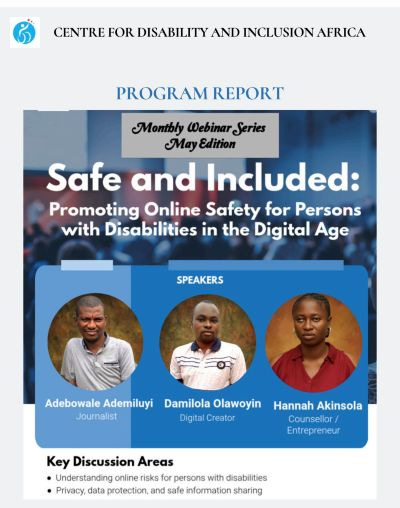
The growing importance of digital technology in everyday life has brought both opportunities and risks for persons with disabilities, a reality that took center stage during the May 2026 edition of the Disability Rights Webinar Series organized by Centre for Disability and Inclusion Africa (CDIA).

Held under the theme “Safe and Included: Promoting Online Safety for Persons with Disabilities,” the virtual session convened disability advocates, journalists, digital rights experts, and inclusion stakeholders to examine the growing threats faced by persons with disabilities in online spaces and the urgent need for safer, more inclusive digital environments.

Opening the session, CDIA Senior program Officer, Busola Oladotun  welcomed participants and emphasized the increasing role digital technology plays in advancing independence, communication, education, and inclusion for persons with disabilities. She noted that assistive technologies such as screen readers, speech recognition tools, and communication aids are all powered by digital innovations, making online accessibility and safety critical to full participation in modern society.

However, while technology has created new opportunities, speakers warned that digital platforms are also reproducing many of the same prejudices and exclusion experienced offline.

One of the keynote contributors, Damiola Olawoyin, highlighted how cultural misconceptions and societal stereotypes about disabilities have migrated into online spaces. Sharing personal experiences and examples, he described how persons with disabilities frequently encounter cyberbullying, mockery, harassment, and discriminatory comments on social media platforms.

Damilola Olawoyin,

According to him, online abuse against persons with disabilities often reflects long-standing societal attitudes that portray disability through pity, ridicule, or stigma. He stressed the need for stronger public education, digital literacy, and enforcement of disability rights protections in the digital ecosystem.

The conversation also examined the importance of online privacy and digital safety practices. Miss Hannah Akinsola emphasized the need for persons with disabilities to receive adequate digital training to help them navigate online risks safely. She encouraged participants to prioritize data protection, privacy awareness, and responsible internet use, particularly in an era where cyber fraud, phishing, identity theft, and online manipulation are becoming increasingly common.

Participants discussed the dangers of cyberbullying and online exploitation, especially for persons with intellectual and visual impairments who may be more vulnerable to manipulation or privacy invasion. Speakers advised users to exercise caution when sharing personal information online and to verify digital contacts carefully before building trust.

The webinar further explored accessibility gaps that continue to limit equal participation in digital spaces. Adebowale Ademiluyi spoke extensively on the challenges persons with disabilities face while using social media platforms and digital applications. He identified major concerns including inadequate accessibility software for blind users, limited voice interpretation options for persons with hearing impairments, and poor compliance with universal design standards.

Ademiluyi Adebowale.

Adebowale also condemned the unauthorized use of photographs and videos of persons with disabilities on social media platforms without consent, describing it as a serious violation of privacy and dignity. Participants agreed that many content creators and online influencers continue to perpetuate harmful narratives by using disability-related content for sensationalism, pity-driven engagement, or mockery.

Contributors called for stronger collaboration between disability advocates, technology companies, media organizations, and policymakers to improve digital accessibility and protect persons with disabilities from abuse and discrimination online.

The session featured contributions from participants across different locations, including Ghana and Ekiti State, who shared lived experiences and practical recommendations for improving online safety and inclusion.

As part of the way forward, CDIA announced plans to organize digital safety and literacy trainings specifically tailored for persons with disabilities. The organization also committed to developing accessible educational materials that will help individuals recognize, document, and report cases of online abuse, cyberbullying, and privacy violations.

Other proposed action points included engaging app developers and technology companies to improve accessibility features such as enhanced screen readers and voice interpretation systems, establishing peer support networks for persons with disabilities, and promoting respectful and non-derogatory reporting of disability issues in the media.

Participants also emphasized the importance of enforcing existing disability rights laws and ensuring that cases of online abuse and discrimination are properly addressed by relevant authorities.

The webinar concluded with a strong collective message: digital inclusion must go beyond access to technology; it must also guarantee safety, dignity, privacy, and equal participation for persons with disabilities in online spaces.

Through conversations like this, Centre for Disability and Inclusion Africa continues to advance advocacy for a digital society where persons with disabilities are not only connected, but also protected, respected, and fully included.

#internetsafety #PersosnwithDisabilities Safe and included, Promoting Online Safety for Persons with Disabilities, a project report of Centre for Disability and Inclusion Africa Read full report here or use this link https://www.linkedin.com/feed/update/urn:li:activity:7463209063103889408/

READ MORE
Challenges of inclusive Budgeting in Nigeria

No Inclusion, No Impact: Rethinking Public Procurement in Nigeria and Africa

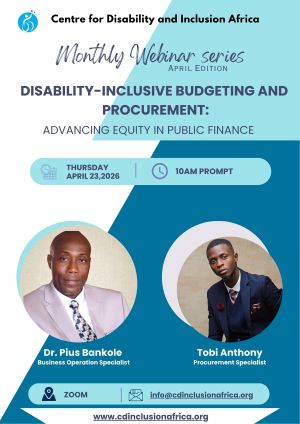
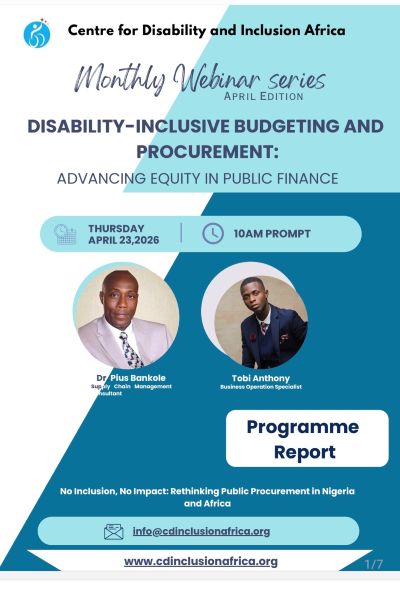
The  April 2026 Disabilitit Rights webinar Series by the Centre for Disability and Inclusion Africa convened stakeholders, professionals, and advocates for a timely conversation on one of the most overlooked levers of inclusion public finance. The latest edition of the Disability Rights Webinar Series brought disability-inclusive budgeting and procurement into sharp focus, reframing them not as technical processes, but as powerful tools for equity, access, and economic participation.

At the heart of the conversation was a simple but critical idea: inclusion must begin at the planning table. Without embedding disability considerations into how governments allocate and spend resources, inclusion risks remaining aspirational rather than actionable.

Inclusion Is Not Charity It Is Strategy

Opening the session, procurement expert Tobi Antony challenged conventional thinking by positioning disability inclusion as an economic imperative. Public finance, he noted, is designed to drive both economic stability and social welfare. Excluding persons with disabilities from budgeting and procurement processes undermines both goals.

Rather than viewing inclusion as a social add-on, Antony emphasized that it should be treated as a strategic investment one that strengthens systems, improves efficiency, and expands market participation. In practical terms, this means designing budgets that anticipate accessibility needs and procurement systems that intentionally create space for persons with disabilities to participate.

Budgeting and Procurement: Two Sides of the Same Coin

A key takeaway from the session was the inseparable relationship between budgeting and procurement. Budgeting defines priorities it is where governments decide what matters. Procurement, on the other hand, is where those priorities are executed.

As Antony explained, procurement cannot exist without budgeting. A well-designed budget ensures that resources are allocated for inclusive initiatives, while effective procurement ensures that those resources deliver value. This alignment is especially critical in contexts where inefficiencies, corruption, or poor planning often derail public projects.

Drawing from private sector practices, Antony highlighted the importance of data-driven decision-making, cost optimization, and value-for-money assessments. These approaches, he argued, could significantly strengthen public procurement systems across Africa if adapted thoughtfully.

Expanding the Role of Persons with Disabilities

Beyond policy frameworks, the webinar explored how persons with disabilities can actively participate in procurement ecosystems. The conversation moved beyond representation to real economic inclusion.

Participants discussed two key entry points:

  • As internal stakeholders, contributing to policy design, oversight, and implementation within government institutions.
  • As external suppliers, competing for and delivering public contracts.

This dual approach shifts the narrative—from beneficiaries of policy to drivers of economic activity. It also aligns with broader development goals around inclusive growth and equitable access to opportunities.

Understanding Procurement Beyond Transactions

Adding depth to the discussion, Dr. Pius Bankole unpacked the distinction between purchasing and procurement terms often used interchangeably but fundamentally different in scope.

Purchasing, he explained, is transactional: the act of acquiring goods and services. Procurement, however, is strategic. It encompasses planning, sourcing, contracting, and evaluation. This broader perspective underscores why inclusion must be integrated at every stage—not just at the point of purchase.

Bankole also stressed the importance of robust budget preparation and allocation as the foundation for effective procurement. Without clear financial planning, even the most well-intentioned procurement processes can fall short.

Lived Experience Meets Systemic Barriers

The conversation gained further resonance with insights from Yisa Usman, who brought a lived-experience perspective to the discussion. While acknowledging the existence of policies and legal frameworks that support disability inclusion, Usman highlighted a persistent gap between policy and practice.

For many persons with disabilities, systemic barriers—ranging from inaccessible processes to limited awareness among decision-makers—continue to restrict meaningful participation. His contribution served as a reminder that legislation alone is not enough; implementation is where real change happens.

From Advocacy to Collaboration

A recurring theme throughout the webinar was the need to rethink advocacy strategies. Rather than approaching government institutions with confrontation, speakers encouraged a more collaborative approach—one that builds partnerships, fosters dialogue, and aligns shared interests.

Engaging policymakers, procurement officers, and legislators early in the budgeting process can help ensure that disability inclusion is not an afterthought. It also creates opportunities to influence how resources are allocated and monitored.

The Road Ahead

As the session concluded, one message stood out: inclusive budgeting and procurement are not optional they are essential to building resilient, equitable societies.

For organizations, governments, and advocates, the path forward is clear. It requires shifting mindsets, strengthening systems, and centering inclusion at every stage of public finance. It also demands sustained engagement turning conversations like this into concrete actions that improve lives.

At the Centre for Disability and Inclusion Africa, this work continues. By convening conversations, amplifying expertise, and driving advocacy, the organization remains committed to ensuring that no one is left behind not in policy, not in planning, and certainly not in the allocation of resources.

Because when inclusion is built into the system, everyone benefits.

You can read full report here or herehttps://www.linkedin.com/feed/update/urn:li:ugcPost:7453101052884598785/?actorCompanyId=104643128

READ MORE
Disability representation in the media

Amplify Your Stories or Be Misrepresented, Olaito charges PWDs

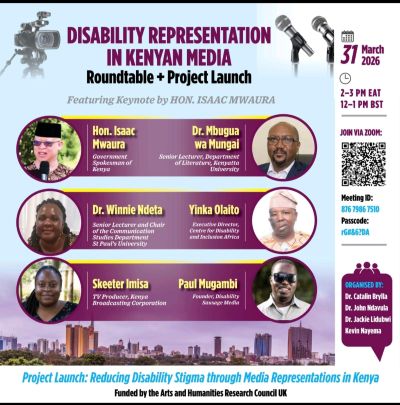
At a workshop organized by Changing Attitudes Through Media Representations of Disability, an international research programme exploring social change through media representations of disability in the UK and Kenya, held on March 31, 2026, media and disability advocates gathered to interrogate how people with disabilities can shape their portrayal in the media. The event featured a roundtable on disability representation in Kenyan media alongside a project launch.

The keynote address at the event was delivered by Honourable Isaac Mwaura , Kenya Government Spokesperson as well as national Coordinator, Albinism Society of kenya. In his speech Hon Isaac sound a note of warning “The person with the megaphone, the person who is helping to tell the story will shape the narrative”

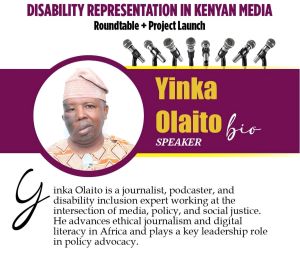
Speaking at the forum, disability inclusion advocate and media professional Yinka Olaito challenged persons with disabilities to take greater ownership of their narratives, emphasizing that influence in media begins with the ability to tell compelling, relatable stories.

“Every person with a disability has a story,” Olaito said, “but the real question is whether that story is worth telling in a way that resonates with audiences.”

He stressed that storytelling remains a critical tool for visibility and influence, urging individuals within the disability community to build their capacity to communicate lived-experiences effectively. According to him, media organizations are constantly in search of authentic and engaging content, but only stories delivered with clarity and conviction gain traction.

Olaito noted that beyond having powerful experiences, the ability to present them convincingly determines whether they will shape public perception. “You can have a good story, but if it is not told well, it may fail to connect,” he said.

He also highlighted internal challenges within the disability ecosystem, particularly disunity and inconsistent terminology, which he said weaken collective advocacy efforts. Calling for greater cohesion, he argued that a unified voice would strengthen the community’s bargaining power in influencing media narratives.

“Language is powerful, and without agreement on how we define ourselves, it becomes harder to project a strong, collective identity,” he added.

In a push for structural change, Olaito encouraged investment in disability-led media platforms, including podcasts, television, and print outlets. Such platforms, he said, would provide opportunities for self-representation and reduce reliance on mainstream media gatekeepers.

“Media organisations have their own priorities, including profitability. But when we build and own our platforms, we can tell our stories on our terms and for public good,” he said.

He further urged persons with disabilities to increase their public visibility and accessibility, noting that media outlets often seek out individuals who are already active and recognizable within public discourse.

“Media wants voices that are visible and available. If we are not seen or heard, we risk being excluded from the conversation,” Olaito warned.

Other prominent speakers at the event include: Dr Mbugua wa Mungai, a senior lecturer and former Director of Disability Services at Kenyatta University, Dr Winnie Ndeta, Chair of Communication Studies at St. Paul’s University,  Skeeter Imisa, a television producer at Kenya Broadcasting Corporation,  The project is led by Dr Catalin Brylla of Bournemouth University, alongside Kenyan-based researchers Dr John Ndavula (Murang’a University of Technology), Dr Jackline Lidubwi (Africa Nazarene University), and Kevin Nayema, a research associate. Other key project partners, including the Kenya Broadcasting Corporation (KBC), Signs TV, the Kenya Union of Journalists (KUJ), and the Action Network for the Disabled (ANDY),

The workshop underscored a growing consensus among stakeholders that improving disability representation in media requires both systemic change and proactive engagement from the community itself.

Participants agreed that as conversations around inclusion gain momentum globally, empowering persons with disabilities to shape their own narratives will be critical to changing perceptions and dismantling stereotypes

READ MORE