
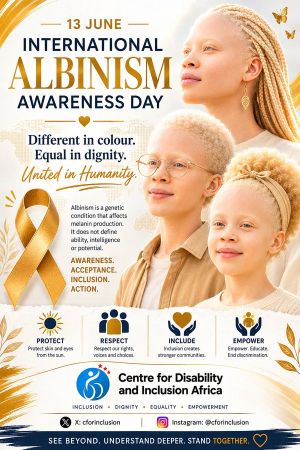
Different in Colour, Equal in Dignity: Ending Stigma Around Albinism
Every year, World Albinism Awareness Week provides an important opportunity to promote understanding, challenge harmful stereotypes, and reaffirm the rights and dignity of persons with albinism. At the Centre for Disability and Inclusion Africa (CDIA), we join the global community in celebrating diversity and advocating for a society where every individual, regardless of skin colour or genetic condition, is valued, respected, and included.
Understanding Albinism

Albinism is a rare, non-contagious genetic condition present from birth. It occurs when an individual inherits specific genetic traits from both parents, resulting in reduced or absent melanin production in the skin, hair, and eyes. Melanin is the pigment responsible for colouring these features and providing some protection against the sun’s ultraviolet rays.
Albinism affects people of all races and ethnic backgrounds and occurs equally among males and females worldwide. Contrary to common misconceptions, albinism is neither a disease nor a curse. It is simply a genetic condition that forms part of the rich diversity of the human family.
Many persons with albinism also experience visual impairments due to reduced pigmentation in the eyes, making access to appropriate eye care services and educational support essential.
Health Challenges and the Need for Protection
The absence of sufficient melanin presents unique health challenges. Persons with albinism are particularly vulnerable to sun damage and face a significantly increased risk of developing skin cancer if preventive measures are not taken. Many also experience sensitivity to bright light and varying degrees of visual impairment.
Simple but essential interventions can dramatically improve quality of life. These include regular use of sunscreen, protective clothing, sunglasses, routine skin examinations, and access to specialized eye care services.
Unfortunately, many persons with albinism across Africa still lack access to these life-saving resources. Limited healthcare access, poverty, and inadequate public awareness continue to place many individuals at unnecessary risk. Ensuring access to healthcare is not a privilege—it is a fundamental human right.
Confronting Stigma and Promoting Mental Wellbeing
While health concerns are significant, social barriers often present equally serious challenges. Across many communities, persons with albinism continue to face stigma, discrimination, bullying, and exclusion.
Children with albinism may encounter mockery in schools, while adults often experience prejudice in workplaces and communities. Persistent myths and harmful stereotypes can lead to social isolation and reduced opportunities for education, employment, and participation in public life.
The emotional and psychological impact of these experiences should not be underestimated. Hurtful comments and so-called “harmless jokes” can leave lasting scars on self-esteem and mental wellbeing. Building inclusive communities requires more than awareness; it demands empathy, respect, and deliberate action to ensure everyone feels valued and accepted.
Breaking Myths with Facts
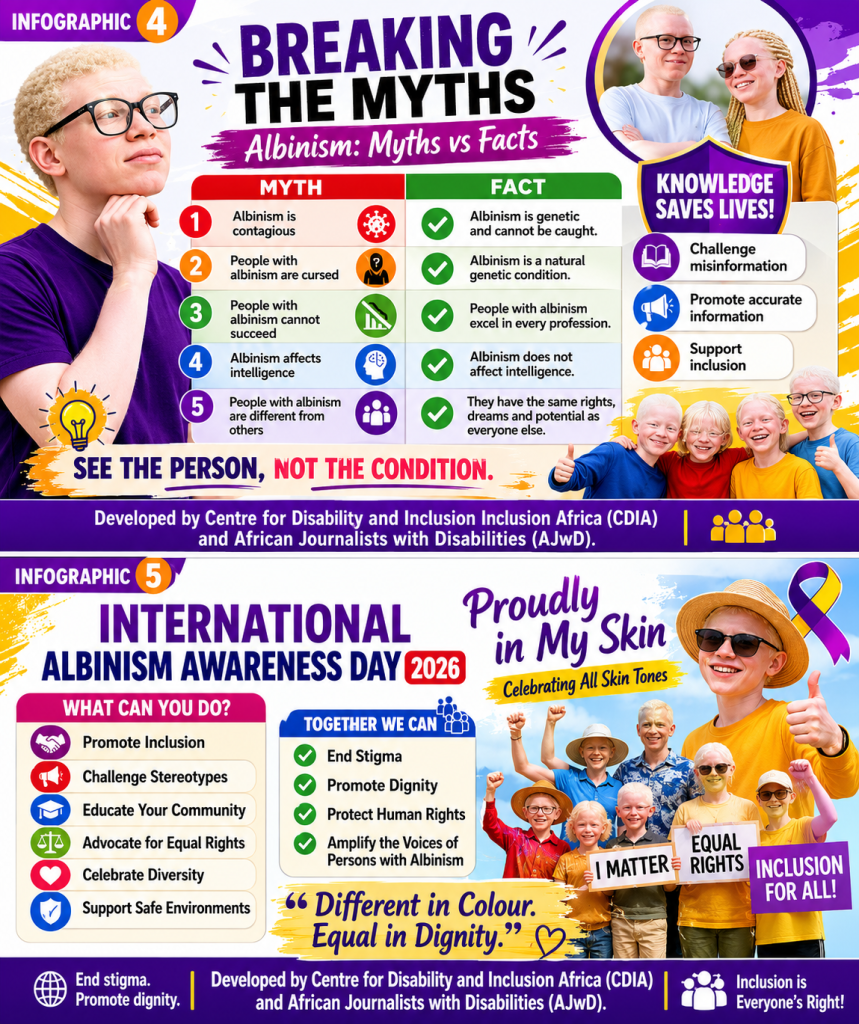
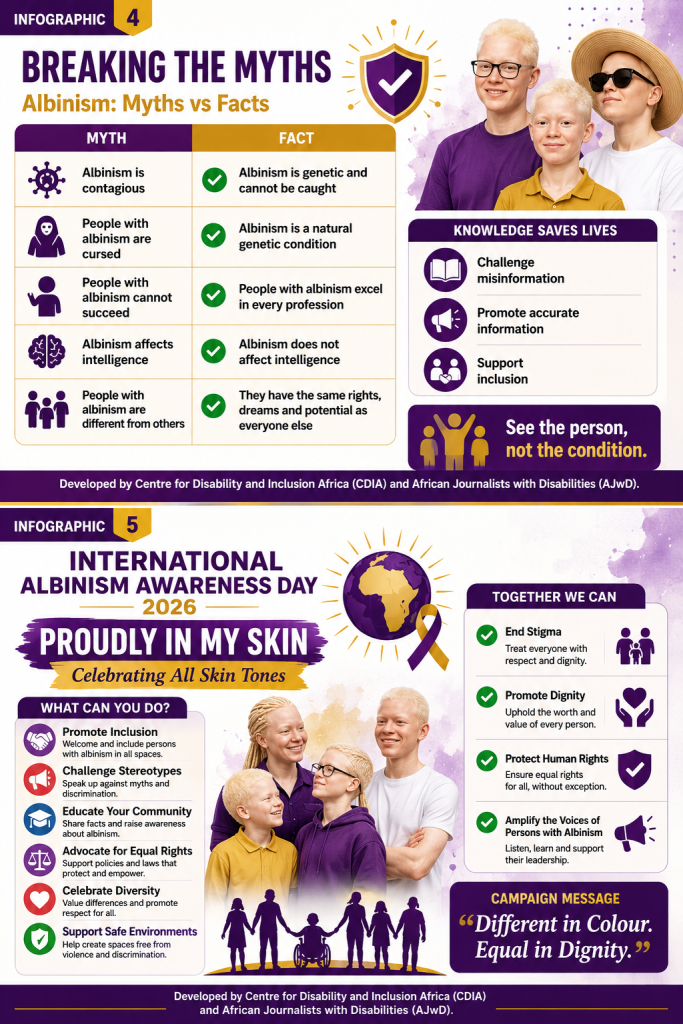
One of the most effective ways to combat discrimination is through education. Albinism is not contagious. It cannot be transmitted through contact. It is not a curse, a punishment, or a sign of supernatural influence.
Persons with albinism possess the same intelligence, talents, aspirations, and potential as anyone else. Across Africa and around the world, they are thriving as professionals, entrepreneurs, academics, artists, advocates, and leaders.
When communities replace myths with facts, they create safer and more inclusive environments where individuals can flourish and contribute their full potential.
A Call to Action
As we commemorate World Albinism Awareness Week, we encourage governments, educational institutions, healthcare providers, employers, civil society organizations, and community leaders to strengthen efforts that protect and promote the rights of persons with albinism.
Each of us has a role to play. We can challenge stereotypes, educate our communities, advocate for equal rights, support safe environments, and celebrate human diversity in all its forms.
At the Centre for Disability and Inclusion Africa (CDIA), we remain committed to advancing inclusion, dignity, and equal opportunities for all persons with disabilities, including persons with albinism.
This week, and every week, let us remember a simple but powerful truth: Different in colour. Equal in dignity.