CDIA Impact story

CDIA celebrates its impact story

After CDIA Accessibility challenge’s in Nigeria’s Airports   call, Federal Government Dissolves Aviation Ministry’s Executives/ MDAs managements

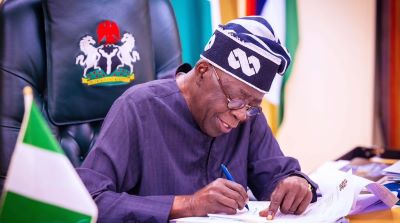
This publication may be coming late, we took responsibility for this, but it is worth nothing that after our call on the federal government to prioritise Persons with Disability call, disability accessibility in Nigeria’s airports on Monday 11th December, 2023; it is worthy of note that three days after, Thursday December 14, 2023, the President of Nigeria, President Ahmed Tinubu had sacked all Aviation Ministry’s directors and replace them with new persons so as to create opportunity for reorganization.

While we continue to celebrate such action, the President’s listening to the call of concerned Nigerians, we must also emphasise the fact that dissolving or replacing top executives in any organization may be a starting point, ensuring the right culture, approach to work that gets things done will go a long way.

As an organization, we will continue to step up conversation so our governance structure among others becomes sustainable and all embracing.–

READ MORE
Call for Actions

Go beyond speeches, prioritise PWDs rights-expert makes demands

To mark International Human Rights Day 2023, The Executive Director of Centre for Disability and Inclusion Africa (registered as Sage Initiative for Disability and Inclusion) through its advocacy and policy drive, using the media had called on the federal government of Nigeria to prioritise persons with disabilities rights in all its ramifications.

Yinka Olaito (the Executive Director), through two major national Television channels had itemised many of the challenges persons with disabilities(PWDs) face daily while the governments (at various levels) continue to pay lip service to many of the human rights violations and denials that affect PWDs.

For the two national television platforms- TVCNews and Kaftan TV Abuja, which programmes aired at different times of the day, Yinka Olaito began his concern by acknowledging the fact that though there has been a sort of movement forward in the journey of PWDs rights, the road to freedom continues to be very challenging for an average PWD in Nigeria.

Yinka Olaito, Executive director on TVC

According to Yinka Olaito “We can see President Tinubu domiciling African Charter of Human Rights for Persons with disabilities –ACHRPWD in Nigeria, as well as the Nigerian Senate making some reviews to the existing Discrimination Against Persons with Disabilities Acts 2018, there had not been official actions that justify government is very serious about PWDs rights in many ways”.

Yinka Olaito on Kaftan TV Abuja

With health, job, accessibility and education rights of PWDs in Nigeria, there seem to be no changes to the status quo. PWDs health rights till date are still in a hanging status. Accessing health by PWDs across Nigeria continues to be a task that no one really puts a concern on. Most hospitals are not accessible. Many medical personnel cannot attend to the health needs of PWDs due to communications issues. Also the National Health Insurance Scheme which could have been a succour does not provide much for PWDs.

The job rights of PWDs is still in Limbo.5% of job allocation to PWDs is still a mirage. Celebrating and organizing events and fun fare will not achieve much. Building and other infrastructural accessibility demands for PWDs are still not in 15% across the nation. Our airports are still not configured to enable disability accessibility infrastructure and yet we continue to move on as this is not a priority.

To access our executive director’s  demands for PWDs rights on 2023 International Human Rights day, on TVC, check here  and on Kaftan TV Abuja, check  here.

N.B. This article should have been published on December 11, 2023

READ MORE
Call for Actions

International Human Rights Day: for PWDs, step up, take action

Hurray, it is December 10. Today  is International Human Rights day 2023. The world leaders everywhere have continued to make speeches and engage in different usual rituals of ceremonies and talks.

As we know, talk is cheap but the political will to act the sound is often missing. We keep having meetings, conferences and workshops with communiques released every year but there has been minimal impact especially on the rights of Persons with disabilities in the developing world especially in Africa and Nigeria.

There have been several Acts, rules and pronouncements made. While we cannot deny a little progress has been made, as we are not where we used to be. The truth is we have untold opportunities to speed up the human rights game. But often we move on so quickly with little action. Since assuming office, President Tinubu has taken two strategic steps in ensuring persons with disabilities(PWDs) are not left behind.

First he had signed, domiciled African Charter of Persons with Disabilities Rights(ACHRPWD) as well as in the last four days directed that a committee is set up for the enforcement of a section of Discrimination Against Persons’ with disabilities Acts 2018, which stipulate that by 2024 all public buildings in Nigeria must be accessible.

President Tinubu(Photo Credit: NGRGUardian)

There is also an ongoing discussion in the Nigeria Senate that DAPDA2018 be amended, which has passed second reading in the Senate. Part of the amendment sought are:  The law should go beyond just public buildings and include all private buildings. Also a consideration for the Disability trust fund is also on the radar. These two are great news.

We at this organization had maintained, while signing the ACHRPWD is a good development, Nigeria had already signed, domiciled UNCHRPWD prior to ACHRPWD. 

What have been the changes experienced by PWDs up until now? We here had also maintained the quality of work put into DAPDA 2018 is good enough if necessary actions and political will to ensure proper execution is treasured. Our position as we mark today’s International Human rights day 2023 are:

-Go beyond talks: Talk and speeches are great, but these do not solve the problem.

Dust the gazettes: in our archives are solid documents that can change the landscape. Nigeria’s DAPDA 2018 documents among others contain great nuggets and pointers to great changes we desire for Persons with Disabilities. Let us go back to our policy shelves and dust some of the documents, policies prepared by experts.

Create an enabling environment: If anything is going to work, the environment, culture and context are very important. Governments at all levels, PWDs community, Societies must work together in creating the right environment that can help persons with disabilities to enjoy their inalienable rights, this is not too much to do.

Take action: Nothing succeeds with just goal setting. Necessary and strategic actions had been seen to produce more results than great speeches. It is time to act. We must remember, we cannot have a sustainable society if over 1billion globally and about 30 Million Nigerians are neglected and their fundamental rights trample up.

We also use this opportunity of International Human Rights Day 2023 to call on International development partners, funding Agencies to support our work as we are poised to make a change. Inclusive society, Inclusive Development is a must now. Just a mail and call away: info@cdinclusionafrica.org and +2348100166703

READ MORE
Education and PWDs

4 roadblocks to inclusive education in Nigeria

Inclusive education is the target set by the United Nations which is expected to be embraced globally. This is because it is founded on the basis of the principle of human rights which every individual, regardless of their physical, mental, or psychological condition, deserves. Quality education for every child leads to an empowered human resources at the national level.

Nigeria shares in this global aspiration, but its journey toward inclusive education faces a multitude of challenges.

According to UNICEF, roughly 95% of children with disabilities in developing countries, including Nigeria, do not attend school, with a disheartening possibility that 90% of them may never receive basic education in their lifetime. 

This distressing situation stems from various factors, including the prevalence of primary and secondary schools in Nigeria that present exclusive and inaccessible environments, lacking the physical and technological accommodations required for children with disabilities. Roadblocks to inclusive education in Nigeria include the following:

-Overreliance on Special Schools, where children with disabilities are confined, often to understaffed, under-equipped, and outdated facilities. This segregation perpetuates a sense of isolation and denies these children the opportunity to interact with their peers. Moreover, there is a lack of public awareness regarding the significance of inclusive education and the benefits it offers to all students.

-Conventional universities with no inclusive infrastructure: The challenges observed at the primary and secondary education levels are evident, but the focus on tertiary education for people with disabilities presents another pressing concern.

The continuous establishment of conventional universities in Nigeria overshadows the critical need for specialized institutions that can cater for the unique needs of students with disabilities. The absence of planned infrastructures for individuals with physical and intellectual challenges leaves a significant gap in the country’s education system.

Therefore, it’s essential for the government to consider creating such institutions, where students with disabilities can access higher education tailored to their specific needs.

Lack of required human capital/resources:  This challenge is worsened by the shortage of institutional and human capacity required for the effective implementation of inclusive education. The only college of special education in Sub-Saharan Africa, the Federal College of Education (Special) Oyo which is supposed to play a pivotal role in training educators who will teach individuals with disabilities faces challenges due to a shortage of manpower and resources.

Funding shortage: Prioritizing funding for special education is crucial if the government intends to ensure every person’s right to a quality education is upheld. That is irrespective of their abilities or disabilities. Nigeria bears the responsibility to ensure inclusive and equitable quality education for all its citizens, promoting lifelong learning opportunities.

Achieving inclusive education requires a collective effort from the government, educational institutions, civil society, and the general public. 

By addressing the challenges outlined in this piece among others and focusing on creating inclusive environments from the primary level to tertiary education can help Nigeria to work towards a more inclusive and equitable education system. Inclusivity is not just a goal; it is a fundamental right that must be upheld for the betterment of Nigerian society as a whole.

READ MORE
Inclusion in Nigeria

Assistive technology for PWDs in Nigeria, Where are we?

Technology serves as a mainstream which provides many devices, equipment that aid the existence of mankind on earth. With this growth various assistive products and services emerged.  Assistive technology is equipment used to improve the ability of persons with disabilities to participate in education, employment, and live independent and dignified lives.

It serves as an umbrella term covering the systems and services related to the delivery of assistive products and services. As the world is tilting towards assistive technology, Nigeria is not left out. There are 25 million people with disabilities according to WHO which cover 12.5% of the total population as of 2011.

Even before assistive technology came into full-fledged use, there has been wooden walking sticks used by people with physical impairments to aid their movement. This shows the inclusiveness and foresight of Nigeria about assistive technology in putting into consideration people living with disabilities. The federal ministry of health had passed verdict on assistive devices being produced in the world through their publication

Before the advent of assistive technology, there are no ways persons with visual impairment could read or write. They rely on whatever they hear but braille bridged the gap. Today, there are two types of braille; braille equipment and braille slate. The braille equipment translates information appearing on a computer screen to braille by electronically lowering and raising different combinations of pins to produce in braille which appears on a portion of the computer screen.

The most common today is the braille slate which is operated manually. The slate can be metal or plastic, with two plated hinged together on the top or side to hold papers for writing braille. Braille has been adopted even in special schools for the visually impaired and this has increased literacy among the blind.

Eye glasses are said to be the most popular assistive device used by Nigerians.  People wear eye glasses because their vision is flawed. Sometimes, people can stop using it if the vision defect is gone but most times people constantly aid their eyes’ vision clarity.

Lenses are mounted onto the eyeglass frame to help in focusing of the image to help individuals with visual impairment due to long term refractive error. Nigerians term these short sighted and long sighted.

Physical motion impairments have hindered growth of people who have this disability. People who have this disability can stay in a certain position for hours without any change of movement and this often leads to stiffness of the backbone. The provision of a wheelchair has become handy. This is widely used and oftentimes it is given out freely by non-governmental Organizations(NGOs), government and philanthropists. Wheelchairs are for people with limited mobility.

Crutches can also be used as walking aid with elbow, underarm or forearm support and a single shaft fitted with a tip, intended to support balance or weigh bearing through the legs. This is used to give temporary support to anyone that has walking impairments.

After the above, then came the emergence of assistive apps for smartphones and tablets. These have also made it easy for speech to text, sign language interpretation and auditory assistance. These applications are to aid access to information and communication. This allows a person with disabilities to communicate with others easily without a hitch.

In conclusion, assistive technology has been widely accepted in Nigeria and it has served as a way of independence, empowerment and attestation of inclusivity being propagated in Nigeria.

In terms of assistive technology, Nigeria may not be where it should be but it can be said Nigeria is taking its baby steps in making life easier for Persons with Disabilities.  Having said that, Nigeria has a long way to go to meet the global standards.

READ MORE
Mental health of PWDs

Mental health issues in Workplaces: Navigating the terrain breaking the stigma.

In an era where diversity and inclusion are at the forefront of societal conversations, it’s essential that we address the often-overlooked issue of mental disabilities in the workplace. 

The stigma surrounding mental health conditions can create substantial barriers for individuals seeking to excel in their careers while managing these challenges. However, there is a growing movement to break this stigma and create a more inclusive and empathetic work environment.

The Reality of Mental health issues in the Workplace.

Mental health conditions affect millions of people across the globe. From anxiety and depression to bipolar disorder and schizophrenia, the range of conditions is vast. Despite their prevalence, individuals with mental health issues/disabilities often face discrimination and prejudice in the workplace. They may grapple with misconceptions and ignorance, making it more difficult to secure and maintain employment.

One of the most significant challenges for these individuals is the stigma associated with mental health. This stigma not only hinders career opportunities but also creates an environment where many are reluctant to seek the support and accommodations they need. This is a barrier we must break down to foster a more inclusive workplace.

The Role of Employers in Fostering Inclusivity

Employers play a crucial role in creating a stigma-free workplace. Many companies are realising that an inclusive environment benefits both employees and the organisation as a whole. Implementing policies that support employees with mental disabilities, offering mental health resources, and fostering a culture of understanding can lead to higher morale, increased productivity, as so many other benefits.

Companies that place huge value on metal health have been lauded for their commitment to employee’s well-being. They offer flexible work schedules, mental health days, and access to therapy services. Such practices create a supportive atmosphere that empowers employees to bring their whole selves to work.

Strategies for Navigating the Workplace

Let individuals be free to openly seek help, companies should create support mechanisms: Individuals with mental disabilities can employ several strategies to navigate the workplace successfully. These include seeking professional help, establishing a support network, and practising self-care. 

It’s crucial for individuals to communicate their needs and challenges with their supervisors, human resources, and colleagues. Open dialogue can lead to reasonable accommodations that enable these employees to perform at their best.

Companies should have open and inclusive policy: Moreover, it’s vital for employers to educate their workforce about mental health, reducing stigma, and encouraging empathy. Building a mentally healthy workplace involves regular training and awareness campaigns. It’s also crucial to address work-related stressors and implement policies that prioritise employee’s well-being.

A commitment to a long term view: Breaking the stigma surrounding mental disabilities in the workplace is an ongoing effort that requires commitment from individuals, employers, and society as a whole. The more we openly discuss mental health, the more we normalise it. It’s crucial to promote understanding, empathy, and inclusivity in all workplaces.

Ensure information is available and where to get help: The road ahead involves making mental health a priority, providing education and resources, and actively working to reduce the stigma. When we create workplaces that embrace the unique strengths and challenges of all employees, we not only break down barriers but also unleash the potential for innovation and success.

A continuous open dialogue: As we reflect on the journey to break the stigma surrounding mental disabilities in the workplace, it becomes clear that this endeavour is essential not just for those directly affected but for society as a whole.

 It’s time to challenge the preconceptions, encourage dialogue, and support one another in our pursuit of workplace inclusivity. By doing so, we enable individuals with mental disabilities to flourish in their careers, contributing their talents to the betterment of organisations and society.

Together, we can break the stigma and create workplaces that value the diverse abilities and experiences that each person brings to the table. In the end, this not only benefits individuals with mental disabilities but enriches the work environment for all.

READ MORE
Call for Actions

On PWDs, documented policies not enough, Yinka Olaito charged Nigeria Federal Govt

On Friday October 20, 2023, Nigerian President, Bola Ahmed Tinubu, signed the Instrument of Ratification of the Protocol to the African Charter on Human and Peoples’ Rights on the Rights of Persons with Disabilities in Africa, which was adopted by the 20th Ordinary Session of the Assembly, held in Addis Ababa, Ethiopia on January 29, 2018.

The implication of this is that the Federal Republic of Nigeria accepts the aforementioned Protocol and undertakes to faithfully perform and carry out the stipulations therein containe

President Bola Ahmed Tinubu(PC: Premium Times)

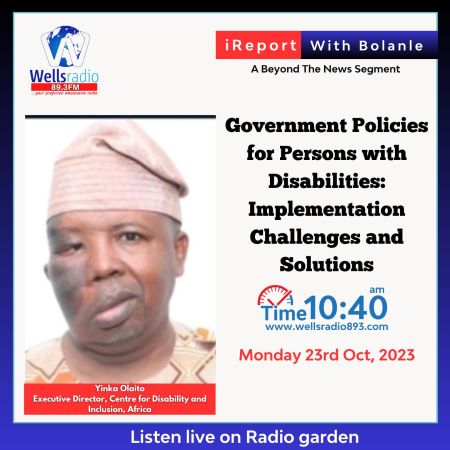
The above news was supposed to be good news to Disability and Inclusion community in Nigeria. But in a separate interview with the Centre’s Executive Director-Yinka Olaito, On WellsRadio(89.3 FM) with the theme “Government Policies on Persons with Disabilities: implementation, Challenges and Solutions” anchored by Bolanle Oduekun-Ayoola on Monday 23rd October, 2023, Yinka Olaito said, the signing for him comes with a mixed feelings.  

To Yinka Olaito, while there may be cause to rejoice but the fact remains there is nothing out rightly different from all other charters like United Nations Charter of Human Rights with regards to Persons with disabilities, Discriminations Against Persons with Disability Acts 2019 in Nigeria among many others that Nigeria’s federal government had signed, the challenge is that we have many strong documents on paper but by many ways the political will to implement their contents remain a mirage.

Yinka Olaito therefore charged the Federal Government to consider full implementations of the contents of all the charters already signed into by creating an enabling environment, works with relevant stakeholders towards ensuring the actualization of all these. You can listen to the full interview here.

READ MORE
Policy and Advocacy

We acknowledged your dedication to your cause- LASG Women Affairs Commissioner

With good understanding of the fact that no meaningful progress without collaboration and engagement with other active stakeholders, Our Centre continues to engage in strategic conversation with governments as well as policy decision-makers that can greatly influence achievement of its vocal programme. Policy and advocacy are too strategic areas that can easily ensure disability and inclusion projects become achievable.

On Thursday 12th October, 2023, Our management led by the Executive Director went on a policy and advocacy visit to Lagos State Commissioner for Women Affairs and Poverty Eradication at Lagos state Secretariat, Alausa Ikeja.

The executive director making his speech

Parts of our team’s aims were to appreciate the Ministry’s outstanding performance, demands for more inclusive projects that affect Women with disabilities, their economic and political empowerment, social inclusion in the most populous state in Nigeria.

The Ministry team making remarks

Our team also identified three key areas in the Ministry we can offer support.

In her response Hon. Bolaji Dada first acknowledged the fact that she is impressed by CDIA’s dedication and commitment to its causes which reflects in what we do. In Hon, Bolaji Cecilia Dada’s words “I will like to celebrate your commitment to your core values”. Hon Bolaji Cecilia Dada went on to brief our team on her achievements and goals as well acknowledged she honoured our visit because she sees a focused organization.


Group photo with CDIA and Lagos Women Affairs and Poverty Alleviation’s team

The Commissioner concluded that there are possibilities of collaboration of her Ministry with our organization.

You want to read more, you can check here and here

READ MORE
Inclusion demands

Neurodiversity: embracing the possibilities, encouraging inclusive workplace.

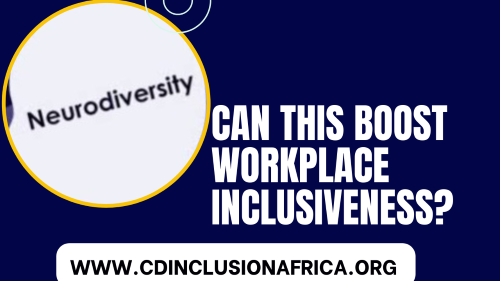
In recent years, the concept of neurodiversity in the workplace has gained traction. Beyond promoting diversity and inclusion, organizations are realizing the unique advantages that neurodiverse talent, including women, youth, and people with disabilities, can bring to the table. Neurodiversity in the workplace offers a wide range of advantages that can positively impact both employees and organizations as a whole.

For recap, neurodiversity is a context which examines unique ways different human being work. It posits that like human fingers, no two human brains work at the same level and goes on to explain brain differences and how these affect how their brain works. It goes on to explain being neurodivergent  shows how certain developmental disorder are normal variation in the brain and that persons who have these attributes also have their strength therefore human resources chief should know how to tap into such strengths instead of seeing this as disability

In this piece we look at the advantages of neurodiversity to both the employees and the organization.

Enhanced Problem Solving and Creativity: We all think using different lenses and neurodiverse team often possess unique perspectives and thinking styles. This diversity of thought leads to more innovative solutions to complex problems.

-Diverse Skillsets: Neurodiverse employees bring a broad range of skills and talents to the table, enriching the capabilities of the workforce. These skills can include exceptional attention to detail, pattern recognition, and deep subject matter expertise.

-Improved Productivity: When given the right support and accommodations, neurodiverse individuals can excel in their roles. Their focus and dedication can lead to increased productivity and efficiency.

-Enhanced Collaboration: Inclusive workplaces that embrace neurodiversity often foster a culture of acceptance and respect. This can improve team dynamics and collaboration among employees, leading to better outcomes.

Centre for Disability and Inclusion Africa equal job campaign

-Market Competitiveness: Companies that actively promote neurodiversity demonstrate their commitment to social responsibility and inclusivity. This can enhance their reputation and make them more attractive to customers, clients, and investors.

-Access to a Broader Talent Pool: By actively recruiting and retaining neurodiverse individuals, organisations tap into a talent pool that may have been previously overlooked. This can help address talent shortages in certain fields.

-Legal and Ethical Compliance: Many countries have laws and regulations that encourage or require inclusivity in the workplace. Embracing neurodiversity ensures compliance with these regulations and demonstrates ethical leadership.

-Employee Satisfaction and Engagement: Inclusive workplaces tend to have higher employee satisfaction and engagement levels. When employees feel valued and respected, they are more likely to be motivated and committed to their work.

-Reduced Turnover: When neurodiverse individuals are supported and accommodated in the workplace, they are more likely to stay in their jobs. This can reduce turnover rates and the associated costs of recruitment and training.

-Innovation and Competitive Advantage: Diversity of thought, stemming from neurodiversity, can drive innovation. Organisations that leverage this diversity gain a competitive advantage by offering unique products, services, and solutions.

Incorporating neurodiversity in the workplace, with a particular focus on women, youth, and individuals with disabilities, is not just about compliance nor a matter of social responsibility; it’s about harnessing the collective power of diverse minds. Embracing neurodiversity is a strategic move that can lead to innovation, improved problem-solving, and a more inclusive work environment, benefiting both employees and organizations.

READ MORE
Inclusion in Nigeria

Women with disabilities in Nigeria? How strategic empowerment can help?

In Nigeria, despite the level of changes in women empowerment, the nation still has a long way to go. Though we cannot say there is a major drive in this regard to include women with disabilities. It is pertinent to know that empowerment is beyond finance augmentation or poverty alleviation for women. 

It must be a holistic development of women which propels national development.  Having noticed greater dividends associated with women empowerment (a woman with or without disabilities) such as the ability of such individuals to gain a level of independence; government agencies and notable NGOs continue to push this agenda.

Women with disabilities in Nigeria face a myriad of challenges spanning from attitudinal derogation, limited access to education, healthcare and physical barriers. Women with disabilities are often excluded.  They are often segregated and excluded by society. 

If we care for an inclusive society, strategic empowerment for women with disabilities has become important today. The following are vital avenues to empower women with disabilities.

Educational empowerment:

If we truly care about empowering women with disabilities, access to quality education should be at the centre. Education comes in different slices. In Nigeria several ground-breaking steps have to be taken. Education is one of the unwavering means of empowering women with disabilities. More structured, inclusive school adult schools may be required.

Trained special needs educators who are not discriminatory with the right attitude are urgently needed to intensify the empowerment of women with disabilities.

Empowerment through health:

Health is a pivotal trajectory in breaking barriers to inclusion, Health is wealth. Gaps in Women with disabilities health need remain wide. Without good health no one can contribute meaningfully to personal and nation growth,

Inclusive health policy and budgeting should become a priority for Nigeria’s lawmakers to enable women g with disabilities to get adequate care from doctors.

Section 21 of Discrimination Against Persons with Disabilities (DAPDA 2019) should be fully implemented. Women with disabilities must be empowered to seek justice if this is denied them. This also will demand inclusive health workers who have the knowledge and training should be employed to cater for PWDs patients

Capacity building for gainful employment:

Economic independence is the most popular way of empowering an individual. Over the years this has not failed and has yielded indelible results. ‘’Economic disability is the worst level of disability.

Jennifer Ibrahim, Physically challenged poultry business owner, founder of a foundation helping others(PC: Nigeria Guardian)

Having a sense of economic independence is an achievement. It helps in conquering many fears as well as help individuals to demand for his/her rights. An economically disadvantaged person often accepts anything offered to them even though they know they deserve more. “Beggars have no choice”” is a popular mantra. 

Economic empowerment can be through competitive sports skills development, vocational training, business and relationship education. The world has shown Women with disabilities can become global champions through its Paralympic games.

Lucy Ejike, a powerlifter, stands today as a great example of an empowered woman with disability in competitive sport. Ejike has represented Nigeria for about six times in Paralympic sports and won medals. She uses an assistive device for movement due to polio and she also works as sport administrator. 

Lucy-Ejike, Nigeria’s Paralympics powerlifter medal winner(PC: okay.ng)

Vocational training centres should be fully equipped to accommodate women with disabilities. It has been proven for example, persons with intellectual developmental disabilities can breed chickens and ducks, physically-challenged persons with walking impairment can learn knitting etc.

In summary, empowering women with disabilities is not just barrier breaking but also supports inclusive society where every potential is maximized

READ MORE