Sexual and Reproductive Health Justice for Women with Disabilities: A Call for Urgent Action

Sexual and reproductive health right (SRHR) is a fundamental human right. Yet, for millions of women and girls with disabilities across Nigeria and Africa, accessing these rights remains a daily struggle shaped by exclusion, stigma, and systemic barriers.

In a recent advocacy video, Yinka Olaito, Executive Director of the Centre for Disability and Inclusion Africa (CDIA), spotlighted the urgent need to place women with disabilities at the centre of conversations on sexual and reproductive health justice. His message was clear: disability inclusion must move beyond rhetoric to concrete action.

Women with disabilities continue to face significant physical barriers when seeking healthcare. Many hospitals and clinics are not designed with accessibility in mind, lacking ramps, accessible restrooms, adjustable examination tables, and other disability-friendly facilities. Even reaching a health centre can be challenging due to inaccessible public transportation and the high cost of travel.

However, physical barriers are only part of the problem.

Negative attitudes among healthcare providers often discourage women with disabilities from seeking reproductive health services. Many are met with disbelief or judgment when requesting family planning, contraception, or maternal healthcare, driven by the harmful misconception that women with disabilities are not sexually active or do not desire marriage and parenthood.

Communication also remains a major gap. The absence of sign language interpreters, Braille materials, and other accessible information leaves many women unable to make informed decisions about their health. In many cases, healthcare providers speak to caregivers instead of engaging directly with the woman, undermining her dignity and autonomy.

Beyond healthcare settings, societal stigma continues to deny women with disabilities the right to make choices about their own lives. Many experience rejection, discrimination, and harmful stereotypes when pursuing relationships or motherhood. These attitudes reinforce exclusion and silence their voices.
Women with disabilities also face disproportionately higher risks of physical and sexual violence. Despite these realities, decisions about marriage, contraception, pregnancy, and childbearing are too often made by family members, guardians, or medical professionals instead of the women themselves.

Addressing SRHR challenges requires collective action.

Civil society organisations must continue to advocate for disability-inclusive sexual and reproductive health policies and programmes. Community leaders, faith-based organizations, and the media have a responsibility to challenge harmful stereotypes and promote positive narratives that affirm the rights, dignity, and agency of women with disabilities.

Government must also demonstrate stronger commitment by allocating adequate resources for disability-inclusive healthcare, enforcing accessibility standards, strengthening data collection on disability, and training healthcare providers on inclusive service delivery.

Sexual and reproductive health justice cannot be achieved while women with disabilities remain excluded from services designed to protect their health, dignity, and rights.

As Yinka Olaito emphasized, creating an inclusive society demands more than awareness it requires deliberate policies, adequate funding, and a shared commitment to ensuring that no woman is left behind because of disability.

The journey toward health equity begins with recognizing that every woman, regardless of disability, has the right to make informed decisions about her body, access quality healthcare without discrimination, and live with dignity. The time to act is now
READ MORE
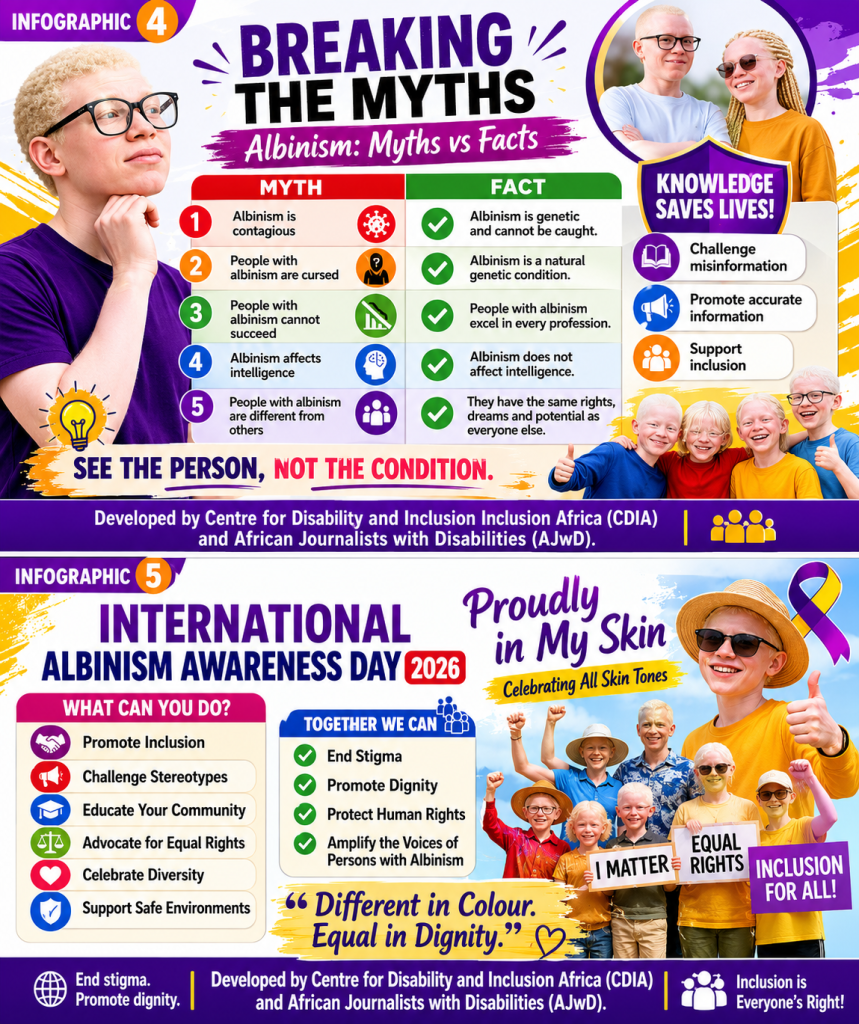
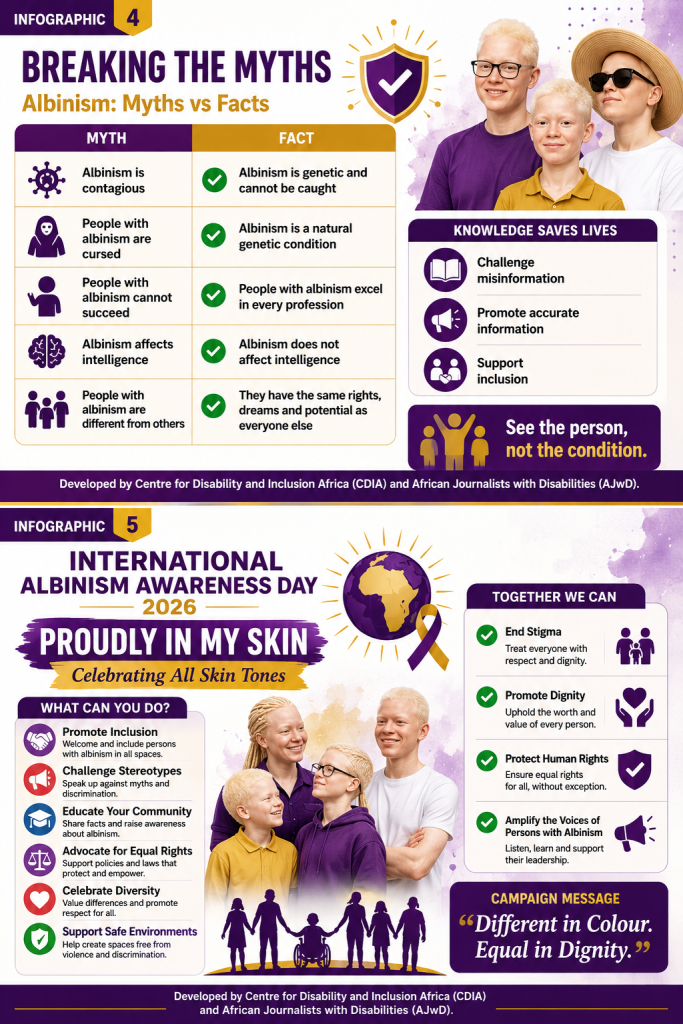
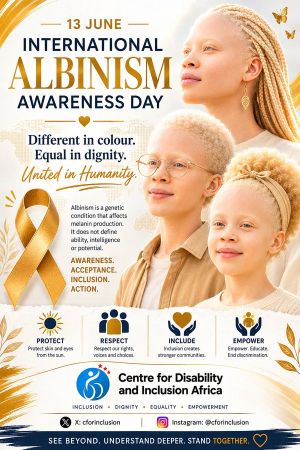
Albinism Awareness Campaign by Centre for Disability and Inclusion Africa

Different in Colour, Equal in Dignity: Ending Stigma Around Albinism

Every year, World Albinism Awareness Week provides an important opportunity to promote understanding, challenge harmful stereotypes, and reaffirm the rights and dignity of persons with albinism. At the Centre for Disability and Inclusion Africa (CDIA), we join the global community in celebrating diversity and advocating for a society where every individual, regardless of skin colour or genetic condition, is valued, respected, and included.

Understanding Albinism

Albinism is a rare, non-contagious genetic condition present from birth. It occurs when an individual inherits specific genetic traits from both parents, resulting in reduced or absent melanin production in the skin, hair, and eyes. Melanin is the pigment responsible for colouring these features and providing some protection against the sun’s ultraviolet rays.

Albinism affects people of all races and ethnic backgrounds and occurs equally among males and females worldwide. Contrary to common misconceptions, albinism is neither a disease nor a curse. It is simply a genetic condition that forms part of the rich diversity of the human family.

Many persons with albinism also experience visual impairments due to reduced pigmentation in the eyes, making access to appropriate eye care services and educational support essential.

Health Challenges and the Need for Protection

The absence of sufficient melanin presents unique health challenges. Persons with albinism are particularly vulnerable to sun damage and face a significantly increased risk of developing skin cancer if preventive measures are not taken. Many also experience sensitivity to bright light and varying degrees of visual impairment.

Simple but essential interventions can dramatically improve quality of life. These include regular use of sunscreen, protective clothing, sunglasses, routine skin examinations, and access to specialized eye care services.

Unfortunately, many persons with albinism across Africa still lack access to these life-saving resources. Limited healthcare access, poverty, and inadequate public awareness continue to place many individuals at unnecessary risk. Ensuring access to healthcare is not a privilege—it is a fundamental human right.

Confronting Stigma and Promoting Mental Wellbeing

While health concerns are significant, social barriers often present equally serious challenges. Across many communities, persons with albinism continue to face stigma, discrimination, bullying, and exclusion.

Children with albinism may encounter mockery in schools, while adults often experience prejudice in workplaces and communities. Persistent myths and harmful stereotypes can lead to social isolation and reduced opportunities for education, employment, and participation in public life.

The emotional and psychological impact of these experiences should not be underestimated. Hurtful comments and so-called “harmless jokes” can leave lasting scars on self-esteem and mental wellbeing. Building inclusive communities requires more than awareness; it demands empathy, respect, and deliberate action to ensure everyone feels valued and accepted.

Breaking Myths with Facts

One of the most effective ways to combat discrimination is through education. Albinism is not contagious. It cannot be transmitted through contact. It is not a curse, a punishment, or a sign of supernatural influence.

Persons with albinism possess the same intelligence, talents, aspirations, and potential as anyone else. Across Africa and around the world, they are thriving as professionals, entrepreneurs, academics, artists, advocates, and leaders.

When communities replace myths with facts, they create safer and more inclusive environments where individuals can flourish and contribute their full potential.

A Call to Action

As we commemorate World Albinism Awareness Week, we encourage governments, educational institutions, healthcare providers, employers, civil society organizations, and community leaders to strengthen efforts that protect and promote the rights of persons with albinism.

Each of us has a role to play. We can challenge stereotypes, educate our communities, advocate for equal rights, support safe environments, and celebrate human diversity in all its forms.

At the Centre for Disability and Inclusion Africa (CDIA), we remain committed to advancing inclusion, dignity, and equal opportunities for all persons with disabilities, including persons with albinism.

This week, and every week, let us remember a simple but powerful truth: Different in colour. Equal in dignity.

READ MORE

Disability Rights Under Siege: Navigating Electoral Exclusion in Nigeria

Across Africa, millions of persons with disabilities (PWDs) face systemic barriers that limit their access to the fundamental tools of citizenship. Inclusion is not only a human right but an essential cornerstone of economic resilience.

In Nigeria, an estimated 19 to 29 million people live with at least one form of disability accounting for roughly 10% to 15% of the total population. Yet, despite representing a massive demographic, this group remains largely on the periphery of both economic development and national governance.

Despite the passage of the Discrimination Against Persons with Disabilities (Prohibition) Act in 2018, which was signed into law in early 2019, which explicitly criminalizes discrimination against PWDs and a further reinforcement of this law by the Section 54 of the electoral Act 2022, which legally mandates the Independent National Electoral Commission (INEC) to make special provisions for PWDs during elections, specifically ensuring the availability of assistive devices, records still show a poor representation of PWDs in politics.

To understand the depth of this exclusion, one must look at how PWDs have participated in Nigeria’s recent democratic processes. While INEC has made commendable policy strides on paper, data from the field reveals a stark implementation gap.

According to data compiled by SBM Intelligence and civil society groups like TAF Africa, out of the 93.46 million registered voters in the 2023 general elections, an estimated 14 million were PWDs. This represents a massive voting bloc capable of swinging any national election. Yet, the reality of election day paints a discouraging picture:

The 2023 general elections in Nigeria once again exposed the deep gaps in political inclusion for persons with disabilities (PwDs). Out of the 4,716 candidates who contested various elective positions nationwide, only 37 were persons with disabilities, representing a mere 0.78 percent of the entire candidate population. Notably, no person with disability contested for the office of the president, highlighting the persistent barriers that continue to limit political participation at the highest levels.

Beyond representation, the elections also revealed serious shortcomings in electoral accessibility. Although the Electoral Act 2022 made provisions for the deployment of assistive devices and special tools to support voters with disabilities, post-election assessments showed that implementation remained largely inadequate. Only 22.26 percent of voters with disabilities reported the availability of assistive materials such as Braille ballot guides, magnifying glasses, or sign language interpreters at their polling units.

The absence of these critical support mechanisms significantly compromised the voting experience of many persons with disabilities, particularly those who are visually impaired or physically challenged. In many cases, voters were compelled to depend on relatives, friends, or even polling officials to help them cast their ballots. This situation not only eroded their independence but also violated the constitutional principle of ballot secrecy, which guarantees every citizen the right to vote privately and freely.

The impact of these exclusions was felt most strongly among young persons with disabilities and visually impaired voters, who expressed the highest levels of dissatisfaction with the electoral process. Their concerns centered on inaccessible polling units, inadequate voter education tailored to disability needs, and security challenges on election day that placed vulnerable groups at greater risk. Collectively, these issues underscore the urgent need for Nigeria’s electoral system to move beyond policy promises toward the full and practical inclusion of persons with disabilities in democratic participation

For Nigeria’s democracy to mature, PwDs must change from being passive observers of political campaigns to being active architects of political strategy. Ahead of coming off-cycle and general elections, government agencies, political parties, and civil society must deliberately institutionalize inclusion by considering the following points:

Reforming Political Party Structures

True representation begins at the primary level. Currently, the internal operations of Nigeria’s 18 registered political parties offer nominal inclusion, often limited to creating a singular, tokenized position of a “National Disability Leader.”

Political parties must move beyond tokenism by waiving nomination fees for qualified PWD candidates, establishing accessible campaign venues, and generating campaign manifestos in alternative formats (Braille, audio, and simplified text).

Mandatory Data Disaggregation

Right now, political parties ignore the PwD demographic because they do not see them clearly on the voter roster.

INEC must fully utilize and publish disaggregated data from its voter register, categorizing voters by their specific disability types. Political parties can then leverage this data to build targeted, realistic campaign promises that address the specific infrastructure, healthcare, and educational needs of PWDs in regional clusters.

Enforcing the 5% Affirmative Action Policy

The government cannot demand inclusivity from the private sector or political parties while failing to practice it internally.

The Federal and State governments must strictly enforce the 5% employment and appointment quota stipulated in the 2018 Disability Act. Legislative bodies and executive cabinets should actively appoint qualified PWDs to head ministries, departments, and agencies (MDAs)—not just those explicitly dealing with humanitarian affairs or social development, but fields like economic planning, technology, and education.

Accessibility as a Campaign Standard

Political rallies in Nigeria are notoriously chaotic, often posing physical dangers to individuals with physical or sensory impairments.

Civil society organizations must pressure political campaigns to adopt an “Accessibility Standard.” If a political rally or televised debate lacks sign language interpreters or wheelchair-accessible venues, it should be flagged as unconstitutional and non-inclusive.

Nigeria cannot achieve true economic resilience or democratic stability while shutting out millions of its citizens. Transitioning from a culture of pity to a culture of policy is not just a moral obligation; it is a legal requirement under the 2018 Disability Act. Only when political parties and government structures intentionally integrate PWDs into mainstream governance will Nigeria truly boast a democracy for all.

Conclusion

Nigeria cannot achieve true economic resilience or democratic stability while shutting out millions of its citizens. Transitioning from a culture of pity to a culture of policy is not just a moral obligation; it is a legal requirement under the 2018 Disability Act. Only when political parties and government structures intentionally integrate PWDs into mainstream governance will Nigeria truly boast a democracy for all.

#Written by Kemi Ade-Adeniji, Ph.D, CDIA BOT member

READ MORE
From Access to Engagement in inclusive Education

From Access to Engagement: Why Inclusive Education Needs a Rethink

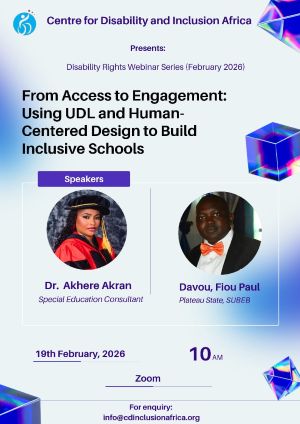
Inclusive education is often discussed in terms of infrastructure, enrolment, and policy commitments. But what happens after learners with disabilities enter the classroom? Do they feel seen, supported, and meaningfully engaged? These critical questions shaped a recent session in the Disability Rights Webinar Series hosted by the Centre for Disability and Inclusion Africa (CDIA), which convened educators, policymakers, and disability advocates to examine a deeper, more practical vision of inclusion.

Held virtually on 19 February 2026, the webinar, themed “From Access to Engagement: Using Universal Design for Learning (UDL) and Human-Centered Design (HCD) for Inclusive Education,” focused on bridging a persistent gap in Nigeria’s education landscape: the difference between providing access and ensuring genuine participation.

Why Access Alone Is Not Enough

Despite growing policy recognition of inclusive education in Nigeria, many learners with disabilities continue to face barriers that limit not only entry into schools but their ability to thrive within them. Challenges such as overcrowded classrooms, insufficient teacher preparation, rigid curricula, and entrenched social attitudes often undermine well-intentioned inclusion efforts.

A recurring concern during the webinar was that inclusion is still too frequently framed as a matter of accommodations reactive measures applied after difficulties emerge rather than proactive design. This mindset, participants agreed, risks creating environments where learners are present but not fully engaged.

Inclusion as a Mindset and Leadership Issue

One of the session’s most compelling insights came from Dr. Mariam Akhere Akran, a special educator and diversity strategist, who challenged common assumptions about inclusive education. She argued that inclusion is not primarily a financial problem but a question of mindset, leadership, and intentional design.

Dr Mariam Akhere Akran

Viewing disability as a form of human diversity rather than deficit, she explained, fundamentally shifts how educators approach teaching and learning. When teachers prioritise empathy, psychological safety, and flexibility, classrooms become more responsive to all learners — not just those with identified disabilities.

This perspective also counters the widespread belief that inclusion is inherently expensive. Many inclusive practices, she noted, involve low-cost adjustments in lesson planning, communication, and student engagement strategies rather than major structural investments.

Universal Design for Learning: Planning for Variability

Central to the discussion was Universal Design for Learning (UDL), presented as a framework for anticipating learner variability from the outset. Instead of designing lessons for an “average” student, UDL encourages educators to recognise that learners differ in how they engage with information, process concepts, and express understanding.

The webinar highlighted three foundational UDL principles:

  • Multiple Means of Engagement – Supporting motivation and sustained participation
  • Multiple Means of Representation – Delivering content in varied formats
  • Multiple Means of Action and Expression – Allowing diverse ways to demonstrate learning

Participants were encouraged to see UDL not as an add-on technique but as a design philosophy embedded at the planning stage of teaching.

Moving from Physical Access to Meaningful Engagement

PAul Davou Fiou

While physical accessibility and enrolment remain vital, speakers emphasized that these measures alone do not define inclusion. Paul Davou Fiou, representing the Special Education Unit of the Plateau State Universal Basic Education Board, observed that many initiatives still focus narrowly on getting learners into schools without sufficiently addressing classroom participation and learning outcomes. Access without engagement, he stressed, can inadvertently reproduce exclusion within the classroom itself. True inclusion requires adaptable curricula, interactive teaching methods, and deliberate attention to learner agency.

Human-Centered Design: Designing With Learners

Complementing UDL, Human-Centered Design (HCD) was introduced as an approach that prioritises the lived experiences of learners and families. Rather than importing generic solutions, HCD advocates context-sensitive strategies shaped by local realities. This includes actively incorporating student and parent voices into curriculum development and policy processes  an especially important consideration in contexts where stigma, trauma, or cultural misconceptions influence educational experiences.

Addressing Systemic Barriers

Importantly, the conversation framed many obstacles to inclusion as systemic rather than individual failures. Overcrowded classrooms, limited teacher training, and weak policy implementation mechanisms were recognised as structural issues requiring coordinated responses.

To this end, participants explored strategic priorities such as integrating Universal Design principles into curriculum reform, strengthening teacher training institutions, establishing cross-sector design teams, and reinforcing accountability systems.

From Dialogue to Action

Beyond knowledge sharing, the webinar fostered robust engagement among participants, reflecting a growing appetite for practical, scalable solutions. Increased awareness of UDL and HCD concepts, coupled with strong multi-stakeholder dialogue, marked key outcomes of the session.

A Broader Vision for Inclusion

The discussions ultimately pointed toward the need for a coherent national inclusion framework one that aligns policy, pedagogy, and governance while embedding monitoring and evaluation mechanisms to track real-world impact.

Inclusive education, as underscored throughout the webinar, is not simply about removing barriers to entry. It is about designing learning environments where every student can participate, contribute, and succeed. As CDIA continues to convene conversations at the intersection of disability rights and development, one message stands clear: sustainable inclusion begins not at the school gate, but at the heart of how we design learning itself.

Read Full Report here or https://www.linkedin.com/feed/update/urn:li:ugcPost:7430249982064029696/?actorCompanyId=104643128

READ MORE

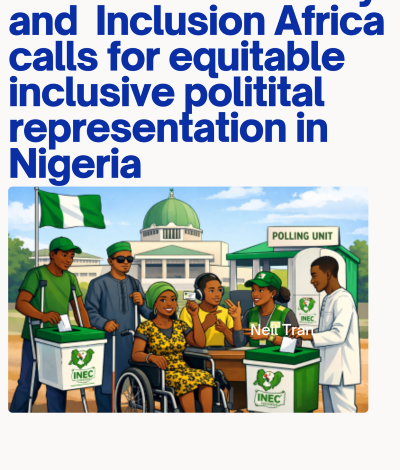
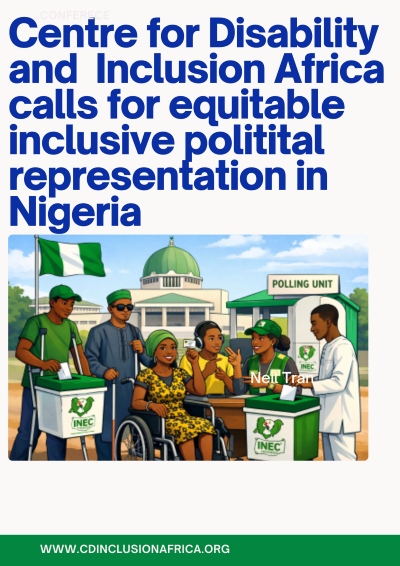
CDIA calls for Inclusive Political Representation in Nigeria as APC begins Review

Nigeria’s democracy continues to evolve, yet one critical question remains unresolved: What is the hope of the marginalized in our political system? From women and youth to persons with disabilities and other marginalized groups, political power in Nigeria is still concentrated in the hands of a narrow elite. It is this reason that Centre for Disability and inclusion Africa released an advocacy video calling on the All-Progressives Congress (APC) and other political parties reignited this conversation, urging political actors to move from tokenism to genuine inclusion.

The Representation Deficit

Despite being Africa’s largest democracy, Nigeria ranks poorly in inclusive political representation. Women constitute nearly half of the population but occupy less than 5 per cent of elective positions nationwide. Youth, who make up over 60 per cent of the population, are largely excluded from party leadership and decision-making spaces. Persons with disabilities (PWDs), in Nigeria population is

A major concern of the Centre for Disability and Inclusion Africa is that democracy without inclusion is incomplete. Elections alone do not guarantee representation if political parties fail to deliberately open their structures to diverse voices.

Political Parties as Gatekeepers

Another concern of the centre  is the central role political parties play in shaping inclusion. In Nigeria. The Centre for Disability and inclusion Africa strongly believes  Political parties are the gatekeepers of political power. They control candidate selection, nomination fees, internal zoning arrangements, and campaign support.

A noted perceived injustice by the Centre is that  many parties continue to prioritize wealth, godfatherism, and entrenched power blocs over competence, diversity, and lived experience. High nomination fees alone exclude women, young people, and PWDs long before elections begin. Internal party processes often lack transparency, making it difficult for under-represented groups to compete fairly.

The call on APC and other parties is therefore strategic: without internal party reform, inclusive governance will remain a slogan rather than a reality.

Inclusion Is Not Charity It Is Democracy

The centre for Disability and Inclusion Africa  in this call and  advocacy message is that inclusive representation should not be treated as political charity. Marginalized groups are not asking for favors; they are demanding their democratic rights.

Inclusive political representation must strengthen governance by: bringing lived experiences into policymaking, improve trust between citizens and the state, produce laws that reflect social realities as well as enhance national cohesion and legitimacy. When persons with disabilities are included, public infrastructure and services become more accessible for everyone.

The basis we stand on: Legal promises and low Political Will

Nigeria’s Constitution and electoral laws recognize equality and non-discrimination. The Discrimination Against Persons with Disabilities (Prohibition) Act, the Not-Too-Young-To-Run Act, and the National Gender Policy all point towards inclusion. However, laws without political will remain ineffective. It is our concern then that as All Progressive Congress begins its South West constitutional review, the reserved slots for for women, youth, and PWDs must be balanced and that PWDs must be supported beyond tokenism

Looking Ahead: From Advocacy to Action

As Nigeria prepares for future elections, inclusive political representation must move to the center of democratic reform. Civil society, media, and voters all have roles to play in holding political parties accountable.

A major responsibility in achieving this lies with political parties themselves. If APC and other parties are serious about national development, they must recognize that exclusion weakens democracy, while inclusion strengthens it.

Nigeria cannot continue to govern a diverse society with a narrow leadership base. Inclusive political representation is not optional  it is essential for justice, legitimacy, and sustainable development.

Inclusive democracy is not about adding more seats at the table; it is about ensuring the table belongs to everyone.

READ MORE
Disability and Entrepreneurship

Women With Disabilities Demand Inclusion, Confidence and Policy Action at Lagos Summit

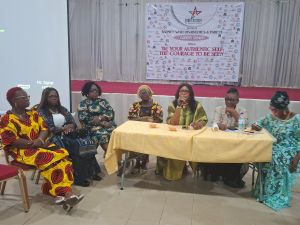
A daily experience of many women with disabilities in Nigeria is perpetual exclusion. For them exclusion is a next dorr neighbour not a faraway stranger. For this major reason, today, being Wednesday 21sst January, 2026 in Lagos, this reality took centre stage as women with disabilities, alongside their parents and carers, came together for a landmark summit organised by the Star Children Development Initiative.

The gathering was more than a conference; it was a space for shared stories, reflection and renewed determination. Participants spoke openly about the social attitudes, policy gaps and structural barriers that continue to push women with disabilities to the margins of Nigerian society.

Held under the theme “Women with Disabilities, Parents and Carers Summit,” the event drew disability rights advocates, caregivers, professionals and community leaders from across sectors. Through conversations, skills-building sessions and collaborative strategising, attendees examined how exclusion persists—not only in public spaces and institutions, but also in decision-making processes meant to protect their rights and improve their quality of life.

Central to the discussions was the lived reality of women with disabilities who remain largely invisible in policy debates, despite being directly affected by laws and programmes on health, education, safety and economic participation. For many in the room, the summit represented both a moment of affirmation and a call to action: that inclusion must move beyond rhetoric to deliberate, sustained change.

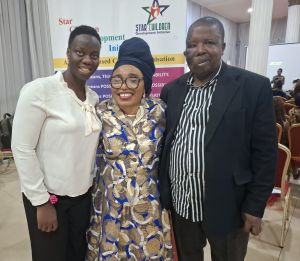
Our team with The ED Star children, at the event

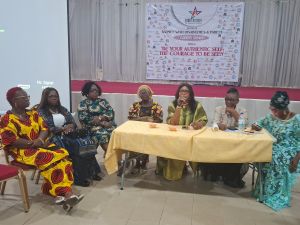
iA panel session during the Summit

n her keynote address, Prof Chinwe Nwani challenged participants to embrace authenticity, reject internalized stigma which can strengthen and build their confidence as a pathway to personal and collective transformation. “Authenticity is power,” she told the audience. “When women with disabilities show up fully as confidence and prepared without apology, they can easily challenge stereotypes, disrupt exclusion and create new possibilities for leadership and visibility.”

Read full post here

Feedback from the event

READ MORE

Inclusion Can’t Wait, Yinka Olaito Presses Nigeria to Act

As the world marks the International Day of Persons with Disabilities (IDPD), global attention has once again shifted to the rights, dignity and full participation of the 1.3 billion people living with disabilities. Observed annually, the day underscores the need for an inclusive society where persons with disabilities are not only recognized but actively involved in political, social, economic and cultural development.

This year’s commemoration reinforces the United Nations’ call for increased awareness of disability issues and stronger action towards accessibility and equal opportunity.

As passionate organizer and individuals, at the Centre for Disability and inclusion, our major focus is often to use the day, through media advocacy, media appearances to deepen public understanding of the diverse experiences of persons with disabilities while mobilizing support for policies that enhance their well-being.

Some of our organization’s mission for the day, driven by Yinka Olaito is to draws global attention to the value of integrating people with disabilities into all areas of life from governance and employment to education, technology and community development. Beyond this, the use of media platforms with Millions of reach is to amplify the leadership and voices of persons with disabilities in decision-making. Yinka Olaito stressed “Stakeholders must continue to insist that meaningful representation rather than token engagement is required to break long-standing barriers, reduce discrimination and ensure full participation in society”.

Yinka Olaito “Cautions that the world cannot attain sustainable development without intentional inclusion, stressing that progress must be measured by how well the most marginalized are supported and empowered”.

About IPWD Day 2025

As activities hold across countries, IDPD stands as a global call to action urging governments, institutions and communities to drive policy reforms, remove systemic barriers and create societies where persons with disabilities can thrive, lead and shape their own futures

READ MORE
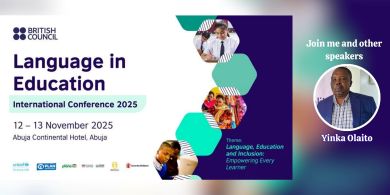
British Council Language, Education and inclusion Conference 2025

At British Council Language, Education and Inclusion conference CDIA advocates for Technology use

“The argument about mother tongue use in Nigeria coming up strongly at the this year’s conference to me is unnecessary if we have not settled the purpose or vision behind education in Nigeria. It is when we agree on what the foundation of education, which to me is literacy, is resolved we may not come to term with best approach to go”

“The fundamental purpose of education must begin with literacy (reading, speaking and listening). Language is a purveyor of knowledge and it is akin to identity, culture and class. When languages dies the culture of people die”

“To help strengthen language diversity for all learners, the use of technology, artificial intelligence here is important even though care must be taken so that technology should not deepen exclusion. “AI may not solve all language challenges, but ignoring minority languages will erode our diversity let’s ensure ai doesn’t deepen exclusion. Position AI as a “digital interpreter’ that promotes linguistic democracy in Classrooms”  

Above are some of the submissions of Yinka Olaito, CDIA Executive Director, during his presentation on “Technology As a catalyst for Language Diversity for All learners’ session

The British Council, in partnership with the Federal Government and leading development organizations, convened a high-level dialogue to push forward bold strategies for inclusive, equitable, and transformative education across West Africa.

This the conference tagged “Language in Education International Conference 2025, with the theme “Language, Education and Inclusion: Empowering Every Learner.”  Was attended by delegates from across sub–Saharan Africa, Asia  and United kingdom. The high-level event had in present Nigeria’s Minister of Education, Dr. Maruf Tunji Alausa, who in his speech underscored the urgency of stronger collaboration among educators, policymakers, and institutions to deliver quality education for every Nigerian child.

The conference which held between12–13 Novemberat the Abuja Continental Hotel.

Over two intense days of plenaries, workshops, keynotes, and panel debates, participants examined the central role of language in shaping inclusive education. Discussions explored foundational learning, improved teacher training, responsive pedagogy for multilingual classrooms, and the power of technology and equitable assessment tools to support diverse learners.

“Language is more than a medium of instruction; it is a cornerstone of inclusion,” said John Simpson, Senior Advisor, English and School Education Programme, British Council. “This conference allowed us to reimagine education systems that reflect Africa’s linguistic and cultural richness—and ensure every child can thrive.”

Speaking further, Julian Parry, Director of English Programmes, Sub-Saharan Africa, described the British Council as “a trusted partner to governments and institutions, drawing on evidence, global insights, and deep listening to support context-driven educational change.”

The event strengthened cross-sector partnerships, elevated language as a critical pillar of education reform, and set the stage for actionable recommendations on language policy, teacher development, and inclusive classroom practices.

About the Conference

The Language in Education International Conference 2025, hosted by the British Council in Abuja, convened national and international stakeholders to explore how language can unlock inclusive and equitable education systems globally. The full programme is available in the conference brochure.

The conference now in its eighth year was organized with in conjunction with UNICEF, Plan International, FCDO PLANE, Sightsavers, Save the Children, and Sterling One Foundation. It brought together global and regional stakeholders: policymakers, educators, researchers, and development partners united by a single mission advancing language-driven, learner-centred education systems.

READ MORE
Inclusion demands

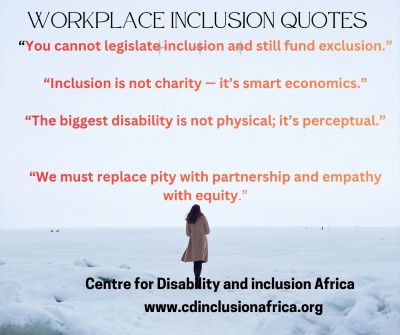
At October 2025 DRWS, experts warned “You cannot legislate inclusion and still fund exclusion.”

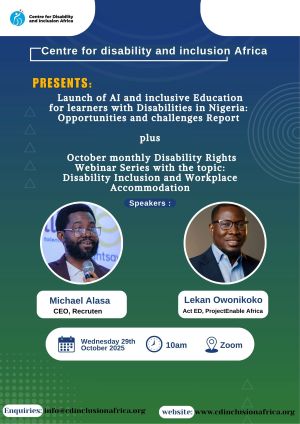
Centre for Disability and inclusion Africa’s October 2025 Disability Rights Webinar Series centred around National Disability Employment Awareness Month advocacy. The theme is “Disability Inclusion and Workplace accommodation?

A major concern of the organization is to advance the discourse on inclusive employment, showcasing success stories, and catalyzing action among stakeholders. Among the major objectives of this event are: To encourage employer’s public, private, non-profit to create equitable, accessible, and diverse workplaces as well as   to advocate for policy or institutional changes to reduce barriers and support reasonable accommodation and equal opportunity.

The event was preceded by the launch of ‘Ai and inclusive Education for learners with Disabilities in Nigeria report’. While opening the session, Busola Oladotun, the Senior Program officer of the Centre for Disability and Inclusion Africa maintained “The October edition of the monthly Disability Rights Webinar centered on workplace inclusion as part of National Disability Employment Awareness Month.

According to Busola. “The aim of this session is to establish a need for an equitable workplace so that persons with disabilities will overcome barriers such as stigma, discrimination, and inaccessible environments to excel academically and professionally”.

After this, Yinka Olaito, CDIA  Executive director, welcomed participants and charged them to give their 110% to the conversation of the day as the two speakers were well-suited to discuss the issue.

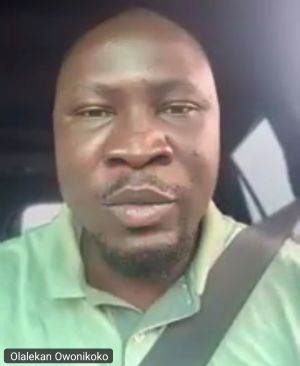
The first speaker, Olalekan Owonikoko, Acting Executive director of ProjectEnable in his speech maintained among others that Inclusion goes beyond compliance, leadership and policy are essential. There is need for inclusive career growth as well as a need to leverage technology as equalizer for a flexible work environment”

Olalekan Owonikoko

Owonikoko concluded “Building an inclusive, equitable, and accessible workspace is not charity or compliance but a strategic move

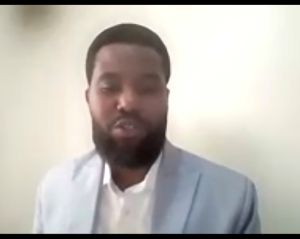
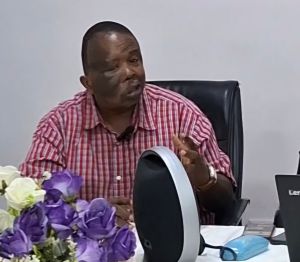
The second speaker, Michael Alasa, the CEO of Recruten consulting on his part stressed the need for workplace equity, diversity, accessibility and different sectors’ responsibilities in the game.

Michael Alasa

Michael Alasa in his call to action emphasized “Public sector should Integrate accessibility in policy design and infrastructure, Private sector mustmeasure and report inclusion outcomes while –Nonprofits: Practice representation, not advocacy alone. Finally, he advised all sectors must collaborate as inclusion cannot succeed if only one acts

To read full event report click Here or here https://www.linkedin.com/feed/update/urn:li:ugcPost:7389981184891637762/?actorCompanyId=104643128

READ MORE

International Sign Language Day 2025: Yinka Olaito Calls on Stakeholders to Move Beyond Legal Frameworks”

“While policy and legal framework are good, no one has moved faster with these two- leg approach. We have witnessed promulgation of several legal frameworks and policies, yet we have not seen the kind of speed we all anticipated. To move faster we need more than legal frameworks and policies, we need community involvement, engagement, input and continuous collaboration as well as commitment to make anything work”.

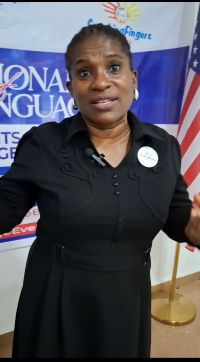
Treasures Uchegbu, ED, SpeakingFingers Network

Above and many other thoughts were shared by Yinka Olaito, Executive Director of the Centre for Disability and Inclusion Africa on International Sign Language Day 2025. Yinka Olaito emphasized the above at the event to commemorate International Sign Languages Day 2025 organized by United Nations Information Centre Nigeria in collaboration with SpeakingFingers Network led by Mrs Treasures Uchegbu in Lagos Nigeria on September 23, 2025.

Yinka olaito speaking at the event

In her opening and welcome speech, the leader of United Nations Disability Strategy group, Mrs Wunmi Laolu Akande, of United Nations Populations Fund Disability and inclusion unit, emphasized the importance of the day and efforts of the United Nations group in Nigeria “As UN bodies, we prioritize and celebrate the uniqueness of the Sign language as a means of communication for the deaf hence a day is dedicated to celebrate this.” Beyond this, the importance of Sign language as human rights informed the theme for this year’s celebration “No Human Rights Without Sign Language Rights”

The Co-Convener, Mrs Treasures Uchegbu charged the audience to always show their intentionality about bridging the gap of communications so that no one is left behind. “As an individual, I began my journey into Deaf inclusion when I met a 21 year old lady, who is deaf and had HIV without support. From there we have helped shape several lives in the course of our journey”.

Beyond the greetings and goodwill messages from strategic stakeholders, a major part of the event is a panel session that brought experts within the ecosystem together to step up conversations on the theme of the day. The panel include Mrs Adenike oyetunde-Lawal, the General Manager of Lagos State office of Disability Affairs {LASODA)

In her presentation, Adenike believes “Government is doing its best to translate Sign language into official languages” Adenike also noted that we must also acknowledge it is “Sign languages’ with variant and therefore the onus lies on all of the stakeholders. In her conclusion Adenike believes “ Sign Language will soon become one of the official languages in Nigeria and that if she has all the power, such action will be stepped up”.

Another panelist, Mrs Ruth Adejumo, who has lived experience and  a mother of a child with hearing impairment charged government and the entire disability inclusion community to do more than lips service as many children with hearing impairment continued to be ostracized n without adequate provision for their needs in term of language and communication.

Beyond this Mrs Adejumo also charged parents of hearing impairment to be intentional about Sign language learning so they can be integrated into the family system and the society at large. “ We need more than tokenism to move faster, everyone must be involved.

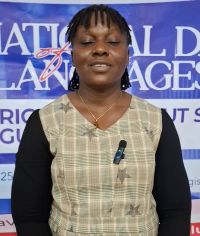
Adesuwa oyerinde

Other dignitaries at the event include Mrs Adesua Oyerinde, head of Sign language unity of Daystar Christian Centre, President of Association of Sign Language interpreters of Nigeria, Lagos State chapter- Mr Sodeinde olubowale among others

Some of the participants at the vent

The international Sign language event was organized in hybrid format so that participants can join across the nation as well as to accommodate the United Nations System participant 

READ MORE