Education and PWDs

Oyo State PWDs, Inclusion Community Stakeholders Policy Dialogue

While a disability bill is already enacted in the state with attendant setting up an Agency to oversee affairs of Disability matters in the state, public awareness and more especially PWDs community awareness is still very low. Majority of the public within the state are not aware the agency exists.  

The agency operations in itself is still in its infancy stage trying to gather momentum. Just recently, the agency just set up its administrative office but administrative staff are yet to be fully employed and given the fact that the provision of at least 50% of staff must be persons with disabilities continue to be a challenge. More importantly, finance has been a major factor.

Officials at the event- L-R Comrade Lawal, Executive Assistant to the Governor’s rep, Mr Akinsewa, repr Mr Ajilo Femi, chair JONAPWD oyo state, Evang, Olu Kayode, Rep of Barr. Adekambi, Mrs Temitope Labai, Women leader , Oyo state JONAPWD, Mr Yusuf Olatunji, Mr Ibiyale, rep Commissioner for Women Affairs

Panellists at the event

Above and many other issues were the major concerns of Oyo state Persons with Disabilities(PWDs), Inclusion Communities at the recently held Oyo State PWDs, Inclusion Stakeholders Policy Dialogues, which is part of the project of the centre to gather views of southwest Nigeria Disabilities caucus. The event was held at University of Ibadan hotel on Friday 26th January, 2024.

The event with the theme: Nigeria Inclusive Society: Accessibility, Exclusion and Social relationships” among many others was convened to create an avenue for collaboration, conversation around PWDs rights and their active participation in the society.

The event, which is organized as a panel session, has Hon. Toyin Balogun, the Oyo state Commissioner for Women Affairs and Social Inclusion as chairperson as well as the following as panellists:  Barr, kayode Adekambi, Director of Oyo state Board for Disability Affairs, Mr Ajilo Femi, Oyo state chair of Joint National Association of Persons with Disabilities(JONAPWD), Mrs Alabi Temitope Success, Women leader, JONAPWD, Oyo state as well as Mr  Yusuf Olatunji, former secretary-general of JONAWPD while Hon. Femi Timothy, Executive Assistant to the Governor served as special guest at the occasion.

The commissioner, through her representative, Mr Ibiyale, who is the director of rehabilitation in the Ministry, shared her Ministry appreciation with the organization for such a laudable project, emphasized state government’s commitment to issue of PWDs especially to Women with Disabilities and itemised ongoing efforts of her Ministry and that of the state’s government to make life better for PWDs in the state.

The panellists, participants made significant contributions to the dialogue which cut across accessibility, exclusion, social relationship issues, need to promote awareness of existence of Disability agency’s activities; need for transparency and accountability of the agency, needs for collaborations among the stakeholders among other salient issues. Find some of these below:

Key Recommendations

  1. There is need to train staff of   the nascent Oyo state Disability Board to understand its vision, mission and the modus Operandi. The board has to be self-sustainable to play its role.
  2. Working intimately with the media houses in Oyo State is important for correcting negative narratives, stereotypes and public awareness about disability.
  3. Local Government Office holders in Oyo state needs capacity building to understand disability and Inclusion and not exclude PWD in governance.
  4. PWDs need to speak up for themselves, be confrontational where necessary without being violent.
  5. JONAPWD need to position itself as a watchdog to the Oyo state Government in ensuring the inclusion of PWD in Oyo State.
  6. There is need for grassroots engagement, as JONAPWD need to be present and active in all local governments of Oyo state and the use of indigenous languages for awareness is important.
  7. Engage key stakeholders in accessibility and mobility such as structural engineer and Nollywood, financial institutions to correct negative narrative and take on where necessary.
  8. Role modelling and teamwork within the PWD community is important.
  9. Nollywood need a lot of briefing and change orientation in the stereotypical portrayal of PWDs in Nigerian films, Movies

Some of the participants

READ MORE
Inclusion demands

Osun State PWDs, Inclusion Stakeholders Policy Dialogue

When we talk of disability, often it is not always about the impaired, as we may think, structures and environment can also be disabling. True, we must acknowledge that having an impairment can slow down human ability to do certain activities but if the environment, structures are configured in a way that makes life easy, the issue of disabilities becomes minimal.

The above and many more are some of the conclusion reached at Osun State Nigeria Persons with Disabilities (PWDs) Inclusion community Stakeholders Policy Dialogue organized by Centre for disability and Inclusion Africa as part of its efforts to create an avenue to discuss nad reaffirm the position of the 6 states that make up of Southwest geo political zone in Nigeria, which has about 49 Million (22% of Nigeria population).

Welcoming participants drawn from (non)state actors of PWDs community in the state which has: the impaired, the affected and the concerned as well as Policy makers, government officials and relevant agencies; the executive director, Yinka Olaito, emphasised a need to collaboratively work together as well as create an avenue which ensures rights and participation of PWDs are protected.  

Panellists: L-R (Stephen Olufemi, Elixabeth Ishola, Jare Tiamiyu, Hon. Adewunmi Adeyemi Irekandu

He further emphasised the purpose of the policy dialogue is for the community to develop common focus which can drive disability, inclusive government, sustainable society demands in the state.

According to Yinka Olaito “Wee live in an age when conversation is loud about not leaving anyone behind, we need to go beyond talk and put money, action where our talk is”.

The theme of the event is “Nigeria Inclusive Society: accessibility, exclusion and social relationships”. It is a panel session that has strategic actor in the PWDs community which include:  Stephen Olufemi, Osun state chair, Joint Association of Persons with Disabilities(JONAOWD), Mrs Elizabeth Ishola, Osun State Women leader, JONAPWD, Jare Tiamiyu, the CEO of Insight media and Honourable Adewunmi Adeyemi Irekandu who is a member of Osun State House of Assembly and sponsor of disability bill in the state.

Hon. Adewunmi Adeyemi believes whoever has a right to vote should have a right to be given his/her fundamental human rights as well as the right to enjoy the benefits of democracy in any nation. The full day event was full of essential discussions and recommendation form relevant actors including security agencies among which are Nigeria Security and Civil Defence Corps, Osun state PWDs desk lead- DSC Bakare Khadijah.

Key Recommendations

1     Osun State disability bill has almost gotten to the final reading through the efforts of JONAPWD, Disability civil societies in Osun State, the media and Osun State house of Assembly and to a large extent, it addresses the various barriers against PWDs in Osun state. The PWD community needs to start preparing for the implementation stage, so as to ensure smooth and quick implementation.

2.   Media had played an important role in the progress of the bill. There should be more synergy between the media and the PWDs in Osun’s state to advocate and promote PWD issues in the Osun State. Media needs data to effectively cover disability issues in Osun state and the PWD community should make disability data for Osun available to media organisation for impactful coverage of PWD issues in Oyo State

3.   There is a need for teamwork, equity and fairness within the various clusters of the PWD community.

4.   There is a need to regular mobilization, awareness, advocacy engagement and capacity building even with the PWD communities in Osun State

5.   The PWD community must reach the grassroots level and the Disability bill needs to be domesticated at the local government level as well. Policy Dialogue should also be replicated

6.   Women with disabilities in Osun State suffer double vulnerability and gender based violence which go unreported. There is a need for capacity training on sexual and reproductive rights.

7.   The PWD community is made up of the affected, impaired and the inclined, therefore interventions should cover all the parties.

8.   The PWD in Osun State decided to have a strong social media presence and a contact person who attends enquiries at JONAPWD Office.

READ MORE
education for women, girls with disabilities in Nigeria, Inclusive Education, education should leave no one behind

Lagos State PWDs. Inclusion Stakeholders Policy Dialogue

agos state has over 22 Million inhabitants which makes it the largest in Nigeria. At least the state has a minimum of 2 Million Persons with Disabilities which is also the highest in Nigeria. Given this strategic position in Southwest geopolitical zone of Nigeria, it is no wonder the organization began its southwest conversation about inclusion and disabilities policy matter from the state,

Lagos state disability laws, 2011 is one of the oldest too in the country as other states followed after Lagos had passed its own bill to ensure a smart and inclusive society. Despite all these, the appraisal of the state in the area of disability and inclusion had also raised some fundamental issues.

 The theme of the conversation, where the organization wants to get the views of disability and inclusion communities across the states in the southwest region beginning from Lagos is: “Nigeria Inclusive Society: Accessibility, Exclusion and Social relationships”

some of the panellists

Mrs Adenike Oyetunde Lawal, GM, Lagos State office of Disability Affairs, A panellist

The conversation has four panellists which include; Dr Shehu Adebayo, the state Chairman of Joint Association of National Persons with Disability, The newly appointed general manager of Lagos state Office of Disability Affairs, Adenike Oyetunde-Lawal, The Executive Director of Down Syndrome Foundation of Nigeria, Mrs Rose Mordi, Ikosi-Isheri LCDA Chairperson- Princess Simbiat Dada as well as National Association of visually Impaired Lawyer-Barr.  Abolarinwa Salami. While the chairperson of the Occasion was Hon. Mrs Cecilia Bada, Commissioner for Women Affairs and Poverty Alleviation represented by a director in the Ministry- Shyllon Olufunke.

Dr Shehu Representative

Discussions

Welcoming participants and Programme speakers to the event, Yinka Olaito, Executive Director of the CDIA emphasised the need for the community to see one another as an ally in progress.

The Chairperson in her speech commended the effort of the organization for pushing this kind of the agenda up at the beginning of the year. She reiterated The State Governor’s efforts led by Mr Babajide Sanwo-Olu in ensuring an equitable society and that he listens a lot the the citizens of the state.

Commissioner of Women Affairs and Poverty Alleviation representative- Mrs Shyllon Olufunke

The deliberation raised a lot of vital issues as panellists, contributors and participants spoke extensively on the challenges of the community at large.

Below are some of the decisions and recommendations.

We must do more

cross sections of participants

Feedbacks

Objective: is to create an avenue for discussions that will promote the rights, participation and inclusion of PwDs in Lagos State as well as to ensure harmonious collaboration among stakeholders in the disability and Inclusion space and to engage with the public and private sector with one voice.

Key Recommendations

·         Women and Girls with disabilities are the most vulnerable within the disability community. They suffer double discrimination, first as a result of their disability and due to their gender therefore, there is need for more data for disability inclusion especially for women and girls with disability to effectively promote, plan, monitor human right and sexual and reproductive rights.

·          The PwD community needs to politely and nicely start correcting negative stereotypes, stigma and misrepresentation through advocacy and awareness programs. The use of ICT and multimedia elements should be leveraged to counter the negative narrative about disability.

·          The Disability and Inclusion must tickle down to grassroots level. There is a need for a Disability Desk at every local government in Nigeria.

·         Synergy and teamwork among the PwD community is a necessity for Disability and inclusion across board in Nigeria.

·         To achieve Disability and Inclusion in Nigeria, the Government needs to go beyond promulgating Disability Act 2019 and establish a body that will monitor the implementation and regulation of civil society working in the disability space.

·         There is a need for adult PwD to be good models and to intentionally mentor young PwDs so as to be interested in pushing the cause of disability and inclusion.

·         Stakeholders in the society such as traditional and religious leaders need to be recruited into the fight against negative stereotypes and disability exclusion.

The programme which was hybrid in nature had both virtual and physical participants totalling about 19 which include Cluster lead of Albinism- Tolani Ojuri, Executive Director of Star children initiatives Nigeria and UK (Mrs Grace-Alexander)  who shared her thoughts on the theme.

The programme then moved to Osun State .

READ MORE
CDIA Impact story

CDIA celebrates its impact story

After CDIA Accessibility challenge’s in Nigeria’s Airports   call, Federal Government Dissolves Aviation Ministry’s Executives/ MDAs managements

This publication may be coming late, we took responsibility for this, but it is worth nothing that after our call on the federal government to prioritise Persons with Disability call, disability accessibility in Nigeria’s airports on Monday 11th December, 2023; it is worthy of note that three days after, Thursday December 14, 2023, the President of Nigeria, President Ahmed Tinubu had sacked all Aviation Ministry’s directors and replace them with new persons so as to create opportunity for reorganization.

While we continue to celebrate such action, the President’s listening to the call of concerned Nigerians, we must also emphasise the fact that dissolving or replacing top executives in any organization may be a starting point, ensuring the right culture, approach to work that gets things done will go a long way.

As an organization, we will continue to step up conversation so our governance structure among others becomes sustainable and all embracing.–

READ MORE
Call for Actions

Go beyond speeches, prioritise PWDs rights-expert makes demands

To mark International Human Rights Day 2023, The Executive Director of Centre for Disability and Inclusion Africa (registered as Sage Initiative for Disability and Inclusion) through its advocacy and policy drive, using the media had called on the federal government of Nigeria to prioritise persons with disabilities rights in all its ramifications.

Yinka Olaito (the Executive Director), through two major national Television channels had itemised many of the challenges persons with disabilities(PWDs) face daily while the governments (at various levels) continue to pay lip service to many of the human rights violations and denials that affect PWDs.

For the two national television platforms- TVCNews and Kaftan TV Abuja, which programmes aired at different times of the day, Yinka Olaito began his concern by acknowledging the fact that though there has been a sort of movement forward in the journey of PWDs rights, the road to freedom continues to be very challenging for an average PWD in Nigeria.

Yinka Olaito, Executive director on TVC

According to Yinka Olaito “We can see President Tinubu domiciling African Charter of Human Rights for Persons with disabilities –ACHRPWD in Nigeria, as well as the Nigerian Senate making some reviews to the existing Discrimination Against Persons with Disabilities Acts 2018, there had not been official actions that justify government is very serious about PWDs rights in many ways”.

Yinka Olaito on Kaftan TV Abuja

With health, job, accessibility and education rights of PWDs in Nigeria, there seem to be no changes to the status quo. PWDs health rights till date are still in a hanging status. Accessing health by PWDs across Nigeria continues to be a task that no one really puts a concern on. Most hospitals are not accessible. Many medical personnel cannot attend to the health needs of PWDs due to communications issues. Also the National Health Insurance Scheme which could have been a succour does not provide much for PWDs.

The job rights of PWDs is still in Limbo.5% of job allocation to PWDs is still a mirage. Celebrating and organizing events and fun fare will not achieve much. Building and other infrastructural accessibility demands for PWDs are still not in 15% across the nation. Our airports are still not configured to enable disability accessibility infrastructure and yet we continue to move on as this is not a priority.

To access our executive director’s  demands for PWDs rights on 2023 International Human Rights day, on TVC, check here  and on Kaftan TV Abuja, check  here.

N.B. This article should have been published on December 11, 2023

READ MORE
Call for Actions

International Human Rights Day: for PWDs, step up, take action

Hurray, it is December 10. Today  is International Human Rights day 2023. The world leaders everywhere have continued to make speeches and engage in different usual rituals of ceremonies and talks.

As we know, talk is cheap but the political will to act the sound is often missing. We keep having meetings, conferences and workshops with communiques released every year but there has been minimal impact especially on the rights of Persons with disabilities in the developing world especially in Africa and Nigeria.

There have been several Acts, rules and pronouncements made. While we cannot deny a little progress has been made, as we are not where we used to be. The truth is we have untold opportunities to speed up the human rights game. But often we move on so quickly with little action. Since assuming office, President Tinubu has taken two strategic steps in ensuring persons with disabilities(PWDs) are not left behind.

First he had signed, domiciled African Charter of Persons with Disabilities Rights(ACHRPWD) as well as in the last four days directed that a committee is set up for the enforcement of a section of Discrimination Against Persons’ with disabilities Acts 2018, which stipulate that by 2024 all public buildings in Nigeria must be accessible.

President Tinubu(Photo Credit: NGRGUardian)

There is also an ongoing discussion in the Nigeria Senate that DAPDA2018 be amended, which has passed second reading in the Senate. Part of the amendment sought are:  The law should go beyond just public buildings and include all private buildings. Also a consideration for the Disability trust fund is also on the radar. These two are great news.

We at this organization had maintained, while signing the ACHRPWD is a good development, Nigeria had already signed, domiciled UNCHRPWD prior to ACHRPWD. 

What have been the changes experienced by PWDs up until now? We here had also maintained the quality of work put into DAPDA 2018 is good enough if necessary actions and political will to ensure proper execution is treasured. Our position as we mark today’s International Human rights day 2023 are:

-Go beyond talks: Talk and speeches are great, but these do not solve the problem.

Dust the gazettes: in our archives are solid documents that can change the landscape. Nigeria’s DAPDA 2018 documents among others contain great nuggets and pointers to great changes we desire for Persons with Disabilities. Let us go back to our policy shelves and dust some of the documents, policies prepared by experts.

Create an enabling environment: If anything is going to work, the environment, culture and context are very important. Governments at all levels, PWDs community, Societies must work together in creating the right environment that can help persons with disabilities to enjoy their inalienable rights, this is not too much to do.

Take action: Nothing succeeds with just goal setting. Necessary and strategic actions had been seen to produce more results than great speeches. It is time to act. We must remember, we cannot have a sustainable society if over 1billion globally and about 30 Million Nigerians are neglected and their fundamental rights trample up.

We also use this opportunity of International Human Rights Day 2023 to call on International development partners, funding Agencies to support our work as we are poised to make a change. Inclusive society, Inclusive Development is a must now. Just a mail and call away: info@cdinclusionafrica.org and +2348100166703

READ MORE
Inclusion in Nigeria

Assistive technology for PWDs in Nigeria, Where are we?

Technology serves as a mainstream which provides many devices, equipment that aid the existence of mankind on earth. With this growth various assistive products and services emerged.  Assistive technology is equipment used to improve the ability of persons with disabilities to participate in education, employment, and live independent and dignified lives.

It serves as an umbrella term covering the systems and services related to the delivery of assistive products and services. As the world is tilting towards assistive technology, Nigeria is not left out. There are 25 million people with disabilities according to WHO which cover 12.5% of the total population as of 2011.

Even before assistive technology came into full-fledged use, there has been wooden walking sticks used by people with physical impairments to aid their movement. This shows the inclusiveness and foresight of Nigeria about assistive technology in putting into consideration people living with disabilities. The federal ministry of health had passed verdict on assistive devices being produced in the world through their publication

Before the advent of assistive technology, there are no ways persons with visual impairment could read or write. They rely on whatever they hear but braille bridged the gap. Today, there are two types of braille; braille equipment and braille slate. The braille equipment translates information appearing on a computer screen to braille by electronically lowering and raising different combinations of pins to produce in braille which appears on a portion of the computer screen.

The most common today is the braille slate which is operated manually. The slate can be metal or plastic, with two plated hinged together on the top or side to hold papers for writing braille. Braille has been adopted even in special schools for the visually impaired and this has increased literacy among the blind.

Eye glasses are said to be the most popular assistive device used by Nigerians.  People wear eye glasses because their vision is flawed. Sometimes, people can stop using it if the vision defect is gone but most times people constantly aid their eyes’ vision clarity.

Lenses are mounted onto the eyeglass frame to help in focusing of the image to help individuals with visual impairment due to long term refractive error. Nigerians term these short sighted and long sighted.

Physical motion impairments have hindered growth of people who have this disability. People who have this disability can stay in a certain position for hours without any change of movement and this often leads to stiffness of the backbone. The provision of a wheelchair has become handy. This is widely used and oftentimes it is given out freely by non-governmental Organizations(NGOs), government and philanthropists. Wheelchairs are for people with limited mobility.

Crutches can also be used as walking aid with elbow, underarm or forearm support and a single shaft fitted with a tip, intended to support balance or weigh bearing through the legs. This is used to give temporary support to anyone that has walking impairments.

After the above, then came the emergence of assistive apps for smartphones and tablets. These have also made it easy for speech to text, sign language interpretation and auditory assistance. These applications are to aid access to information and communication. This allows a person with disabilities to communicate with others easily without a hitch.

In conclusion, assistive technology has been widely accepted in Nigeria and it has served as a way of independence, empowerment and attestation of inclusivity being propagated in Nigeria.

In terms of assistive technology, Nigeria may not be where it should be but it can be said Nigeria is taking its baby steps in making life easier for Persons with Disabilities.  Having said that, Nigeria has a long way to go to meet the global standards.

READ MORE
Mental health of PWDs

Mental health issues in Workplaces: Navigating the terrain breaking the stigma.

In an era where diversity and inclusion are at the forefront of societal conversations, it’s essential that we address the often-overlooked issue of mental disabilities in the workplace. 

The stigma surrounding mental health conditions can create substantial barriers for individuals seeking to excel in their careers while managing these challenges. However, there is a growing movement to break this stigma and create a more inclusive and empathetic work environment.

The Reality of Mental health issues in the Workplace.

Mental health conditions affect millions of people across the globe. From anxiety and depression to bipolar disorder and schizophrenia, the range of conditions is vast. Despite their prevalence, individuals with mental health issues/disabilities often face discrimination and prejudice in the workplace. They may grapple with misconceptions and ignorance, making it more difficult to secure and maintain employment.

One of the most significant challenges for these individuals is the stigma associated with mental health. This stigma not only hinders career opportunities but also creates an environment where many are reluctant to seek the support and accommodations they need. This is a barrier we must break down to foster a more inclusive workplace.

The Role of Employers in Fostering Inclusivity

Employers play a crucial role in creating a stigma-free workplace. Many companies are realising that an inclusive environment benefits both employees and the organisation as a whole. Implementing policies that support employees with mental disabilities, offering mental health resources, and fostering a culture of understanding can lead to higher morale, increased productivity, as so many other benefits.

Companies that place huge value on metal health have been lauded for their commitment to employee’s well-being. They offer flexible work schedules, mental health days, and access to therapy services. Such practices create a supportive atmosphere that empowers employees to bring their whole selves to work.

Strategies for Navigating the Workplace

Let individuals be free to openly seek help, companies should create support mechanisms: Individuals with mental disabilities can employ several strategies to navigate the workplace successfully. These include seeking professional help, establishing a support network, and practising self-care. 

It’s crucial for individuals to communicate their needs and challenges with their supervisors, human resources, and colleagues. Open dialogue can lead to reasonable accommodations that enable these employees to perform at their best.

Companies should have open and inclusive policy: Moreover, it’s vital for employers to educate their workforce about mental health, reducing stigma, and encouraging empathy. Building a mentally healthy workplace involves regular training and awareness campaigns. It’s also crucial to address work-related stressors and implement policies that prioritise employee’s well-being.

A commitment to a long term view: Breaking the stigma surrounding mental disabilities in the workplace is an ongoing effort that requires commitment from individuals, employers, and society as a whole. The more we openly discuss mental health, the more we normalise it. It’s crucial to promote understanding, empathy, and inclusivity in all workplaces.

Ensure information is available and where to get help: The road ahead involves making mental health a priority, providing education and resources, and actively working to reduce the stigma. When we create workplaces that embrace the unique strengths and challenges of all employees, we not only break down barriers but also unleash the potential for innovation and success.

A continuous open dialogue: As we reflect on the journey to break the stigma surrounding mental disabilities in the workplace, it becomes clear that this endeavour is essential not just for those directly affected but for society as a whole.

 It’s time to challenge the preconceptions, encourage dialogue, and support one another in our pursuit of workplace inclusivity. By doing so, we enable individuals with mental disabilities to flourish in their careers, contributing their talents to the betterment of organisations and society.

Together, we can break the stigma and create workplaces that value the diverse abilities and experiences that each person brings to the table. In the end, this not only benefits individuals with mental disabilities but enriches the work environment for all.

READ MORE
Call for Actions

On PWDs, documented policies not enough, Yinka Olaito charged Nigeria Federal Govt

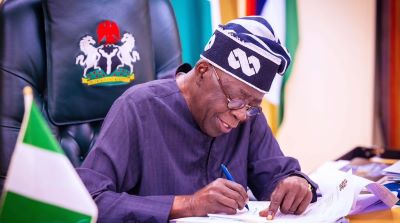
On Friday October 20, 2023, Nigerian President, Bola Ahmed Tinubu, signed the Instrument of Ratification of the Protocol to the African Charter on Human and Peoples’ Rights on the Rights of Persons with Disabilities in Africa, which was adopted by the 20th Ordinary Session of the Assembly, held in Addis Ababa, Ethiopia on January 29, 2018.

The implication of this is that the Federal Republic of Nigeria accepts the aforementioned Protocol and undertakes to faithfully perform and carry out the stipulations therein containe

President Bola Ahmed Tinubu(PC: Premium Times)

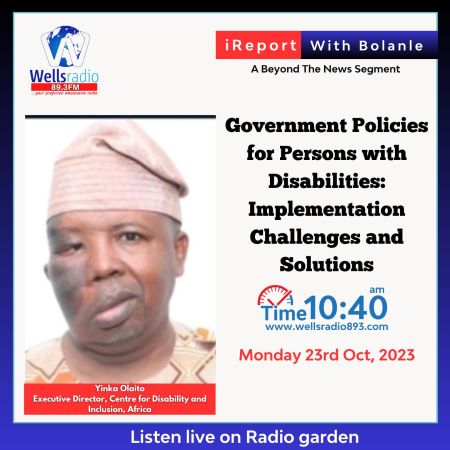
The above news was supposed to be good news to Disability and Inclusion community in Nigeria. But in a separate interview with the Centre’s Executive Director-Yinka Olaito, On WellsRadio(89.3 FM) with the theme “Government Policies on Persons with Disabilities: implementation, Challenges and Solutions” anchored by Bolanle Oduekun-Ayoola on Monday 23rd October, 2023, Yinka Olaito said, the signing for him comes with a mixed feelings.  

To Yinka Olaito, while there may be cause to rejoice but the fact remains there is nothing out rightly different from all other charters like United Nations Charter of Human Rights with regards to Persons with disabilities, Discriminations Against Persons with Disability Acts 2019 in Nigeria among many others that Nigeria’s federal government had signed, the challenge is that we have many strong documents on paper but by many ways the political will to implement their contents remain a mirage.

Yinka Olaito therefore charged the Federal Government to consider full implementations of the contents of all the charters already signed into by creating an enabling environment, works with relevant stakeholders towards ensuring the actualization of all these. You can listen to the full interview here.

READ MORE
Policy and Advocacy

We acknowledged your dedication to your cause- LASG Women Affairs Commissioner

With good understanding of the fact that no meaningful progress without collaboration and engagement with other active stakeholders, Our Centre continues to engage in strategic conversation with governments as well as policy decision-makers that can greatly influence achievement of its vocal programme. Policy and advocacy are too strategic areas that can easily ensure disability and inclusion projects become achievable.

On Thursday 12th October, 2023, Our management led by the Executive Director went on a policy and advocacy visit to Lagos State Commissioner for Women Affairs and Poverty Eradication at Lagos state Secretariat, Alausa Ikeja.

The executive director making his speech

Parts of our team’s aims were to appreciate the Ministry’s outstanding performance, demands for more inclusive projects that affect Women with disabilities, their economic and political empowerment, social inclusion in the most populous state in Nigeria.

The Ministry team making remarks

Our team also identified three key areas in the Ministry we can offer support.

In her response Hon. Bolaji Dada first acknowledged the fact that she is impressed by CDIA’s dedication and commitment to its causes which reflects in what we do. In Hon, Bolaji Cecilia Dada’s words “I will like to celebrate your commitment to your core values”. Hon Bolaji Cecilia Dada went on to brief our team on her achievements and goals as well acknowledged she honoured our visit because she sees a focused organization.


Group photo with CDIA and Lagos Women Affairs and Poverty Alleviation’s team

The Commissioner concluded that there are possibilities of collaboration of her Ministry with our organization.

You want to read more, you can check here and here

READ MORE