Inclusion demands

Without data, Women with disabilities’ SRH will suffer untold hardship- Yinka Olaito

Persons with disabilities in Nigeria and especially, women with disabilities face a lot of social and institutional challenges. While Nigeria had signed various international charters of rights of persons with disabilities and had actually enacted Discrimination Against Persons with Disabilities Acts 2018 with over 75% of its state governments enacted disability laws  within the states, nothing much had changed.

A major problem facing implementation of the laws is the absence of data. While efforts are being made by various stakeholders to ensure accurate data are made available for planning, the speed of this is still snail-speed. 

Many women with disabilities continue to suffer untold hardship when it comes to proper planning and assessing sexual reproductive health needs. Governments at every level seem to be missing the mark when it comes to inclusive health, a major part of a sustainable and inclusive society.

More than ever before, if Nigeria will meet the global demand of an inclusive and sustainable society, there is an urgent need for  more publicity, awareness creation, sensitization, lobbying and full implementation of the national and state disability laws as well as their full domestication. To push for this, our ED, Yinka Olaito was on Wave FM 91.7 Portharcourt Nigeria on Wednesday July 31, 2024 during the Radio’s news segment from 6am, 12noon and 5pm

Here are some of things he emphasized

#Disabilitydata #Inclusion #Womenwithdisabilities #Sexualreproductivehealth The absence of credible and reliable data is a source of worry for persons with disabilities, (PWDs), in Nigeria.

In an interview on #Wave91.7fm Portharcourt as, the Executive Director of Centre for Disability and Inclusion Africa, I emphasized that the lack of data worsens hardships for individuals with disabilities in the country.

2. He  urged proper data collection and documentation of persons with disabilities to plan and support inclusive development.

3-He also urged stakeholders involved in sustainable development to prioritize inclusivity by completely addressing the needs of individuals with disabilities.

4. He stressed that policymakers remain unaware of how to effectively plan and implement inclusive smart cities, worsening the
challenges faced by PWDs, especially women with disabilities

READ MORE
Policy and Advocacy

We acknowledged your dedication to your cause- LASG Women Affairs Commissioner

With good understanding of the fact that no meaningful progress without collaboration and engagement with other active stakeholders, Our Centre continues to engage in strategic conversation with governments as well as policy decision-makers that can greatly influence achievement of its vocal programme. Policy and advocacy are too strategic areas that can easily ensure disability and inclusion projects become achievable.

On Thursday 12th October, 2023, Our management led by the Executive Director went on a policy and advocacy visit to Lagos State Commissioner for Women Affairs and Poverty Eradication at Lagos state Secretariat, Alausa Ikeja.

The executive director making his speech

Parts of our team’s aims were to appreciate the Ministry’s outstanding performance, demands for more inclusive projects that affect Women with disabilities, their economic and political empowerment, social inclusion in the most populous state in Nigeria.

The Ministry team making remarks

Our team also identified three key areas in the Ministry we can offer support.

In her response Hon. Bolaji Dada first acknowledged the fact that she is impressed by CDIA’s dedication and commitment to its causes which reflects in what we do. In Hon, Bolaji Cecilia Dada’s words “I will like to celebrate your commitment to your core values”. Hon Bolaji Cecilia Dada went on to brief our team on her achievements and goals as well acknowledged she honoured our visit because she sees a focused organization.


Group photo with CDIA and Lagos Women Affairs and Poverty Alleviation’s team

The Commissioner concluded that there are possibilities of collaboration of her Ministry with our organization.

You want to read more, you can check here and here

READ MORE
Health care inequalities

PWDs’ women  SRH in jeopardy.

Health is essential to every human being across the world. A healthy population brims a healthy economy. Access to good and quality health care is the right of all range of people in the country. As health is for a range of people, it seems the Nigeria health has not prioritized inclusive healthcare system, especially sexual reproductive health of women and girls with disabilities. There have been no concrete plans which accommodate women and girls living with disabilities in sexual reproductive health package at different levels of governments in Nigeria. 

This had prevented many women, girls with disabilities from getting adequate sexual reproductive health(SRH) attention. The followings are the foundations as well as outcomes of such neglect.

Stigmatization and discrimination: Stigmatization and discrimination are attitudinal derogations which women and girls with disabilities are daily facing in their bid to benefit from quality and accessible sexual reproductive  healthcare, if that exist in the first instance.

The pivotal agents of these attitudinal derogations are the health workers who sometime indirectly abuse patients who have disabilities. Stigmatization and discrimination by health workers affect patients mentally. This often lead to depression or other mental-related issues. A visually-impaired patient once shared how she was once discriminated against, tactically insulted by a health worker. Since she  had decided not to go to public hospital again

Health Investment deficit: Inadequate financing of the health sector reflects in lack of assistive devices, accessible technology that can aid women and girls with disabilities sexual reproductive health diagnosis and management. 2023 Nigeria ‘budget only enjoys 5.75% of the total budget. Meanwhile African Leaders under the Abuja Declaration had advocated for a base of at least 15% of the annual spending to the sector.

Communication barriers: As already identified in a previous post, individuals with hearing. speech and visual impairments continued to be left behind. There is shortage of social health social workers trained in sign language etc who can help in many public and private hospitals

Long waiting time; Long waiting time is a common factor for majority of people looking for health care in public health institutions. For women with disabilities, sitting down for long or waiting for a whole day sometime can really be a burden. A great solution here can be priority in consultation for women and girls with disabilities  so as to reduce this discomfort

Transportation and distance: with the increase in cost of living standard that is not backed up with commensurate purchasing power for many, especially persons with disabilities, many of whom are not gainfully employed; the challenge becomes compounded. Yes, there are Primary health Care centres, but some are not fully equipped to care for women and girls with disabilities ‘sexual reproductive health needs.

Limited PWD sexual and reproductive health materials: For women without disabilities, there are couples of materials here and there they can access, read to be informed of what sexual and reproductive health challenges and opportunities can present to them. But with women and girls with disabilities, not much materials are available out there when compared with women without disabilities

READ MORE
Africa

Africa’s Disability, diversity and inclusion forum, Yinka Olaito joins…

In a recent Disability Network advocates’ meeting, Our Executive Director was sharing with like minds a need for collaborative and joint efforts of everyone involved instead of individual advocates or groups running a solo show. While the challenges are real, a concerted voice can be an advantage at the global level. Collaborative, strategic and joint efforts do offer more formidable action oriented results no matter what we say.

So recently, when Africa Diversity, Equity, Inclusion and belonging Forum, a pan African forum championing issues along our corporate goals invited our Executive director to join the second continental event speakers around the issues, he agreed to be there.

2023 Africa, Diversity, Equity, Inclusion & Belonging (DEIB) Forum’s deliberation will include discussion around transformation, Culture, Justice and Affirmative Action ) under the theme “ Enhancing Diversity, Equity & Inclusion for shared prosperity and Development”. This summit always cover African perspectives on issues around disability, diversity, equity and inclusion. More than anything it brings together key stakeholders in Disability, Diversity, Equity and Inclusion sectors across multi-sectoral. Multi-agencies players.

The essence of this event is majorly to discuss among other things, legal, regulatory, policy frameworks that can push the agenda forward. This year’s event will be held in Cape Town, South Africa from 28-29th September, 2023.

Yinka Olaito His, executive director of the centre, will join other experts in this dialogue. Yinka Olaito’s focus will centre around enabling policy and how to make things work in Africa. Other speakers in the event are below

READ MORE
Inclusion in Nigeria

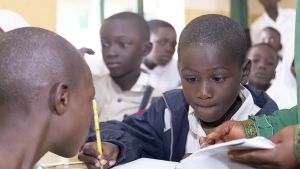
Promoting Inclusive Education for Children with Disabilities in Nigeria

To reach real peace in the world, we will have to begin with the children.” – Mahatma Gandhi.

This quote is just one of many quotes that denotes how imperative it is for children to have access to education in order to have a promising and fortified future.

However, in Nigeria today, education is embroiled in loads of challenges and many children are being denied access to a good education due to the narratives surrounding its effectiveness. This is especially so for children with disabilities. Educational system in Nigeria is one of the less funded sectors and this has shattered the hope of good and affordable education for children in Nigeria.

If Nigerian children, especially the ones with disabilities, must ascend a promising future in the educational sector, inclusiveness as well as access must be prioritized.

Inclusive education upholds the famous theme “education for all” because it promotes equality in giving good and quality education to children. It bridges the gap that causes disparities in giving good education to the abilities and disabilities and makes them equal. This ideology has to be promoted to make the disabled contribute their quota to the growth of humanity and have a sense of belonging. Inclusive education is creating a school environment that is accepting and supportive of all children regardless of their disabilities or abilities.

If Inclusive education will work, Nigeria government must:

Create awareness and sensitization about disability issues: Inclusive education can be promoted in diverse ways. This is the best way to effectively bridge the disparities between children with disabilities and those with none. To do this right, one of the ways is to create awareness and sensitization about disability issues. In a stereotypical society where people are quick to backlash or talk down on people with disabilities, inclusive education can’t be promoted or utilized effectively.

Value of inclusive education must form the core of sensitization and awareness. This must be the central message and must be hammered consistently. Reorientation of teachers and every stakeholder must be given priority. Effective channels of disseminating information must reach the teachers, parents, school administrators, and students.  The channels for disseminating information regarding the importance of inclusive education can be through seminars, training, flyers, radio, television newspapers, etc.

Special education curriculum: for the students, the government can introduce special education subjects into the curriculum for primary and secondary students so they are able to communicate with and appreciate children with special needs or with disabilities. A change of orientation that disabilities are not mostly contagious messages should be spread to ease the tension of ignorant parents. The belief system that promotes disabilities is contagious may work against inclusive education. Radio jingles, drama, television shows in different languages should be encouraged.

-The use of inclusive teaching methods: Teaching methods always differ based on the type of students but this can change by using inclusive teaching which accommodates all ranges of students. A focus on teaching strategies which are engaging, interactive and provide multiple ways for students to demonstrate their understanding will help a lot.

Another teaching method that can also help here is known as Differentiated Instruction (DI). Here, teachers will give different instructions to students in the class based on their strengths and meeting the individual needs of students. This will require teaching methods to be the same but assessment and evaluation can be varied based on the specific situation of the students. This is because the level of understanding may differ.  For children with no disabilities, a fusion of simple and complex assessment may apply but for braille users, simple assessment should be introduced at first. This will help in promoting inclusive education in Africa.

Recruitment of qualified and well-equipped teachers: We must acknowledge education is crucial. Teachers do have a great role to play here.

If Nigerians are determined to promote inclusive, good and quality education, the right kind of teachers have to be recruited. Inclusive education can become an integral part of education if the teacher can at least communicate with every student through a form each can comprehend. At least even if this is at the basic level. This may require a level of overhauling the present educational courses at the higher institution levels. Those in the class already can do well with some training.

Photo credit: Smile project

READ MORE
Disability and Inclusion in Oyo State

We value your contribution- Oyo State Commissioner for Women Affairs and Social inclusion

Success in every inclusion drive across the globe will always benefit immensely from strategic collaboration. The difference is in knowing that collaboration delivers best in certain corners. As part of the Policy and advocacy project of the centre, one of our goals is to co-opt every major stakeholder into the conversation that matters. Such conversation can push our activities in the direction that will accelerate performance.

The second term of His Excellence Seyi Makinde in Oyo state comes with different dynamics as some of the commissioners are coming in newly into different portfolios. With this hindsight, the centre decided one of the things to do to support a state that has just recently passed into law Disability Acts, it will be of value to support its operations with knowledge and resources that can enhance effective performance of inclusive governance.

The first point of call for this was a policy and advocacy visit to the state commissioner for Women Affairs and Social Inclusion, Mrs Toyin Balogun. 

In his opening remark, Yinka Olaito, Executive Director of the centre expressed his gratitude for the commissioners scheduled meeting, “Great we have someone from the private sector like her heading the Ministry at this time and we do hope you will bring the changes that will will enhance the quality of life of women and persons with disabilities and every stakeholder within the state”. Yinka Olaito said.

Yinka Olaito, presenting to the honourable Commissioner how the centre can help etc

The global environment is leaving no one behind, the ability of the state to craft a clear direction and pursue this with precision will make achieving this principle a reality in the state. Having the right resources (persons, knowledge, finance, infrastructure etc) are essential today. Interestingly these resources are available if an individual and organization knows where to look for them.  “While many consider that funding is drying up, there are new opportunities every day in the development sector for those who understand their goals, value they are driving at and prioritise accountability in all its process” Yinka Olaito concluded.

Mrs Toyin Balogun. The honourable Commissioner for Women Affairs and Social Inclusion in Oyo State, while responding thanked the management and team of the Centre for Disability and Inclusion Africa for such a timely visit and the clarity, resources it supplied to her new administration.

 Centre for disability and Inclusion Africa team listening to feedback from the Honourable Commission for Women Affairs and Inclusion, Oyo State

“I must commend the Centre for Disability and Inclusion Africa for such a visit and contribution to us at this time. As a new face in the Ministry, I am happy that some of the goals we already outlined can now find fulfilment through because of this meeting”” Hon. Toyin Balogun.

Prior to this, she had praised the state governor, Mr Seyi Makinde, whom she said prioritises inclusive governance through the appointment of 4 female commissioners in the state which affirmed the 35% affirmative action in Nigeria.

Some of the take away of this visit are:

-Presenting value services of the non-profit

-Suggest ways the organization can help the Commissioner and the ministry in its drive to achieve faster success

-Helping in establishing clarity of direction for the Ministry goals and aspiration in the Inclusion programmes, drives.

-Supplying relevant resources and collaborative channels the Ministry can annex

READ MORE