CDIA Impact Story

CDIA Celebrates 2025, Publishes Project Successes

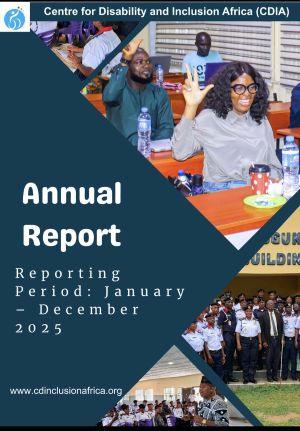
With the closure of 2025 in the last 8 days, the Centre for Disability and Inclusion Africa (CDIA) pause to reflect not just on the passage of another year, but on the tangible progress made in advancing disability rights, inclusion, and social justice across Nigeria and beyond.

This year had been one of bold advocacy, strategic partnerships, and measurable impact. Despite persistent systemic barriers faced by persons with disabilities, CDIA remained steadfast in its mission: to challenge exclusion, influence policy, and amplify the voices of those too often left unheard.

Driving Justice and Accountability

One of CDIA’s most visible successes in 2025 was its national advocacy #WheelChairNotLuggage as well as  access to education  for persons with persons with disabilities across the nation. Through sustained media engagement, policy briefs, and strategic reports, CDIA helped push disability accommodation from the margins into national discourse. The  #WheelCAhirNotLuggage campaign became a rallying point mobilizing civil society, journalists, legal experts, and regulators to confront discriminatory practices that criminalize disability.

Strengthening Inclusive Systems

Beyond advocacy, CDIA delivered targeted programmes aimed at strengthening institutional inclusion. Working with schools, examination bodies, and public institutions, the organization supported the development of disability inclusion guidelines, promoted reasonable accommodation standards, and built the capacity of duty-bearers such as Nigeria Security and Civil Defence Corps in Ogun and Osun States Nigeria to comply with Nigeria’s Disability Act. Beyond this, the Centre also ran its Disability and inclusion reporting fellowship with Africa foundation for young Media professionals. The yearly media fellowship aimed at equipping journalists, broadcasters and other media professionals or sustained shift narrative that position disability issues in human right frame

These efforts directly contributed to improved awareness, pilot reforms, and renewed commitments from key stakeholders to institutionalize inclusive practices rather than treat them as discretionary acts of goodwill.

Strategic Partnerships and Continental Engagement with disability inclusion ecosystem and other collaborators

In 2025, CDIA deepened collaborations with national and international partners, including disability-focused funders, media organisations, and development actors. These partnerships expanded CDIA’s reach, enabling cross-border learning, stronger advocacy coalitions, and alignment with global disability inclusion frameworks.

The organisation also played an active role in shaping conversations on gender, democracy, and freedom of expression—ensuring disability inclusion remained central to broader development and human rights agendas across Africa.

Evidence, Visibility, and Voice

A defining feature of CDIA’s work this year was its commitment to evidence-based advocacy. Through research, policy analysis, and storytelling, CDIA documented lived experiences of exclusion while proposing practical, rights-based solutions. Its thought leadership—published through blogs, opinion pieces, policy briefs, and media appearances—helped reframe disability from a charity issue to a justice and governance imperative.

Looking Ahead

As CDIA publishes its 2025 project successes, it does so with clarity and resolve. Progress has been made, but the work is far from done. In 2026, CDIA will scale its advocacy, deepen monitoring of policy implementation, and expand programmes that place persons with disabilities at the centre of decision-making.
READ MORE
CDIA Impact Story

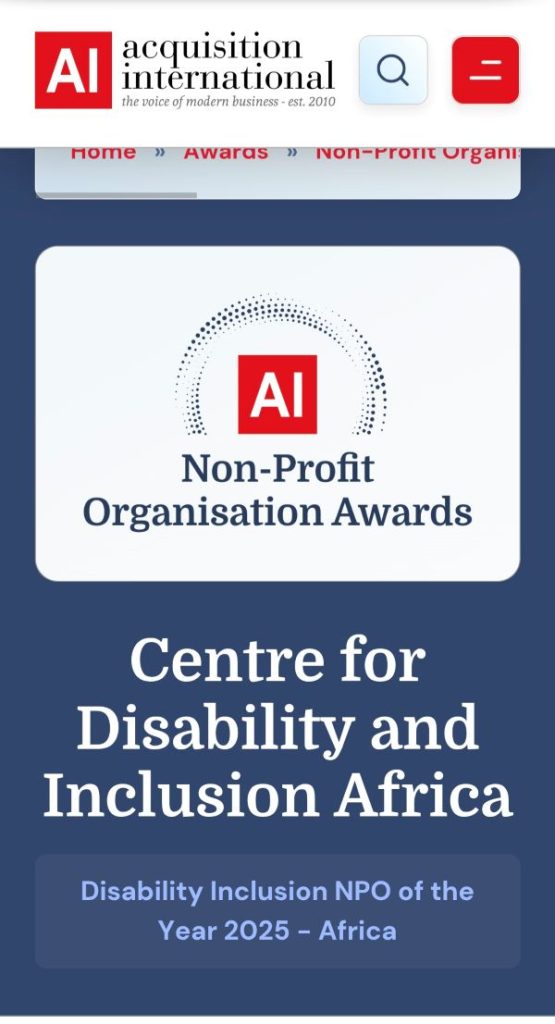
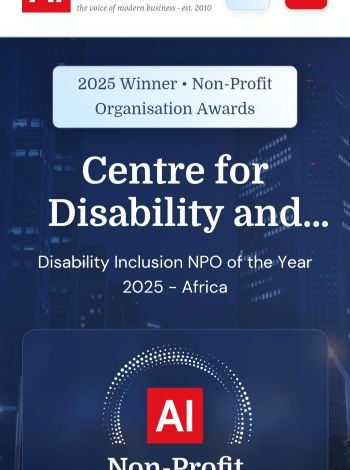
CDIA named Disability Inclusion NPO of the year in Africa for 2025

The Centre for disability and Inclusion Africa has been named  leading Disability Inclusion Nonprofit in  Africa for 2025

Iin a press release by the global organization behind the award- Acquisition International, United kingdom, the organization congratulates all the organizations that made up its 2025 winner lists after a rigorous process

According to the award coordinator, Melissa Bremall, Acquisition International’s winners are each deserving winners of their recognition. Melissa Bramall commented on the success of this unsung heroes as they are featured in the prestigious Non-Profit Awards winners list and publication. Melissa shared: “We’re proud to recognise those who play a part in improving this world and the lives of our fellow beings. It’s such an honour to celebrate their successes and learn from their stories. Congratulations again.”

The executive Director of the centre, Yinka Olaito, believes that the organization behind this keenly contested and global award is sincere and goal oriented in its mission. This 2025 is the fifth edition of a keen, open and very thorough process in making decisions with regards to  its selection of the finalists drawn from hundreds of thousands of nonprofits across the globe every year.

On what this award means to the center for Disability and Inclusion Africa, Yinka affirmed “This is an affirmation of the center’s activities and commitment to see Africa continent becoming totally inclusive as well as a sustainable development driven continent”

The organization will continue to be dogged in its drive to be goal driven with the support of its stakeholders. Yinka Olaito then used the occasion to ask the disability inclusion ecosystem to remain resolute despite global budget cuts and withdrawal if we hope to sustain the changes already made. “No one says this is going to be easy, those who still believe in an inclusive society must be more determined by hanging in there” Yinka Olaito said

About The Award

Acquisition International is excited to announce the return of the Non-Profit Organisation Awards in 2025 for a fifth consecutive year!

This prestigious programme is designed to honour and celebrate the exceptional work carried out by non-profit organisations worldwide. From local grassroots charities to large international foundations, these awards shine a spotlight on those who dedicate themselves to improving lives, fostering positive change, and advancing social good.

With a dynamic and ever-evolving global landscape, the non-profit sector continues to play a vital role in addressing pressing issues, such as poverty alleviation, healthcare access, education, and environmental conservation.

The global non-profit industry is vast, with more than 10 million organisations operating across various categories, including humanitarian aid, environmental advocacy, cultural promotion, health services, education, and social welfare. In recent years, the sector has experienced significant growth, driven by rising awareness of social issues, increased funding opportunities, and technological advancements.

According to the Nonprofit Finance Fund, 75% of non-profits have reported increased demand for their services, reflecting their growing importance in modern society. The global charitable giving market alone is projected to exceed $500 billion by 2026, underscoring the sector’s expanding reach and influence. Looking ahead, the non-profit sector is poised for further growth, with key trends shaping its future. 

READ MORE
CDIA Impact Story

Ekiti State heeds public outcry on PWDs Board establishment

Ekiti State had responded to disability and inclusion ecosystem demand for  an urgent need to establish a specialized board which will oversee Disability Inclusion matters in the state. We decided to wait until now before making any official comment on this because we were eager to see full implement of the board and effective take off of its activities

The board was constituted on October 7, 2024 and took effect immediately. The board has Dr Ogunlade Ebenezer, from Persons with Albinism Cluster as its Chairman. Official Gazeta release confirmed this.

The Office of Disability Affairs under the Governor Office supervision is “established to address the needs and rights of individuals with disabilities in Ekiti State, Nigeria. It aims to ensure that persons with disabilities have access to education, healthcare, social services, and are protected from discrimination. The board is responsible for implementing policies and programs to promote inclusion and accessibility for people with disabilities in the state.”

Members of the public will recall  that at our 7th February, 2024 Ekiti State PWDs Policy hangout a major demand we and all the Ekiti State Disability ecosystem made was a call for a reconstituted, functional disability Board where a Person with Disability should be the head instead of what was obtain then where the Executive order which established the existing commission  then allowed an Executive Secretary, who is a career officer to serve. As of then, the Executive Secretary was a woman without disabilities which many ecosystem members felt did not have full import of disability inclusion issues.

For this (board constitution and its effective running) development which we had monitored in the past 7 months and which we strongly believe is on a good start,: we are happy to have been part of those who raised their voices for this and its fulfilment for us is a cheery news. We must also commend the State Governor, His excellency Abiodun Oyebanji for being a listening leader.

READ MORE
#WheekchairNotLuggage

At CDIA January’s DRWS, experts call for sustainable efforts in behavioural change towards…

Centre for Disability and Inclusion Africa continues to use every platform to push for a better and inclusive society for all. Conversation and dialogue building with stakeholders remain one of the best ways to achieve meaningful progress.

January 2025 edition of Disability Rights Webinar Series (DRWS) was organized to step up conversation around ongoing corporate campaigns aimed at combating rights abuses of persons with disabilities with specific references to Physically-challenged persons in Nigerian Society.

Yusuf Olatunji

The campaign- #WheelChairNotLuggage challenged behavioural and attitudinal acts directed at this cluster which over the years had remained a concern to everyone. While the campaign has enjoyed massively the support of the media as it has become viral, more conversations are still needed, coupled with other physical activities.

Comrade Mayor Ekpomomukor

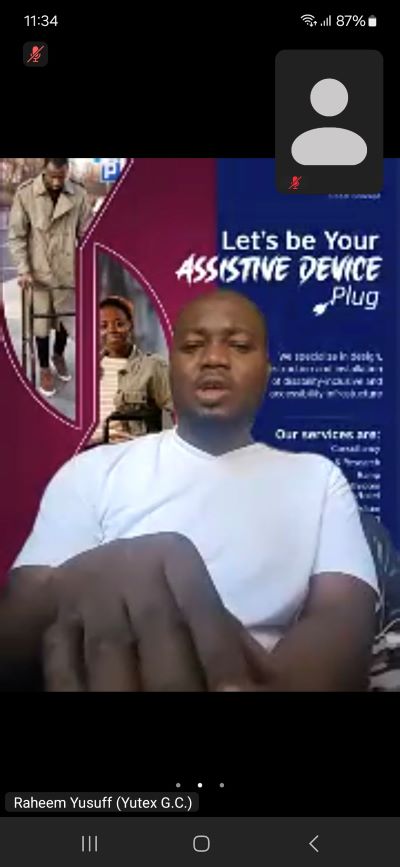
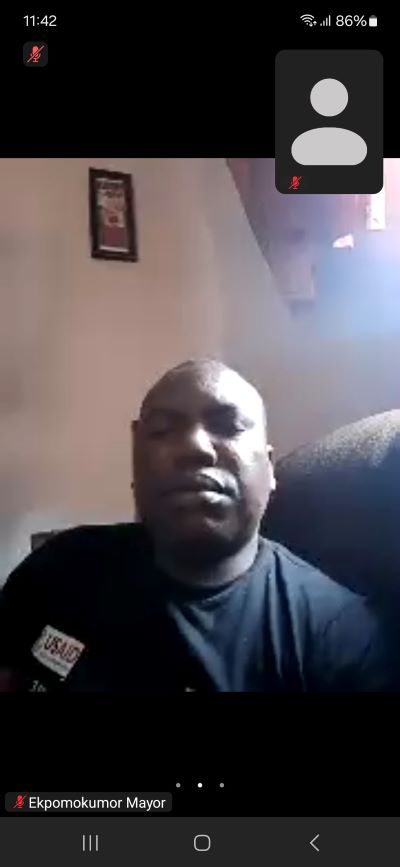
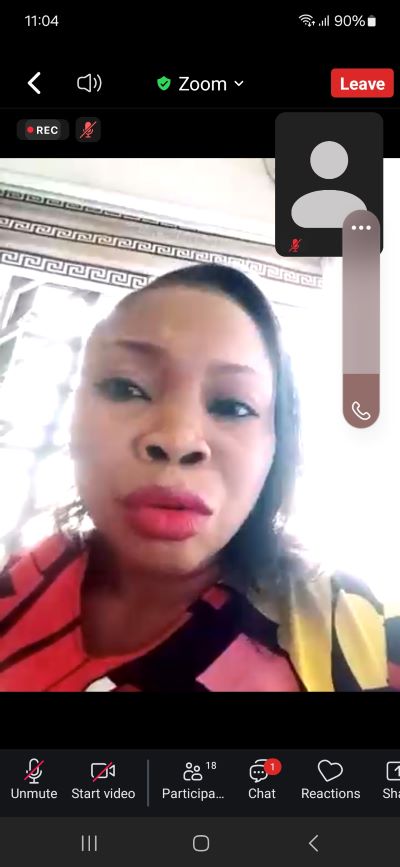
The four speakers in this January webinar were Susan Ihuoma (gender and Inclusion Advocate), Yusuf Olatunji (Accessibility Expert), Mayor Ekpomomukor (Senior Special Assistant to Bayelsa State Governor on General Duties as well as Chairman, Bayelsa state Chapter of Joint Association of Persons with Disabilities) and Mohammed Abba Isa9Senior Special Assistant to the President on Special Needs and Equal Opportunities)

Susan Ihuoma

A common and resounding echo that was reinforced by all the speakers was that there is need for behavioural change and stakeholders’ orientation, especially public transport operators. More importantly it was agreed that government and policy makers need to do more than they are currently offering.

Listen to the full conversation below

READ MORE
Education and PWDs

Oyo State PWDs, Inclusion Community Stakeholders Policy Dialogue

While a disability bill is already enacted in the state with attendant setting up an Agency to oversee affairs of Disability matters in the state, public awareness and more especially PWDs community awareness is still very low. Majority of the public within the state are not aware the agency exists.  

The agency operations in itself is still in its infancy stage trying to gather momentum. Just recently, the agency just set up its administrative office but administrative staff are yet to be fully employed and given the fact that the provision of at least 50% of staff must be persons with disabilities continue to be a challenge. More importantly, finance has been a major factor.

Officials at the event- L-R Comrade Lawal, Executive Assistant to the Governor’s rep, Mr Akinsewa, repr Mr Ajilo Femi, chair JONAPWD oyo state, Evang, Olu Kayode, Rep of Barr. Adekambi, Mrs Temitope Labai, Women leader , Oyo state JONAPWD, Mr Yusuf Olatunji, Mr Ibiyale, rep Commissioner for Women Affairs

Panellists at the event

Above and many other issues were the major concerns of Oyo state Persons with Disabilities(PWDs), Inclusion Communities at the recently held Oyo State PWDs, Inclusion Stakeholders Policy Dialogues, which is part of the project of the centre to gather views of southwest Nigeria Disabilities caucus. The event was held at University of Ibadan hotel on Friday 26th January, 2024.

The event with the theme: Nigeria Inclusive Society: Accessibility, Exclusion and Social relationships” among many others was convened to create an avenue for collaboration, conversation around PWDs rights and their active participation in the society.

The event, which is organized as a panel session, has Hon. Toyin Balogun, the Oyo state Commissioner for Women Affairs and Social Inclusion as chairperson as well as the following as panellists:  Barr, kayode Adekambi, Director of Oyo state Board for Disability Affairs, Mr Ajilo Femi, Oyo state chair of Joint National Association of Persons with Disabilities(JONAPWD), Mrs Alabi Temitope Success, Women leader, JONAPWD, Oyo state as well as Mr  Yusuf Olatunji, former secretary-general of JONAWPD while Hon. Femi Timothy, Executive Assistant to the Governor served as special guest at the occasion.

The commissioner, through her representative, Mr Ibiyale, who is the director of rehabilitation in the Ministry, shared her Ministry appreciation with the organization for such a laudable project, emphasized state government’s commitment to issue of PWDs especially to Women with Disabilities and itemised ongoing efforts of her Ministry and that of the state’s government to make life better for PWDs in the state.

The panellists, participants made significant contributions to the dialogue which cut across accessibility, exclusion, social relationship issues, need to promote awareness of existence of Disability agency’s activities; need for transparency and accountability of the agency, needs for collaborations among the stakeholders among other salient issues. Find some of these below:

Key Recommendations

  1. There is need to train staff of   the nascent Oyo state Disability Board to understand its vision, mission and the modus Operandi. The board has to be self-sustainable to play its role.
  2. Working intimately with the media houses in Oyo State is important for correcting negative narratives, stereotypes and public awareness about disability.
  3. Local Government Office holders in Oyo state needs capacity building to understand disability and Inclusion and not exclude PWD in governance.
  4. PWDs need to speak up for themselves, be confrontational where necessary without being violent.
  5. JONAPWD need to position itself as a watchdog to the Oyo state Government in ensuring the inclusion of PWD in Oyo State.
  6. There is need for grassroots engagement, as JONAPWD need to be present and active in all local governments of Oyo state and the use of indigenous languages for awareness is important.
  7. Engage key stakeholders in accessibility and mobility such as structural engineer and Nollywood, financial institutions to correct negative narrative and take on where necessary.
  8. Role modelling and teamwork within the PWD community is important.
  9. Nollywood need a lot of briefing and change orientation in the stereotypical portrayal of PWDs in Nigerian films, Movies

Some of the participants

READ MORE
Inclusion demands

Osun State PWDs, Inclusion Stakeholders Policy Dialogue

When we talk of disability, often it is not always about the impaired, as we may think, structures and environment can also be disabling. True, we must acknowledge that having an impairment can slow down human ability to do certain activities but if the environment, structures are configured in a way that makes life easy, the issue of disabilities becomes minimal.

The above and many more are some of the conclusion reached at Osun State Nigeria Persons with Disabilities (PWDs) Inclusion community Stakeholders Policy Dialogue organized by Centre for disability and Inclusion Africa as part of its efforts to create an avenue to discuss nad reaffirm the position of the 6 states that make up of Southwest geo political zone in Nigeria, which has about 49 Million (22% of Nigeria population).

Welcoming participants drawn from (non)state actors of PWDs community in the state which has: the impaired, the affected and the concerned as well as Policy makers, government officials and relevant agencies; the executive director, Yinka Olaito, emphasised a need to collaboratively work together as well as create an avenue which ensures rights and participation of PWDs are protected.  

Panellists: L-R (Stephen Olufemi, Elixabeth Ishola, Jare Tiamiyu, Hon. Adewunmi Adeyemi Irekandu

He further emphasised the purpose of the policy dialogue is for the community to develop common focus which can drive disability, inclusive government, sustainable society demands in the state.

According to Yinka Olaito “Wee live in an age when conversation is loud about not leaving anyone behind, we need to go beyond talk and put money, action where our talk is”.

The theme of the event is “Nigeria Inclusive Society: accessibility, exclusion and social relationships”. It is a panel session that has strategic actor in the PWDs community which include:  Stephen Olufemi, Osun state chair, Joint Association of Persons with Disabilities(JONAOWD), Mrs Elizabeth Ishola, Osun State Women leader, JONAPWD, Jare Tiamiyu, the CEO of Insight media and Honourable Adewunmi Adeyemi Irekandu who is a member of Osun State House of Assembly and sponsor of disability bill in the state.

Hon. Adewunmi Adeyemi believes whoever has a right to vote should have a right to be given his/her fundamental human rights as well as the right to enjoy the benefits of democracy in any nation. The full day event was full of essential discussions and recommendation form relevant actors including security agencies among which are Nigeria Security and Civil Defence Corps, Osun state PWDs desk lead- DSC Bakare Khadijah.

Key Recommendations

1     Osun State disability bill has almost gotten to the final reading through the efforts of JONAPWD, Disability civil societies in Osun State, the media and Osun State house of Assembly and to a large extent, it addresses the various barriers against PWDs in Osun state. The PWD community needs to start preparing for the implementation stage, so as to ensure smooth and quick implementation.

2.   Media had played an important role in the progress of the bill. There should be more synergy between the media and the PWDs in Osun’s state to advocate and promote PWD issues in the Osun State. Media needs data to effectively cover disability issues in Osun state and the PWD community should make disability data for Osun available to media organisation for impactful coverage of PWD issues in Oyo State

3.   There is a need for teamwork, equity and fairness within the various clusters of the PWD community.

4.   There is a need to regular mobilization, awareness, advocacy engagement and capacity building even with the PWD communities in Osun State

5.   The PWD community must reach the grassroots level and the Disability bill needs to be domesticated at the local government level as well. Policy Dialogue should also be replicated

6.   Women with disabilities in Osun State suffer double vulnerability and gender based violence which go unreported. There is a need for capacity training on sexual and reproductive rights.

7.   The PWD community is made up of the affected, impaired and the inclined, therefore interventions should cover all the parties.

8.   The PWD in Osun State decided to have a strong social media presence and a contact person who attends enquiries at JONAPWD Office.

READ MORE
CDIA Impact story

CDIA celebrates its impact story

After CDIA Accessibility challenge’s in Nigeria’s Airports   call, Federal Government Dissolves Aviation Ministry’s Executives/ MDAs managements

This publication may be coming late, we took responsibility for this, but it is worth nothing that after our call on the federal government to prioritise Persons with Disability call, disability accessibility in Nigeria’s airports on Monday 11th December, 2023; it is worthy of note that three days after, Thursday December 14, 2023, the President of Nigeria, President Ahmed Tinubu had sacked all Aviation Ministry’s directors and replace them with new persons so as to create opportunity for reorganization.

While we continue to celebrate such action, the President’s listening to the call of concerned Nigerians, we must also emphasise the fact that dissolving or replacing top executives in any organization may be a starting point, ensuring the right culture, approach to work that gets things done will go a long way.

As an organization, we will continue to step up conversation so our governance structure among others becomes sustainable and all embracing.–

READ MORE
Education and PWDs

4 roadblocks to inclusive education in Nigeria

Inclusive education is the target set by the United Nations which is expected to be embraced globally. This is because it is founded on the basis of the principle of human rights which every individual, regardless of their physical, mental, or psychological condition, deserves. Quality education for every child leads to an empowered human resources at the national level.

Nigeria shares in this global aspiration, but its journey toward inclusive education faces a multitude of challenges.

According to UNICEF, roughly 95% of children with disabilities in developing countries, including Nigeria, do not attend school, with a disheartening possibility that 90% of them may never receive basic education in their lifetime. 

This distressing situation stems from various factors, including the prevalence of primary and secondary schools in Nigeria that present exclusive and inaccessible environments, lacking the physical and technological accommodations required for children with disabilities. Roadblocks to inclusive education in Nigeria include the following:

-Overreliance on Special Schools, where children with disabilities are confined, often to understaffed, under-equipped, and outdated facilities. This segregation perpetuates a sense of isolation and denies these children the opportunity to interact with their peers. Moreover, there is a lack of public awareness regarding the significance of inclusive education and the benefits it offers to all students.

-Conventional universities with no inclusive infrastructure: The challenges observed at the primary and secondary education levels are evident, but the focus on tertiary education for people with disabilities presents another pressing concern.

The continuous establishment of conventional universities in Nigeria overshadows the critical need for specialized institutions that can cater for the unique needs of students with disabilities. The absence of planned infrastructures for individuals with physical and intellectual challenges leaves a significant gap in the country’s education system.

Therefore, it’s essential for the government to consider creating such institutions, where students with disabilities can access higher education tailored to their specific needs.

Lack of required human capital/resources:  This challenge is worsened by the shortage of institutional and human capacity required for the effective implementation of inclusive education. The only college of special education in Sub-Saharan Africa, the Federal College of Education (Special) Oyo which is supposed to play a pivotal role in training educators who will teach individuals with disabilities faces challenges due to a shortage of manpower and resources.

Funding shortage: Prioritizing funding for special education is crucial if the government intends to ensure every person’s right to a quality education is upheld. That is irrespective of their abilities or disabilities. Nigeria bears the responsibility to ensure inclusive and equitable quality education for all its citizens, promoting lifelong learning opportunities.

Achieving inclusive education requires a collective effort from the government, educational institutions, civil society, and the general public. 

By addressing the challenges outlined in this piece among others and focusing on creating inclusive environments from the primary level to tertiary education can help Nigeria to work towards a more inclusive and equitable education system. Inclusivity is not just a goal; it is a fundamental right that must be upheld for the betterment of Nigerian society as a whole.

READ MORE
Inclusion in Nigeria

Assistive technology for PWDs in Nigeria, Where are we?

Technology serves as a mainstream which provides many devices, equipment that aid the existence of mankind on earth. With this growth various assistive products and services emerged.  Assistive technology is equipment used to improve the ability of persons with disabilities to participate in education, employment, and live independent and dignified lives.

It serves as an umbrella term covering the systems and services related to the delivery of assistive products and services. As the world is tilting towards assistive technology, Nigeria is not left out. There are 25 million people with disabilities according to WHO which cover 12.5% of the total population as of 2011.

Even before assistive technology came into full-fledged use, there has been wooden walking sticks used by people with physical impairments to aid their movement. This shows the inclusiveness and foresight of Nigeria about assistive technology in putting into consideration people living with disabilities. The federal ministry of health had passed verdict on assistive devices being produced in the world through their publication

Before the advent of assistive technology, there are no ways persons with visual impairment could read or write. They rely on whatever they hear but braille bridged the gap. Today, there are two types of braille; braille equipment and braille slate. The braille equipment translates information appearing on a computer screen to braille by electronically lowering and raising different combinations of pins to produce in braille which appears on a portion of the computer screen.

The most common today is the braille slate which is operated manually. The slate can be metal or plastic, with two plated hinged together on the top or side to hold papers for writing braille. Braille has been adopted even in special schools for the visually impaired and this has increased literacy among the blind.

Eye glasses are said to be the most popular assistive device used by Nigerians.  People wear eye glasses because their vision is flawed. Sometimes, people can stop using it if the vision defect is gone but most times people constantly aid their eyes’ vision clarity.

Lenses are mounted onto the eyeglass frame to help in focusing of the image to help individuals with visual impairment due to long term refractive error. Nigerians term these short sighted and long sighted.

Physical motion impairments have hindered growth of people who have this disability. People who have this disability can stay in a certain position for hours without any change of movement and this often leads to stiffness of the backbone. The provision of a wheelchair has become handy. This is widely used and oftentimes it is given out freely by non-governmental Organizations(NGOs), government and philanthropists. Wheelchairs are for people with limited mobility.

Crutches can also be used as walking aid with elbow, underarm or forearm support and a single shaft fitted with a tip, intended to support balance or weigh bearing through the legs. This is used to give temporary support to anyone that has walking impairments.

After the above, then came the emergence of assistive apps for smartphones and tablets. These have also made it easy for speech to text, sign language interpretation and auditory assistance. These applications are to aid access to information and communication. This allows a person with disabilities to communicate with others easily without a hitch.

In conclusion, assistive technology has been widely accepted in Nigeria and it has served as a way of independence, empowerment and attestation of inclusivity being propagated in Nigeria.

In terms of assistive technology, Nigeria may not be where it should be but it can be said Nigeria is taking its baby steps in making life easier for Persons with Disabilities.  Having said that, Nigeria has a long way to go to meet the global standards.

READ MORE
Mental health of PWDs

Mental health issues in Workplaces: Navigating the terrain breaking the stigma.

In an era where diversity and inclusion are at the forefront of societal conversations, it’s essential that we address the often-overlooked issue of mental disabilities in the workplace. 

The stigma surrounding mental health conditions can create substantial barriers for individuals seeking to excel in their careers while managing these challenges. However, there is a growing movement to break this stigma and create a more inclusive and empathetic work environment.

The Reality of Mental health issues in the Workplace.

Mental health conditions affect millions of people across the globe. From anxiety and depression to bipolar disorder and schizophrenia, the range of conditions is vast. Despite their prevalence, individuals with mental health issues/disabilities often face discrimination and prejudice in the workplace. They may grapple with misconceptions and ignorance, making it more difficult to secure and maintain employment.

One of the most significant challenges for these individuals is the stigma associated with mental health. This stigma not only hinders career opportunities but also creates an environment where many are reluctant to seek the support and accommodations they need. This is a barrier we must break down to foster a more inclusive workplace.

The Role of Employers in Fostering Inclusivity

Employers play a crucial role in creating a stigma-free workplace. Many companies are realising that an inclusive environment benefits both employees and the organisation as a whole. Implementing policies that support employees with mental disabilities, offering mental health resources, and fostering a culture of understanding can lead to higher morale, increased productivity, as so many other benefits.

Companies that place huge value on metal health have been lauded for their commitment to employee’s well-being. They offer flexible work schedules, mental health days, and access to therapy services. Such practices create a supportive atmosphere that empowers employees to bring their whole selves to work.

Strategies for Navigating the Workplace

Let individuals be free to openly seek help, companies should create support mechanisms: Individuals with mental disabilities can employ several strategies to navigate the workplace successfully. These include seeking professional help, establishing a support network, and practising self-care. 

It’s crucial for individuals to communicate their needs and challenges with their supervisors, human resources, and colleagues. Open dialogue can lead to reasonable accommodations that enable these employees to perform at their best.

Companies should have open and inclusive policy: Moreover, it’s vital for employers to educate their workforce about mental health, reducing stigma, and encouraging empathy. Building a mentally healthy workplace involves regular training and awareness campaigns. It’s also crucial to address work-related stressors and implement policies that prioritise employee’s well-being.

A commitment to a long term view: Breaking the stigma surrounding mental disabilities in the workplace is an ongoing effort that requires commitment from individuals, employers, and society as a whole. The more we openly discuss mental health, the more we normalise it. It’s crucial to promote understanding, empathy, and inclusivity in all workplaces.

Ensure information is available and where to get help: The road ahead involves making mental health a priority, providing education and resources, and actively working to reduce the stigma. When we create workplaces that embrace the unique strengths and challenges of all employees, we not only break down barriers but also unleash the potential for innovation and success.

A continuous open dialogue: As we reflect on the journey to break the stigma surrounding mental disabilities in the workplace, it becomes clear that this endeavour is essential not just for those directly affected but for society as a whole.

 It’s time to challenge the preconceptions, encourage dialogue, and support one another in our pursuit of workplace inclusivity. By doing so, we enable individuals with mental disabilities to flourish in their careers, contributing their talents to the betterment of organisations and society.

Together, we can break the stigma and create workplaces that value the diverse abilities and experiences that each person brings to the table. In the end, this not only benefits individuals with mental disabilities but enriches the work environment for all.

READ MORE
  • 1
  • 2