
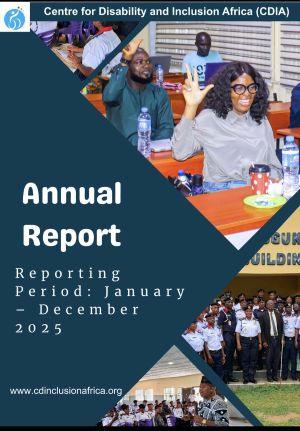
CDIA Celebrates 2025, Publishes Project Successes
With the closure of 2025 in the last 8 days, the Centre for Disability and Inclusion Africa (CDIA) pause to reflect not just on the passage of another year, but on the tangible progress made in advancing disability rights, inclusion, and social justice across Nigeria and beyond.
This year had been one of bold advocacy, strategic partnerships, and measurable impact. Despite persistent systemic barriers faced by persons with disabilities, CDIA remained steadfast in its mission: to challenge exclusion, influence policy, and amplify the voices of those too often left unheard.
Driving Justice and Accountability
One of CDIA’s most visible successes in 2025 was its national advocacy #WheelChairNotLuggage as well as access to education for persons with persons with disabilities across the nation. Through sustained media engagement, policy briefs, and strategic reports, CDIA helped push disability accommodation from the margins into national discourse. The #WheelCAhirNotLuggage campaign became a rallying point mobilizing civil society, journalists, legal experts, and regulators to confront discriminatory practices that criminalize disability.
Strengthening Inclusive Systems
Beyond advocacy, CDIA delivered targeted programmes aimed at strengthening institutional inclusion. Working with schools, examination bodies, and public institutions, the organization supported the development of disability inclusion guidelines, promoted reasonable accommodation standards, and built the capacity of duty-bearers such as Nigeria Security and Civil Defence Corps in Ogun and Osun States Nigeria to comply with Nigeria’s Disability Act. Beyond this, the Centre also ran its Disability and inclusion reporting fellowship with Africa foundation for young Media professionals. The yearly media fellowship aimed at equipping journalists, broadcasters and other media professionals or sustained shift narrative that position disability issues in human right frame
These efforts directly contributed to improved awareness, pilot reforms, and renewed commitments from key stakeholders to institutionalize inclusive practices rather than treat them as discretionary acts of goodwill.
Strategic Partnerships and Continental Engagement with disability inclusion ecosystem and other collaborators
In 2025, CDIA deepened collaborations with national and international partners, including disability-focused funders, media organisations, and development actors. These partnerships expanded CDIA’s reach, enabling cross-border learning, stronger advocacy coalitions, and alignment with global disability inclusion frameworks.
The organisation also played an active role in shaping conversations on gender, democracy, and freedom of expression—ensuring disability inclusion remained central to broader development and human rights agendas across Africa.
Evidence, Visibility, and Voice
A defining feature of CDIA’s work this year was its commitment to evidence-based advocacy. Through research, policy analysis, and storytelling, CDIA documented lived experiences of exclusion while proposing practical, rights-based solutions. Its thought leadership—published through blogs, opinion pieces, policy briefs, and media appearances—helped reframe disability from a charity issue to a justice and governance imperative.
Looking Ahead
As CDIA publishes its 2025 project successes, it does so with clarity and resolve. Progress has been made, but the work is far from done. In 2026, CDIA will scale its advocacy, deepen monitoring of policy implementation, and expand programmes that place persons with disabilities at the centre of decision-making.