Centre for Disability and Inclusion Africa continues to use every platform to push for a better and inclusive society for all. Conversation and dialogue building with stakeholders remain one of the best ways to achieve meaningful progress.
January 2025 edition of Disability Rights Webinar Series (DRWS) was organized to step up conversation around ongoing corporate campaigns aimed at combating rights abuses of persons with disabilities with specific references to Physically-challenged persons in Nigerian Society.
Yusuf Olatunji
The campaign- #WheelChairNotLuggage challenged behavioural and attitudinal acts directed at this cluster which over the years had remained a concern to everyone. While the campaign has enjoyed massively the support of the media as it has become viral, more conversations are still needed, coupled with other physical activities.
Comrade Mayor Ekpomomukor
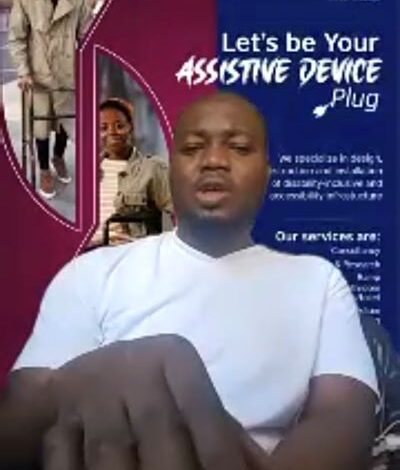
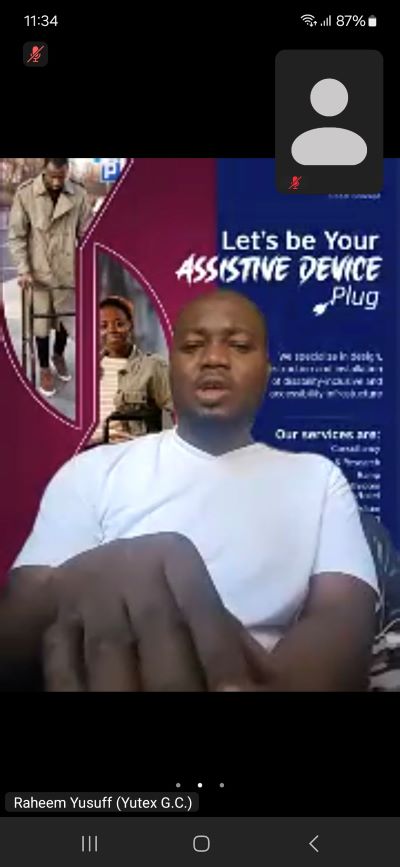
The four speakers in this January webinar were Susan Ihuoma (gender and Inclusion Advocate), Yusuf Olatunji (Accessibility Expert), Mayor Ekpomomukor (Senior Special Assistant to Bayelsa State Governor on General Duties as well as Chairman, Bayelsa state Chapter of Joint Association of Persons with Disabilities) and Mohammed Abba Isa9Senior Special Assistant to the President on Special Needs and Equal Opportunities)
Susan Ihuoma
A common and resounding echo that was reinforced by all the speakers was that there is need for behavioural change and stakeholders’ orientation, especially public transport operators. More importantly it was agreed that government and policy makers need to do more than they are currently offering.
When we talk of disability, often it is not always about the impaired, as we may think, structures and environment can also be disabling. True, we must acknowledge that having an impairment can slow down human ability to do certain activities but if the environment, structures are configured in a way that makes life easy, the issue of disabilities becomes minimal.
The above and many more are some of the conclusion reached at Osun State Nigeria Persons with Disabilities (PWDs) Inclusion community Stakeholders Policy Dialogue organized by Centre for disability and Inclusion Africa as part of its efforts to create an avenue to discuss nad reaffirm the position of the 6 states that make up of Southwest geo political zone in Nigeria, which has about 49 Million (22% of Nigeria population).
Welcoming participants drawn from (non)state actors of PWDs community in the state which has: the impaired, the affected and the concerned as well as Policy makers, government officials and relevant agencies; the executive director, Yinka Olaito, emphasised a need to collaboratively work together as well as create an avenue which ensures rights and participation of PWDs are protected.
He further emphasised the purpose of the policy dialogue is for the community to develop common focus which can drive disability, inclusive government, sustainable society demands in the state.
According to Yinka Olaito “Wee live in an age when conversation is loud about not leaving anyone behind, we need to go beyond talk and put money, action where our talk is”.
The theme of the event is “Nigeria Inclusive Society: accessibility, exclusion and social relationships”. It is a panel session that has strategic actor in the PWDs community which include: Stephen Olufemi, Osun state chair, Joint Association of Persons with Disabilities(JONAOWD), Mrs Elizabeth Ishola, Osun State Women leader, JONAPWD, Jare Tiamiyu, the CEO of Insight media and Honourable Adewunmi Adeyemi Irekandu who is a member of Osun State House of Assembly and sponsor of disability bill in the state.
Hon. Adewunmi Adeyemi believes whoever has a right to vote should have a right to be given his/her fundamental human rights as well as the right to enjoy the benefits of democracy in any nation. The full day event was full of essential discussions and recommendation form relevant actors including security agencies among which are Nigeria Security and Civil Defence Corps, Osun state PWDs desk lead- DSC Bakare Khadijah.
— Centre for disability&inclusionafrica (@cforinclusion) January 23, 2024
Key Recommendations
1 Osun State disability bill has almost gotten to the final reading through the efforts of JONAPWD, Disability civil societies in Osun State, the media and Osun State house of Assembly and to a large extent, it addresses the various barriers against PWDs in Osun state. The PWD community needs to start preparing for the implementation stage, so as to ensure smooth and quick implementation.
2. Media had played an important role in the progress of the bill. There should be more synergy between the media and the PWDs in Osun’s state to advocate and promote PWD issues in the Osun State. Media needs data to effectively cover disability issues in Osun state and the PWD community should make disability data for Osun available to media organisation for impactful coverage of PWD issues in Oyo State
3. There is a need for teamwork, equity and fairness within the various clusters of the PWD community.
4. There is a need to regular mobilization, awareness, advocacy engagement and capacity building even with the PWD communities in Osun State
5. The PWD community must reach the grassroots level and the Disability bill needs to be domesticated at the local government level as well. Policy Dialogue should also be replicated
6. Women with disabilities in Osun State suffer double vulnerability and gender based violence which go unreported. There is a need for capacity training on sexual and reproductive rights.
7. The PWD community is made up of the affected, impaired and the inclined, therefore interventions should cover all the parties.
8. The PWD in Osun State decided to have a strong social media presence and a contact person who attends enquiries at JONAPWD Office.
Technology serves as a mainstream which provides many devices, equipment that aid the existence of mankind on earth. With this growth various assistive products and services emerged. Assistive technology is equipment used to improve the ability of persons with disabilities to participate in education, employment, and live independent and dignified lives.
It serves as an umbrella term covering the systems and services related to the delivery of assistive products and services. As the world is tilting towards assistive technology, Nigeria is not left out. There are 25 million people with disabilities according to WHO which cover 12.5% of the total population as of 2011.
Even before assistive technology came into full-fledged use, there has been wooden walking sticks used by people with physical impairments to aid their movement. This shows the inclusiveness and foresight of Nigeria about assistive technology in putting into consideration people living with disabilities. The federal ministry of health had passed verdict on assistive devices being produced in the world through their publication
Before the advent of assistive technology, there are no ways persons with visual impairment could read or write. They rely on whatever they hear but braille bridged the gap. Today, there are two types of braille; braille equipment and braille slate. The braille equipment translates information appearing on a computer screen to braille by electronically lowering and raising different combinations of pins to produce in braille which appears on a portion of the computer screen.
The most common today is the braille slate which is operated manually. The slate can be metal or plastic, with two plated hinged together on the top or side to hold papers for writing braille. Braille has been adopted even in special schools for the visually impaired and this has increased literacy among the blind.
Eye glasses are said to be the most popular assistive device used by Nigerians. People wear eye glasses because their vision is flawed. Sometimes, people can stop using it if the vision defect is gone but most times people constantly aid their eyes’ vision clarity.
Lenses are mounted onto the eyeglass frame to help in focusing of the image to help individuals with visual impairment due to long term refractive error. Nigerians term these short sighted and long sighted.
Physical motion impairments have hindered growth of people who have this disability. People who have this disability can stay in a certain position for hours without any change of movement and this often leads to stiffness of the backbone. The provision of a wheelchair has become handy. This is widely used and oftentimes it is given out freely by non-governmental Organizations(NGOs), government and philanthropists. Wheelchairs are for people with limited mobility.
Crutches can also be used as walking aid with elbow, underarm or forearm support and a single shaft fitted with a tip, intended to support balance or weigh bearing through the legs. This is used to give temporary support to anyone that has walking impairments.
After the above, then came the emergence of assistive apps for smartphones and tablets. These have also made it easy for speech to text, sign language interpretation and auditory assistance. These applications are to aid access to information and communication. This allows a person with disabilities to communicate with others easily without a hitch.
In conclusion, assistive technology has been widely accepted in Nigeria and it has served as a way of independence, empowerment and attestation of inclusivity being propagated in Nigeria.
In terms of assistive technology, Nigeria may not be where it should be but it can be said Nigeria is taking its baby steps in making life easier for Persons with Disabilities. Having said that, Nigeria has a long way to go to meet the global standards.
In the hustle and bustle of Nigeria’s urban centres, millions of people navigate through bustling streets, towering buildings, and bustling markets every day. However, for people living with disabilities, this urban landscape often presents significant challenges and barriers to participation in daily life. Inclusive urban planning is crucial to ensure that cities in Nigeria become truly accessible and welcoming to all residents, regardless of their physical abilities.
Unknown to a lot of people, one of the easiest ways to discriminate against people with disabilities is through buildings, road construction designs etc which could either be by inaccessibility or difficulty for PWDs usage. The level of discrimination is also seen transportation system and others which inhibit the movement of people living with disabilities in Nigeria.
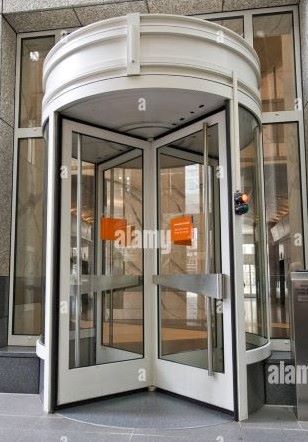
A very good example is the revolving doors commonly used in Nigerian banks. On one hand, these doors are security enclosures that shut off access when metal or weapons are detected, but they have become too small to grant access to PLWD, especially those using wheelchairs. This is a typical scenario of what this Act aims to address.
The United Nations’ Sustainable Development Goals (SDGs) emphasize the importance of leaving no one behind, and this principle applies just as much to urban development. In Nigeria, millions of people with disabilities face daily hurdles in accessing essential services, employment opportunities, and social interactions due to inadequate urban planning and infrastructure.
A Lot of us may have heard that the Discrimination against Persons with Disabilities (Prohibition) Act has been signed into law in Nigeria. Which stipulates that it is now an offence to discriminate against PWDs. Thus, this gives rise to the question; how can we make our urban centre disability-friendly? Many organizations deny PWDs their legitimate rights. Here are examples:
Intra and inter-city transportation challenges: One of the most pressing issues for people with disabilities in Nigerian cities is the lack of accessible transportation. Public transportation systems are often ill-equipped to accommodate wheelchairs, and bus stops and train stations are rarely designed with accessibility in mind. This makes it extremely difficult for individuals with mobility impairments to move around the city independently.
Sidewalk and sideway; Furthermore, sidewalks and pedestrian pathways in many Nigerian cities are riddled with obstacles such as uneven surfaces, potholes, and poorly maintained infrastructure. For individuals with visual impairments or mobility challenges, navigating these environments can be treacherous.
The path to inclusive urban planning in Nigeria requires a multi-faceted approach. It begins with acknowledging the rights of people with disabilities and involving them in the planning and decision-making processes. Their lived experiences are invaluable in identifying the barriers they face and finding effective solutions.
Inclusive design should encompass various aspects of urban life, including transportation, infrastructure, public spaces, and public services. This means ensuring that public buildings and facilities are wheelchair accessible, that signage is provided in Braille and other accessible formats, and that transportation systems are designed with the needs of all residents in mind.
Efforts to create accessible cities have been successful in various parts of the world. For example, cities like Copenhagen and Melbourne have implemented comprehensive accessibility plans that have transformed their urban environments, making them more welcoming to all residents. If we truly care, we(government and other stakeholders) must note:
Inclusive urban planning is not just a matter of convenience; it is a matter of human rights and social justice. Nigerian cities must prioritize accessibility for all, working towards a future where people with disabilities can live, work, and play without barriers.
Stakeholders must collaborate to create, implement right codes, policies: To achieve the vision of inclusive cities., it is imperative that government agencies, city planners, architects, and civil society organizations come together to develop and implement policies and initiatives that prioritize accessibility. This includes enforcing building codes that require accessibility features, investing in accessible transportation infrastructure, and raising awareness about the importance of inclusive urban planning.
As Nigeria continues to grow and urbanize, it must ensure that its cities are designed for everyone, leaving no one behind. Inclusive urban planning is not just a goal; it is a moral imperative, a commitment to building cities where every individual, regardless of their abilities, can thrive and contribute to the vibrant tapestry of urban life.