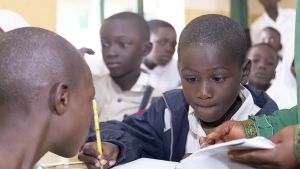
Inclusion in Nigeria

Women with disabilities in Nigeria? How strategic empowerment can help?

In Nigeria, despite the level of changes in women empowerment, the nation still has a long way to go. Though we cannot say there is a major drive in this regard to include women with disabilities. It is pertinent to know that empowerment is beyond finance augmentation or poverty alleviation for women. 

It must be a holistic development of women which propels national development.  Having noticed greater dividends associated with women empowerment (a woman with or without disabilities) such as the ability of such individuals to gain a level of independence; government agencies and notable NGOs continue to push this agenda.

Women with disabilities in Nigeria face a myriad of challenges spanning from attitudinal derogation, limited access to education, healthcare and physical barriers. Women with disabilities are often excluded.  They are often segregated and excluded by society. 

If we care for an inclusive society, strategic empowerment for women with disabilities has become important today. The following are vital avenues to empower women with disabilities.

Educational empowerment:

If we truly care about empowering women with disabilities, access to quality education should be at the centre. Education comes in different slices. In Nigeria several ground-breaking steps have to be taken. Education is one of the unwavering means of empowering women with disabilities. More structured, inclusive school adult schools may be required.

Trained special needs educators who are not discriminatory with the right attitude are urgently needed to intensify the empowerment of women with disabilities.

Empowerment through health:

Health is a pivotal trajectory in breaking barriers to inclusion, Health is wealth. Gaps in Women with disabilities health need remain wide. Without good health no one can contribute meaningfully to personal and nation growth,

Inclusive health policy and budgeting should become a priority for Nigeria’s lawmakers to enable women g with disabilities to get adequate care from doctors.

Section 21 of Discrimination Against Persons with Disabilities (DAPDA 2019) should be fully implemented. Women with disabilities must be empowered to seek justice if this is denied them. This also will demand inclusive health workers who have the knowledge and training should be employed to cater for PWDs patients

Capacity building for gainful employment:

Economic independence is the most popular way of empowering an individual. Over the years this has not failed and has yielded indelible results. ‘’Economic disability is the worst level of disability.

Jennifer Ibrahim, Physically challenged poultry business owner, founder of a foundation helping others(PC: Nigeria Guardian)

Having a sense of economic independence is an achievement. It helps in conquering many fears as well as help individuals to demand for his/her rights. An economically disadvantaged person often accepts anything offered to them even though they know they deserve more. “Beggars have no choice”” is a popular mantra. 

Economic empowerment can be through competitive sports skills development, vocational training, business and relationship education. The world has shown Women with disabilities can become global champions through its Paralympic games.

Lucy Ejike, a powerlifter, stands today as a great example of an empowered woman with disability in competitive sport. Ejike has represented Nigeria for about six times in Paralympic sports and won medals. She uses an assistive device for movement due to polio and she also works as sport administrator. 

Lucy-Ejike, Nigeria’s Paralympics powerlifter medal winner(PC: okay.ng)

Vocational training centres should be fully equipped to accommodate women with disabilities. It has been proven for example, persons with intellectual developmental disabilities can breed chickens and ducks, physically-challenged persons with walking impairment can learn knitting etc.

In summary, empowering women with disabilities is not just barrier breaking but also supports inclusive society where every potential is maximized

READ MORE
Health care inequalities

Inclusive health: Government should be intentional in leadership – Yinka Olaito

“Any system which lays  a claim to embracing inclusive health must prioritise as well as be willing and ready to make changes to the traditional health system by taking deliberate efforts in ensuring there are structured accessible programmes which accommodate persons with disabilities”.

“When inclusive health becomes a priority, there are basic principles that must be followed. Two of these are vital. These are equitable access and full participation”. This will require adequate steps to ensure everyone has the access to services as well as resources to achieve personal health potentials, If these two principles are missing, we can forget all the claims.

The above and may others issues form the focus of discussion our executive Director, Yinka Olaito, pushed forward in a radio programme on Sobi FM (101.9FM) Ilorin today where he was guest expert on the topic: “Bridging the health gaps for persons with disabilities” The programme was aired on all the Sobi 101.9 FM channels.

The programme anchor, Dare Akogun, wanted the guest expert to identify challenges associated with inclusive health in Nigeria.

Yinka Olaito identified some of the followings:

Inadequate funding, Nigeria is yet to meet 15% of total health budget demand.

Lack of strong will to implement what is in the Discrimination against Persons with Disabilities Act 2019. Especially section 21 which focuses on inclusive health.

-Accessibility issue

-Lack of enough trained medical personnel who can handle the surge

-Lack of infrastructure

-Persistency lack of transparency in the use of scarce resources

– Lack of strong commitment from government to make necessary changes to medical practice and system

-While we have solid documents on the principles of inclusive health demand, there is no tangible structure which supports the will to do so.

While the 45 minutes’ session last, some other points emphasised by Yinka Olaito include:

-Appreciation of the little and consistency effort of the present leadership of National commission for Persons with Disabilities(NCPWD) which seems to be active

– A need for joint and collaborative efforts with relevant CSOs, disability advocacy groups operating in the sector to bring desired change.

-A call for an open and transparent structure that displays accountability which can allow well-meaning and philanthropic Nigerians to pull funds together in ensuring inclusive health as implementation will require adequate funding.

-Inclusive health benefits all and should be a priority

-Until government show good leadership, inclusive health may continue to be a mirage in Nigeria

READ MORE
Inclusion in Nigeria

How to encourage, improve PWDs involvement in sports and recreational activities

In the vast tapestry of Nigeria’s diverse population, people with disabilities (PWDs) represent a resilient yet underrepresented fraction. While progress has been made in recent years to improve accessibility and inclusivity, there is still much work to be done to ensure that PWDs have equal opportunities to have active and fulfilling lives. Adaptive sports programs and recreational activities are a powerful strategy to break down barriers, fostering not only physical well-being but also social inclusion and empowerment.

PWDs have long been underrepresented and underserved in the sporting sector, and their demands are crucial to rectifying this imbalance. Sporting activities are critical for people with disabilities as they promote physical health, enhance mobility and independence, and provide mental health benefits. Sporting and recreational activities foster social inclusion, boost self-esteem, and offer career opportunities, all while serving as a platform for advocacy and representation.

Sports also bring joy and enjoyment, allowing individuals with disabilities to experience the thrill of competition and the sense of accomplishment that comes with it. Ultimately, embracing and promoting sports for people with disabilities is not only about inclusion but also about improving overall quality of life and empowering individuals to achieve their full potential.

This article explores how the Nigerian government can create adaptive sports programs and recreational activities to encourage the participation of PWDs, highlighting the crucial need for their involvement.

The Power of Adaptive Sports: Adaptive sports, tailored to accommodate various disabilities offer a path to empowerment and inclusivity. These sports not only provide physical benefits but also boost self-esteem and confidence, fostering a sense of belonging within a community. Wheelchair basketball, sitting volleyball, and para-athletics are just a few examples of adaptive sports with the potential to flourish in Nigeria.

Creating Accessible Infrastructure: To facilitate the growth of adaptive sports, Nigerians must invest in accessible infrastructure. Sports facilities, parks, and recreational areas need to be designed with inclusivity in mind. This includes ramps, accessible bathrooms, and appropriate equipment to cater to different disabilities. The government should collaborate with local communities and disability organizations to identify areas where such infrastructure is most needed.

Promoting Awareness and Education: Raising awareness about adaptive sports is crucial to encouraging participation. The government can launch campaigns, host workshops, and partner with schools to educate the public about the benefits of these activities. Additionally, incorporating disability awareness and inclusivity training into school curricula can promote understanding and acceptance from a young age.

Inclusive Sports Initiatives: Establishing inclusive sports programs in schools can be a game-changer. By integrating adaptive sports into physical education curricula, students with and without disabilities can learn and play together. This not only promotes inclusivity but also fosters a culture of acceptance and respect.

Supporting Talent Development: Identifying and nurturing talent among PWDs is vital to creating a competitive adaptive sports scene. Scholarships, training programs, and coaching opportunities should be made available to ensure that talented individuals can excel on the national and international stage.

Community Engagement: Engaging local communities is essential for the sustainability of adaptive sports programs. Organizing local competitions, events, and recreational activities can bring people together and break down stereotypes and prejudices. Additionally, community involvement can help identify and address specific needs and challenges faced by PWDs in different regions of Nigeria.

Creating adaptive sports programs and recreational activities tailored to the needs of PWDs is not just a matter of physical health; it is about fostering a more inclusive and compassionate society. The Nigerian government has a unique opportunity to lead the way in promoting empowerment and inclusion for PWDs. Nigeria can break down barriers and ensure that all its citizens have the opportunity to participate fully in the vibrant tapestry of the nation.

As Nigeria takes steps towards a brighter and more inclusive future, let us remember that the true strength of a nation lies in its ability to uplift every member, regardless of their abilities, and celebrate the richness that diversity brings to society. Adaptive sports and recreational activities are the bridge that can lead us to a more inclusive and empowered Nigeria.

READ MORE
Inclusive cities and designs

Creating Inclusive Cities? Can we make Nigerian cities disability-friendly?

In the hustle and bustle of Nigeria’s urban centres, millions of people navigate through bustling streets, towering buildings, and bustling markets every day. However, for people living with disabilities, this urban landscape often presents significant challenges and barriers to participation in daily life. Inclusive urban planning is crucial to ensure that cities in Nigeria become truly accessible and welcoming to all residents, regardless of their physical abilities.

Unknown to a lot of people, one of the easiest ways to discriminate against people with disabilities is through buildings, road construction designs etc which could either be by inaccessibility or difficulty for PWDs usage. The level of discrimination is also seen transportation system and others which inhibit the movement of people living with disabilities in Nigeria.

A very good example is the revolving doors commonly used in Nigerian banks. On one hand, these doors are security enclosures that shut off access when metal or weapons are detected, but they have become too small to grant access to PLWD, especially those using wheelchairs. This is a typical scenario of what this Act aims to address.

The United Nations’ Sustainable Development Goals (SDGs) emphasize the importance of leaving no one behind, and this principle applies just as much to urban development. In Nigeria, millions of people with disabilities face daily hurdles in accessing essential services, employment opportunities, and social interactions due to inadequate urban planning and infrastructure.

A Lot of us may have heard that the Discrimination against Persons with Disabilities (Prohibition) Act has been signed into law in Nigeria. Which stipulates that it is now an offence to discriminate against PWDs. Thus, this gives rise to the question; how can we make our urban centre disability-friendly? Many organizations deny PWDs their legitimate rights. Here are examples:

Intra and inter-city transportation challenges: One of the most pressing issues for people with disabilities in Nigerian cities is the lack of accessible transportation. Public transportation systems are often ill-equipped to accommodate wheelchairs, and bus stops and train stations are rarely designed with accessibility in mind. This makes it extremely difficult for individuals with mobility impairments to move around the city independently.

Sidewalk and sideway; Furthermore, sidewalks and pedestrian pathways in many Nigerian cities are riddled with obstacles such as uneven surfaces, potholes, and poorly maintained infrastructure. For individuals with visual impairments or mobility challenges, navigating these environments can be treacherous.

The path to inclusive urban planning in Nigeria requires a multi-faceted approach. It begins with acknowledging the rights of people with disabilities and involving them in the planning and decision-making processes. Their lived experiences are invaluable in identifying the barriers they face and finding effective solutions.

Inclusive design should encompass various aspects of urban life, including transportation, infrastructure, public spaces, and public services. This means ensuring that public buildings and facilities are wheelchair accessible, that signage is provided in Braille and other accessible formats, and that transportation systems are designed with the needs of all residents in mind.

Efforts to create accessible cities have been successful in various parts of the world. For example, cities like Copenhagen and Melbourne have implemented comprehensive accessibility plans that have transformed their urban environments, making them more welcoming to all residents. If we truly care, we(government and other stakeholders) must note:

Inclusive urban planning is not just a matter of convenience; it is a matter of human rights and social justice. Nigerian cities must prioritize accessibility for all, working towards a future where people with disabilities can live, work, and play without barriers.

Stakeholders must collaborate to create, implement right codes, policies: To achieve the vision of inclusive cities., it is imperative that government agencies, city planners, architects, and civil society organizations come together to develop and implement policies and initiatives that prioritize accessibility. This includes enforcing building codes that require accessibility features, investing in accessible transportation infrastructure, and raising awareness about the importance of inclusive urban planning.

As Nigeria continues to grow and urbanize, it must ensure that its cities are designed for everyone, leaving no one behind. Inclusive urban planning is not just a goal; it is a moral imperative, a commitment to building cities where every individual, regardless of their abilities, can thrive and contribute to the vibrant tapestry of urban life. 

READ MORE
Education and PWDs

Women with Disabilities: quality education will reduce inequality

In a society where gender disparities have persisted for decades, education emerges as a powerful tool for pivotal change, paving the way for equality and progress.

Nigeria is a diverse nation with rich cultural traditions. However, like many countries around the world, it grapples with gender inequality. Women in Nigeria, especially the ones with disabilities,  have historically faced challenges in accessing education, health care, and economic opportunities. Discriminatory norms and practices have kept women and girls from amassing their full potential.

Education is a catalyst for change, and its role in women’s empowerment, inclusion and participation cannot be overstated. When girls and women are educated, it leads to positive outcomes for individuals, families, and society as a whole.

This highlights the transformative power of education in promoting gender equality. Educating women with disabilities enhances knowledge of their rights and empowers them against certain abuses. Educating women with disabilities may not solve all their problems but it clearly leads to significant progress in their economic empowerment. What are some of the values educating women with disabilities bring to the economy?

1. Breaking Cycles of Poverty: Education is a ladder out of poverty. Educated women are more likely to find employment, earn higher incomes, and contribute to their households’ economic well-being. In Nigeria, where poverty remains a pressing concern, educating women can have a profound impact on reducing poverty levels.

2. Improved Health Outcomes: Educated women tend to make more informed decisions about their health and the health of their families. They are more likely to seek prenatal care, vaccinations, and family planning services, leading to improved maternal and child health.

3. Enhanced Participation in Decision-Making: Education empowers women to participate actively in social, economic, and political spheres. It equips them with the knowledge and skills needed to engage in leadership roles and advocate for their rights.

4. Changing Gender Norms: Education challenges traditional gender norms and stereotypes. It encourages critical thinking and a broader perspective on gender roles, fostering a more inclusive and equitable society.

Nigeria has made significant strides in promoting women’s education in recent years. Government initiatives, such as the Universal Basic Education (UBE) program and the Girl-Child Education Unit, have aimed to increase girls’ enrolment and retention in schools. These efforts have yielded positive results, with more girls attending primary and secondary schools.

Furthermore, non-governmental organizations (NGOs) and community-based organizations have played a vital role in bridging gaps in girls’ education, providing scholarships, mentoring, and support programs to empower girls across the country.

Despite the progress, challenges persist. Gender-based violence, early marriage, and cultural biases still hinder girls’ access to education. Moreover, inadequate infrastructure, insufficient resources, and security concerns in certain regions pose barriers to quality education.

To achieve true equality, Nigeria must continue investing in education, particularly for girls and women. This includes addressing the root causes of gender-based discrimination and violence and providing a safe and conducive learning environment for all.

The journey toward gender equality and women’s inclusivity is intrinsically linked to education. By investing in the education of girl children and women, Nigeria not only unlocks their potential but also sets the stage for a brighter, more equitable future. As we celebrate the progress made so far, let’s all remain committed to the path of educating, empowering, and uplifting Nigerian women—because their success is Nigeria’s success.

READ MORE
Africa

Africa’s Disability, diversity and inclusion forum, Yinka Olaito joins…

In a recent Disability Network advocates’ meeting, Our Executive Director was sharing with like minds a need for collaborative and joint efforts of everyone involved instead of individual advocates or groups running a solo show. While the challenges are real, a concerted voice can be an advantage at the global level. Collaborative, strategic and joint efforts do offer more formidable action oriented results no matter what we say.

So recently, when Africa Diversity, Equity, Inclusion and belonging Forum, a pan African forum championing issues along our corporate goals invited our Executive director to join the second continental event speakers around the issues, he agreed to be there.

2023 Africa, Diversity, Equity, Inclusion & Belonging (DEIB) Forum’s deliberation will include discussion around transformation, Culture, Justice and Affirmative Action ) under the theme “ Enhancing Diversity, Equity & Inclusion for shared prosperity and Development”. This summit always cover African perspectives on issues around disability, diversity, equity and inclusion. More than anything it brings together key stakeholders in Disability, Diversity, Equity and Inclusion sectors across multi-sectoral. Multi-agencies players.

The essence of this event is majorly to discuss among other things, legal, regulatory, policy frameworks that can push the agenda forward. This year’s event will be held in Cape Town, South Africa from 28-29th September, 2023.

Yinka Olaito His, executive director of the centre, will join other experts in this dialogue. Yinka Olaito’s focus will centre around enabling policy and how to make things work in Africa. Other speakers in the event are below

READ MORE
Inclusion in Nigeria

Promoting Inclusive Education for Children with Disabilities in Nigeria

To reach real peace in the world, we will have to begin with the children.” – Mahatma Gandhi.

This quote is just one of many quotes that denotes how imperative it is for children to have access to education in order to have a promising and fortified future.

However, in Nigeria today, education is embroiled in loads of challenges and many children are being denied access to a good education due to the narratives surrounding its effectiveness. This is especially so for children with disabilities. Educational system in Nigeria is one of the less funded sectors and this has shattered the hope of good and affordable education for children in Nigeria.

If Nigerian children, especially the ones with disabilities, must ascend a promising future in the educational sector, inclusiveness as well as access must be prioritized.

Inclusive education upholds the famous theme “education for all” because it promotes equality in giving good and quality education to children. It bridges the gap that causes disparities in giving good education to the abilities and disabilities and makes them equal. This ideology has to be promoted to make the disabled contribute their quota to the growth of humanity and have a sense of belonging. Inclusive education is creating a school environment that is accepting and supportive of all children regardless of their disabilities or abilities.

If Inclusive education will work, Nigeria government must:

Create awareness and sensitization about disability issues: Inclusive education can be promoted in diverse ways. This is the best way to effectively bridge the disparities between children with disabilities and those with none. To do this right, one of the ways is to create awareness and sensitization about disability issues. In a stereotypical society where people are quick to backlash or talk down on people with disabilities, inclusive education can’t be promoted or utilized effectively.

Value of inclusive education must form the core of sensitization and awareness. This must be the central message and must be hammered consistently. Reorientation of teachers and every stakeholder must be given priority. Effective channels of disseminating information must reach the teachers, parents, school administrators, and students.  The channels for disseminating information regarding the importance of inclusive education can be through seminars, training, flyers, radio, television newspapers, etc.

Special education curriculum: for the students, the government can introduce special education subjects into the curriculum for primary and secondary students so they are able to communicate with and appreciate children with special needs or with disabilities. A change of orientation that disabilities are not mostly contagious messages should be spread to ease the tension of ignorant parents. The belief system that promotes disabilities is contagious may work against inclusive education. Radio jingles, drama, television shows in different languages should be encouraged.

-The use of inclusive teaching methods: Teaching methods always differ based on the type of students but this can change by using inclusive teaching which accommodates all ranges of students. A focus on teaching strategies which are engaging, interactive and provide multiple ways for students to demonstrate their understanding will help a lot.

Another teaching method that can also help here is known as Differentiated Instruction (DI). Here, teachers will give different instructions to students in the class based on their strengths and meeting the individual needs of students. This will require teaching methods to be the same but assessment and evaluation can be varied based on the specific situation of the students. This is because the level of understanding may differ.  For children with no disabilities, a fusion of simple and complex assessment may apply but for braille users, simple assessment should be introduced at first. This will help in promoting inclusive education in Africa.

Recruitment of qualified and well-equipped teachers: We must acknowledge education is crucial. Teachers do have a great role to play here.

If Nigerians are determined to promote inclusive, good and quality education, the right kind of teachers have to be recruited. Inclusive education can become an integral part of education if the teacher can at least communicate with every student through a form each can comprehend. At least even if this is at the basic level. This may require a level of overhauling the present educational courses at the higher institution levels. Those in the class already can do well with some training.

Photo credit: Smile project

READ MORE
Disability and Inclusion in Oyo State

We value your contribution- Oyo State Commissioner for Women Affairs and Social inclusion

Success in every inclusion drive across the globe will always benefit immensely from strategic collaboration. The difference is in knowing that collaboration delivers best in certain corners. As part of the Policy and advocacy project of the centre, one of our goals is to co-opt every major stakeholder into the conversation that matters. Such conversation can push our activities in the direction that will accelerate performance.

The second term of His Excellence Seyi Makinde in Oyo state comes with different dynamics as some of the commissioners are coming in newly into different portfolios. With this hindsight, the centre decided one of the things to do to support a state that has just recently passed into law Disability Acts, it will be of value to support its operations with knowledge and resources that can enhance effective performance of inclusive governance.

The first point of call for this was a policy and advocacy visit to the state commissioner for Women Affairs and Social Inclusion, Mrs Toyin Balogun. 

In his opening remark, Yinka Olaito, Executive Director of the centre expressed his gratitude for the commissioners scheduled meeting, “Great we have someone from the private sector like her heading the Ministry at this time and we do hope you will bring the changes that will will enhance the quality of life of women and persons with disabilities and every stakeholder within the state”. Yinka Olaito said.

Yinka Olaito, presenting to the honourable Commissioner how the centre can help etc

The global environment is leaving no one behind, the ability of the state to craft a clear direction and pursue this with precision will make achieving this principle a reality in the state. Having the right resources (persons, knowledge, finance, infrastructure etc) are essential today. Interestingly these resources are available if an individual and organization knows where to look for them.  “While many consider that funding is drying up, there are new opportunities every day in the development sector for those who understand their goals, value they are driving at and prioritise accountability in all its process” Yinka Olaito concluded.

Mrs Toyin Balogun. The honourable Commissioner for Women Affairs and Social Inclusion in Oyo State, while responding thanked the management and team of the Centre for Disability and Inclusion Africa for such a timely visit and the clarity, resources it supplied to her new administration.

 Centre for disability and Inclusion Africa team listening to feedback from the Honourable Commission for Women Affairs and Inclusion, Oyo State

“I must commend the Centre for Disability and Inclusion Africa for such a visit and contribution to us at this time. As a new face in the Ministry, I am happy that some of the goals we already outlined can now find fulfilment through because of this meeting”” Hon. Toyin Balogun.

Prior to this, she had praised the state governor, Mr Seyi Makinde, whom she said prioritises inclusive governance through the appointment of 4 female commissioners in the state which affirmed the 35% affirmative action in Nigeria.

Some of the take away of this visit are:

-Presenting value services of the non-profit

-Suggest ways the organization can help the Commissioner and the ministry in its drive to achieve faster success

-Helping in establishing clarity of direction for the Ministry goals and aspiration in the Inclusion programmes, drives.

-Supplying relevant resources and collaborative channels the Ministry can annex

READ MORE
Digital Rights

How to promote inclusivity through digital  communication

In this age of digital connectivity, social media platforms have become indispensable tools for driving social change and pushing the bounds of unthinkable thoughts. Digital media platforms have become central to exchange of information by enabling the connection of people and ideas everywhere across the globe.

 In recent times, digital platforms have made significant use when strategically deployed can promote inclusivity through its various features that enable People with disability to have access to media contents. The interface is enhancing the user experience for all.

In this piece we will like to suggest the use of certain features to ensure everyone gets access to contents regardless of their disabilities.

1.Alternative text: “alt text” for short, is simply a descriptive caption that can be added to images or videos shared on social media. The target of this feature is primarily people with visual impairments who use screen readers to access contents online. When alt text is included, screen readers can convey a brief description of the image or video, providing context that may otherwise be lost.

Twitter and Instagram platforms had given users the opportunity to add alt text to their media uploads. This simple yet powerful function allows content creators to describe the content of their images in a few words. By doing so, they make their content accessible to those who rely on screen readers, ensuring that everyone can engage with and understand the message.

2.use of video content: There has been a surge in the use of video content on social media. No doubt this poses challenges for people with hearing impairments. This is where closed captioning comes in to play. Closed captions are synchronized text displayed on videos, providing a transcript of the spoken content as well as descriptions of relevant audio elements such as music or sound effects.

YouTube and Facebook offer tools for adding closed captions to videos. By doing so, content creators not only make their content accessible to the hearing-impaired but also improve the overall user experience by enabling viewers to engage with videos in environments where audio may be muted or inconvenient.

3.High Contrast Mode; this is another feature in digital interfaces and operating systems that can significantly promote inclusivity, especially for individuals with vision-related disabilities. High Contrast Mode is designed to improve the visibility and legibility of content on screens by increasing the contrast between text and background colors, employing bold, high-contrast color schemes, applying simplified design and adjusting text sizes in some cases.

4.Text-to-Speech (TTS) is a feature that promotes inclusivity in the digital realm by breaking down barriers for individuals with disabilities, enhancing accessibility, and ensuring that information is readily available to a broader audience. Some platforms offer TTS functionality, allowing text-based content to be converted into speech for users with visual impairments.

The feature can read out the content of websites, digital books, e-readers and other text-based files. This makes information accessible to visually impaired people.

5.Screen Reader Compatibility: For individuals with visual impairments, screen readers are essential tools that bridge the gap between them and the online space. Screen readers are software applications that convert digital text and other content into synthesized speech. They allow users to navigate websites, read emails, and interact with various digital interfaces.

Digital platforms now offer commendable opportunities for promoting inclusivity through the incorporation of inclusive design features with far-reaching implications. Individuals with disabilities can actively participate in the online conversation, share their experiences, and access information and entertainment just like anyone else.

Inclusive digital communications not only fulfil a moral imperative but also expands the reach of organization’s communications, content creators to a wider and more diverse audience. As technology continues to advance, it is crucial for social media platforms to maintain their commitment to inclusivity, making the online space more accessible, welcoming and safe for all.

READ MORE
Health care inequalities

Healthcare Inequities: The Battle for Access Amongst Nigeria’s Disabled Population

Accessible and inclusive healthcare is a fundamental human right, and it should be no different for people with disabilities in Nigeria. However, for far too long, individuals with disabilities have faced numerous barriers when seeking medical services.  There are several reasons why inclusive health has been a challenge in Nigeria and in some other African societies. Here we itemised our findings.

1.Discrimantion, prejudices and disrespect: The number one issue here is the discrimination and prejudice within the healthcare system. Some individuals with disabilities report being treated disrespectfully or even denied care due to their disability. This discrimination creates a hostile environment that deters people from seeking medical assistance when needed.

2-Inaccessible physical structures: While there have been improvements over the years, much needs to be done about the physical infrastructure of many healthcare facilities across Nigeria as most are still inaccessible to people with disabilities. Some basic facilities like widened doorways and accessible restrooms are rare. With these, navigating the uneven terrain of hospitals and clinics becomes an arduous task for individuals with mobility impairments.

3, Effective communications: Effective communication between healthcare providers and patients is essential. How does a certain Persons with disabilities (especially persons with speech and hearing impairment of some intellectual developmental challenge etc) communicate their ailments if the doctor or nurse doesn’t speak their ‘language’. Trained social workser who could do this are always in short supply or absent in many hospitals,

In Nigeria, individuals with hearing or speech impairments often struggle to convey their medical concerns. Lack of sign language interpreters and alternative communication methods further worsens these communication challenges.

4- No access to healthcare information: Also, access to healthcare information in formats suitable for individuals with disabilities is severely lacking. Braille materials, audio resources, or materials in large print are rare, making it difficult for individuals with visual impairments to understand their medical conditions, treatment options, and prescriptions.

In addition to this, some healthcare professionals, while well-intentioned, often lack the training required to provide appropriate care to individuals with special needs and disabilities. This includes understanding the unique needs and challenges these patients face and how to make necessary accommodations.

5-Quality primary health for special needs can be too far away: Accessing healthcare services often involves travel, and public transportation is frequently inaccessible to people with disabilities. This lack of transportation options means that individuals may have to rely on costly private transportation or forgo medical appointments altogether.

While Nigeria has made progress in recognizing the rights of people with disabilities, there are still gaps in policies and regulations that need to be addressed. Ensuring that healthcare facilities are accessible and that discrimination is prohibited in all healthcare settings is crucial.

Addressing these barriers requires a concerted effort from all stakeholders. The government, healthcare institutions, advocacy groups, and the community must collaborate to create a more inclusive healthcare system. Initiatives such as accessible infrastructure, specialized training for healthcare professionals, and awareness campaigns can significantly improve the situation.

In conclusion, it is imperative that Nigeria takes concrete steps to remove these barriers and ensure that individuals with disabilities can access medical services on an equal basis with others. Recognizing that diversity and inclusivity are our strengths, we must work collectively to ensure that healthcare is a right accessible to all, regardless of their abilities.

6-Policy formations not enough: It’s not just about changing policies; it’s about transforming attitudes and building a more compassionate and inclusive society for all Nigerians. The journey towards inclusive healthcare requires the collective effort of government, healthcare providers, advocacy groups, and the community at large. By working together, we can ensure that every Nigerian, regardless of their abilities, has equal access to the medical care they deserve. It’s not only a matter of policy; it’s a matter of humanity.

READ MORE