Ekiti State had responded to disability and inclusion ecosystem demand for an urgent need to establish a specialized board which will oversee Disability Inclusion matters in the state. We decided to wait until now before making any official comment on this because we were eager to see full implement of the board and effective take off of its activities
The board was constituted on October 7, 2024 and took effect immediately. The board has Dr Ogunlade Ebenezer, from Persons with Albinism Cluster as its Chairman. Official Gazeta release confirmed this.
The Office of Disability Affairs under the Governor Office supervision is “established to address the needs and rights of individuals with disabilities in Ekiti State, Nigeria. It aims to ensure that persons with disabilities have access to education, healthcare, social services, and are protected from discrimination. The board is responsible for implementing policies and programs to promote inclusion and accessibility for people with disabilities in the state.”
Members of the public will recall that at our 7th February, 2024 Ekiti State PWDs Policy hangout a major demand we and all the Ekiti State Disability ecosystem made was a call for a reconstituted, functional disability Board where a Person with Disability should be the head instead of what was obtain then where the Executive order which established the existing commission then allowed an Executive Secretary, who is a career officer to serve. As of then, the Executive Secretary was a woman without disabilities which many ecosystem members felt did not have full import of disability inclusion issues.
For this (board constitution and its effective running) development which we had monitored in the past 7 months and which we strongly believe is on a good start,: we are happy to have been part of those who raised their voices for this and its fulfilment for us is a cheery news. We must also commend the State Governor, His excellency Abiodun Oyebanji for being a listening leader.
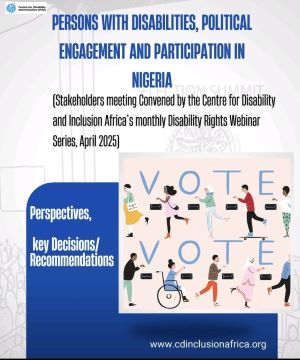
A new report by the centre that catalogued opinions, perspective of stakeholders about Persons with Disabilities’ political participation and engagement has been released for public consumption.
The Centre for Disability and Inclusion Africa’s monthly Disability Rights Webinar Series was focused on Persons with Disabilities, Political Participation and Engagement in Nigeria. It is just about 48 months(2 years) away from Nigeria General Election, we believe that Persons with Disabilities have rights to participate and be allowed to contest elective posts. Democracy aggregates the voices of the majority without leaving anyone behind.
The speakers at the vent were Hon. Mohammed Abba Isa, The Senior Special Assistant to the President on Special Needs and Equal Opportunities, Hon Folasade Arise, The Ondo State Chairperson of Ondo State Welfare Board for persons with Disabilities, and three Hon. Mayor Ekpomomukor who is Special Assistant to Bayelsa State Joint Association of Persons with Disabilities. The audience include Many PWDs who are political aspirants, Chairmen and executive of some of the State JONAPWDs .
We also have in attendance Hon. Oladosu Olanrewaju, the Special Assistant on Disabilities to Osun State Governor.
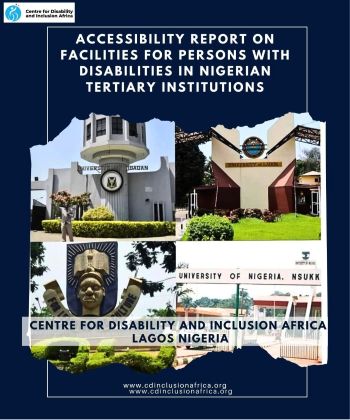
The event also coincides with the launching of centre’s Accessibility Report of Facilities for Persons with Disabilities in Nigerian Tertiary Institutions. You can download a copy here,
The Centre for Disability and Inclusion Africa is set to launch its Accessibility Reports on Nigerian Tertiary Institutions facilities for Students/Persons with Disabilities.
The report process which covers sample of all the tertiary Institutions within six geo-political zones of Nigeria is now ready for release on Wednesday April 30, 2025.
The launching will run consecutively with the organization’s monthly Disability Rights Webinar Series of April, 2025.
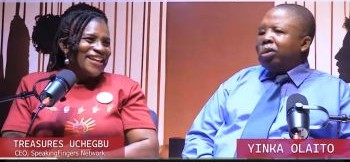
The Executive Director, Yinka Olaito, said he was happy at the development as the report showed some of the fundamental issues the organization had often raised with regards to educational rights of persons with disabilities in Nigeria and how facilities available are making this seem impossible.
According to Yinka “Even though this report is a pilot study that covered all the accessibility basics as well as the first in Nigeria that covered the six geo-political zones Tertiary Institutions, we do hope it will serve as a pointer to what needs to be done urgently”.
The report which revealed a lot about the lack of preparedness of the majority of Tertiary institutions in Nigeria to accommodate students/persons with disabilities did also affirm that many of the institutions have disability friendly policies on Paper among others.
Inclusion Matters Television Broadcast is part of the media strategies of the Centre for Disability and Inclusion Africa to achieve its goals. It is primarily focused on using online television media platform to raise and communicate its mission to strategic audience. The online Television has been running for over 8 months and therefore the management believes supports from the ecosystem can help.
According to Yinka Olaito “If people realise What changes little contribution they can make towards shattering stereotypes, clearing misgivings, strengthening better understanding of Disability Inclusion in the society they will be committed to an issue like this? Because the impact can be huge, that is the reason we are calling everyone to join us in creating and building an inclusive, sustainable society that delivers for all. Please follow the call for impact thoughts expressed below.
The Nigeria/Africa Society we live in today continues to wallow in ignorance, myths, stereotype, negative attitude, denial on several issues of concern to children and adults with disabilities. To address this is to constantly engage in inclusive conversations which enlighten the public as it offers numerous benefits, including fostering empathy.
Such informed conversations also build bridges between different groups, and promote a just, inclusive, understanding and equitable society. These conversations can also lead to a deeper understanding of diverse concerns, perspectives; challenge harmful stereotypes, and encourage respectful dialogue, ultimately contributing to an inclusive and tolerant community of concerns.
Inclusion Matter TV format
-It is presently ab online TV platform which is interview and discussion focused. It is solely created to break the barriers as well as build bridges with regards to knowledge of disabilities in the society.
For now, it is a YouTube Channel with a plan to have a full Television project website with accessibility options as well as a possible program on a Television station.
Discussions centres on rich and insightful real life issues around various disabilities, challenges, opportunities, how to manage and promote special abilities, drive conversations against all forms of wrong beliefs, stereotypes, drive strong conversation in favour of national policy that works for all and builds a community of empowered community of concerns where open conversation, support are welcome.
Why is this important and What does this involve?
A weekly media broadcast that focuses on discussion around disability and inclusion issues
– A platform that strengthens conversations; addresses change in public attitude to disability and inclusion matters
-Discussions are focused on challenges and potentials of persons (Children and adults) with disabilities
-Discussion breaks the myths and fears parents have, shatters all forms of shame associated with having a differently-abled member of the family and needs to seek help and get necessary information
-It guides members of the society against ignorance of pitying an average person with disabilities on the street instead of empathy or concentration on their capabilities
-An open platform where concerned parents and stakeholders can seek help
– A community of concern stakeholders who are proud of themselves as a person with disabilities, parent, family member or a caregiver
What your support and promotion can do and why should you commit to bridging this gap?
For parents or family members of a child or persons with disabilities, you help break the barrier and shame as society is better informed.
-The above offer a lot of emotional and psychological support and understanding needed from the society.
-It help foster public understanding, shatter ignorance, stereotypes, myths, misgiving age long belief Nigeria/African society had held. You help send right messages to policy makers
-You can help other parents, family members who are still living in self-denial or shame of having a child, persons with disabilities so they can publicly and unashamedly seek help where necessary
-You are helping in building a society free of misgivings about a child, persons with disabilities.
– The platform is global, reaches policy makers, young and informed people faster who can help shape policy as well as build stronger momentum for the change we all desire.
What level of support can you offer?
– Sponsor 12 episodes of 3 months (4 episodes per month of a 35 minutes’ session) discussion at highly discounted price per episode with you, your corporate organization acknowledged on the programme as sponsor
– Sponsor 8 episodes of 2 months (4 episodes per month of a 35 minutes’ session) discussion at highly discounted price episode with you, your corporate organization acknowledged on the programme as sponsor
– Sponsor 4 episodes of 1 month (of a 35 minutes’ session) discussion at highly discounted price per episode with you, your corporate organization acknowledged on the programme as sponsor
– Sponsor 1 episode of a 35 minutes’ session) discussion at highly discounted price per episode with you, your corporate organization acknowledged on the programme as sponsor
N.B Each episode (planning, scripting, pre and post studio recording, editing) cost us average of One hundred and fifty thousand Naira (Between Seventy- five- One Hundred US dollars)
-You can join the conversation as expert, community member, share your thoughts anonymously
– Subscribe and join Inclusive Media TV/Broadcast YouTube channel as well as a specialized Closed Facebook community as well as WhatsApp group of community who shares tips and ask questions about disabilities without any judgement
The ratio of young persons with disabilities unemployment status is very high. In a world where social justice and leaving no one behind have become a mantra, why is that the country continues to tactically allow the exclusion to continue? The cost of this exclusion and continued lack of attention will have a huge boomerang on everyone in no distant time.
We all know some of the factors that are responsible for young people with disabilities lack of unemployment trajectory. A substantial 63% of persons with disabilities lack education or training and related employability skills. There is fire on the mountain top and no one seems to care like Asa rhythms go. But the remaining population who even has such opportunities is constantly faced.
Many young PWDs’ face to face experience with employers often end in disaster as several recruitment teams will be meeting some of these special people in real life on a formal basis.
Many young PWDs have complaints about the attitude of recruitment committee members which is often betrayed by shocks shown on the faces of the recruit team whenever they have any serious encounter with PWDs experts/potential applicants. It has been proven not many of these recruitment team members have had good exposure and knowledge of potentials of an average qualified PWDs job applicants except hose they have met on the street that are begging.
Trust Inonse, a radio producer who is also a communications expert shared that he once submitted a proposal to hand a corporate organization’s communications brief.
According to Trust, because his proposal was solid, the management called for a virtual chat which he passed. Following that, he was asked to do a virtual presentation which he scaled and rated the best among potential consultants. But the major problem began when he was supposed to meet the final decision maker in the appointment of the consultant for the brief.
According to him, everyone agreed he did best and positioned as someone who could do the job but the CEOI said he was finding it hard to accept Trust Inonse might have the energy to attend the demand of completing the assignment, and that was how he lost the brief. For him and many other brilliant young PWD professionals, this has become a regular experience
A major solution that is bridging the employment gap which a few inclusive-driven employers and any other talent recruitment agencies are now being promoted across the globe is inclusive job/career fair. This is still at the ignition state in Nigeria is the Inclusive career or job fair or other related events and program.
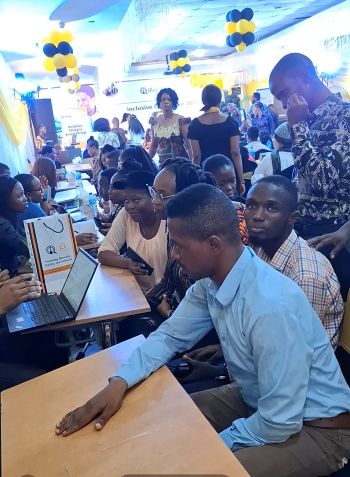
A recent Inclusive career, hiring event in Lagos organized by BlackSkills and SightSavers Nigeria
With an inclusive career fair, a relaxed atmosphere with a mind to know or build conversation and communications between potential young persons with disabilities’ job applicants and potential employers I s established.
Both can have the opportunity of asking relevant questions that can lead to greater mutual relationships in no distance time. I had an opportunity to attend one recently in Lagos Nigeria and my interaction with potential young PWDs qualified professionals who are applicants was positive, many or the participating talent recruitment agencies, corporate organizations as well as organizers were happy with outcomes.
But beyond the above solution, literacy rate, employment policy implementation and a possible incentive to corporate organizations who are deliberate about inclusive hiring will help.
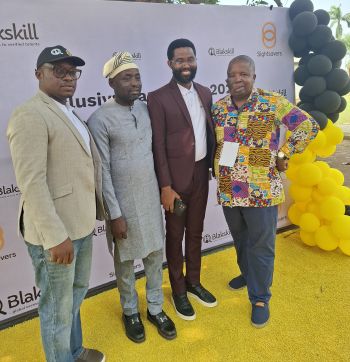
Yinka Olaito and leaders of the organizing team of an inclusive career fair in Lagos- Sightsavers Nigeria and BlackSkills
The government continued to find solutions by implementing policies and programs to address youth unemployment, such as the Nigerian Youth Employment Action Plan (NIYEAP). The Nigerian government had also collaborated with the United Nations Development Programme (UNDP) to develop the Nigeria Jubilee Fellowship programme. On a final note we all need to understand that youth unemployment has a devastating impact on both individuals and society, leading to increased militancy, violent crimes, kidnappings, restiveness, and socially delinquent behaviour
Report from a recent Inclusive Career fair organized by BlackSkills and SightSavers Nigeria
The Centre for Disability and Inclusion Africa’s disability and inclusion reporting media fellowship. Which is often jointly organized with Africa Foundation for Young Media Professionals impact is growing and impact. Aside from mentoring, coaching on underrepresented reporting, helping to grow media capacity of early and young media Professionals across Africa continue to grow. The 2024 media fellowship for next generation of journalists. Broadcasters, specifically for campus journalists impact is growing.
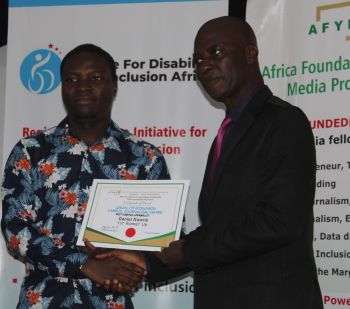
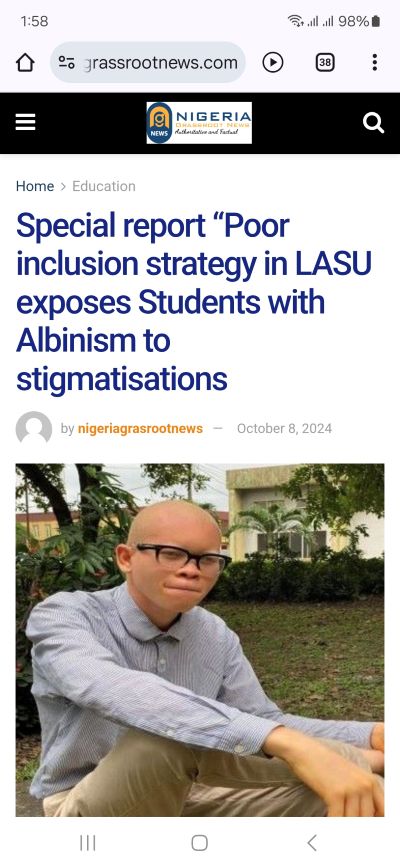
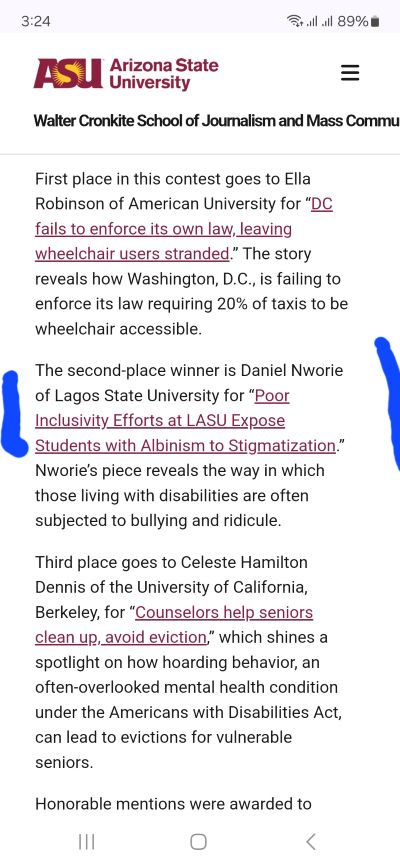
One of the campus Journalists had won an international disability media reporting award. His story that won the award is centred around challenges Students with Albinism are facing in Lagos state University.
Read full story here, or the global announcement here
Daniel Nworie in 2024 won Africa Media Come Alive Campus Journalism Award
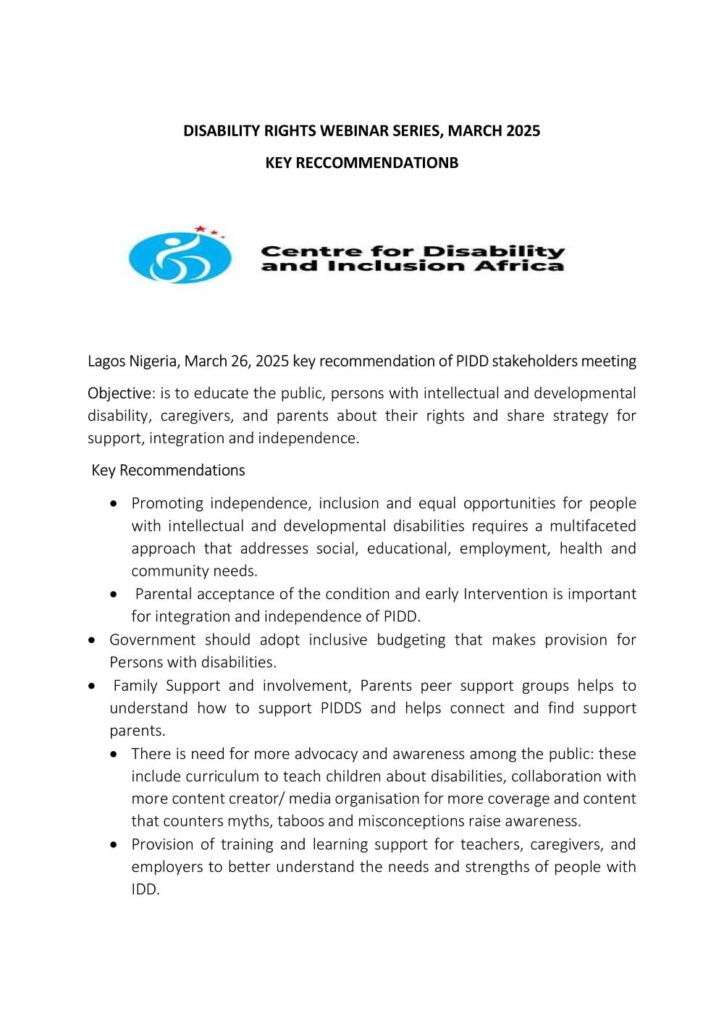
At the recently held virtual Town Hall meeting of stakeholders’ convened by the Centre for Disability and Inclusion Africa, in Lagos Nigeria on March 26, 2025 2025. Stakeholders while calling for concerted and urgent efforts from everyone, jointly agreed on the following
DISABILITY RIGHTS WEBINAR SERIES, MARCH 2025
KEY RECCOMMENDATIONB
Lagos Nigeria, March 26, 2025 key recommendation of PIDD stakeholders meeting
Objective: is to educate the public, persons with intellectual and developmental disability, caregivers, and parents about their rights and share strategy for support, integration and independence.
Key Recommendations
Promoting independence, inclusion and equal opportunities for people with intellectual and developmental disabilities requires a multifaceted approach that addresses social, educational, employment, health and community needs.
Parental acceptance of the condition and early Intervention is important for integration and independence of PIDD.
Government should adopt inclusive budgeting that makes provision for Persons with disabilities.
Family Support and involvement, Parents peer support groups helps to understand how to support PIDDS and helps connect and find support parents.
There is need for more advocacy and awareness among the public: these include curriculum to teach children about disabilities, collaboration with more content creator/ media organisation for more coverage and content that counters myths, taboos and misconceptions raise awareness.
Provision of training and learning support for teachers, caregivers, and employers to better understand the needs and strengths of people with IDD.
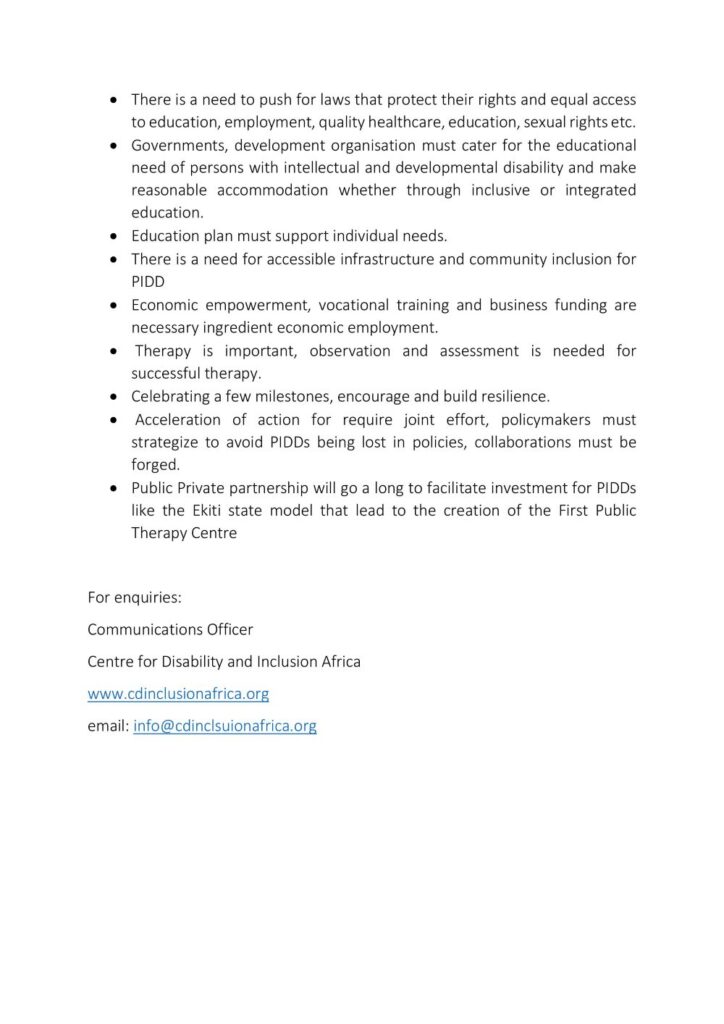
There is a need to push for laws that protect their rights and equal access to education, employment, quality healthcare, education, sexual rights etc.
Governments, development organisation must cater for the educational need of persons with intellectual and developmental disability and make reasonable accommodation whether through inclusive or integrated education.
Education plan must support individual needs.
There is a need for accessible infrastructure and community inclusion for PIDD
Economic empowerment, vocational training and business funding are necessary ingredient economic employment.
Therapy is important, observation and assessment is needed for successful therapy.
Celebrating a few milestones, encourage and build resilience.
Acceleration of action for require joint effort, policymakers must strategize to avoid PIDDs being lost in policies, collaborations must be forged.
Public Private partnership will go a long to facilitate investment for PIDDs like the Ekiti state model that lead to the creation of the First Public Therapy Centre
Despite the challenges faced by persons with Intellectual and Developmental Disabilities (limitation in cognitive function(IQ), adaptive behaviours such as everyday skills in communications, social interaction and self-care) and the fact that the disabilities can vary widely from severe to above average several challenges which affect individuals’ ability to learn and live independently, a major challenge comes from lack of awareness and full understanding from the society or family members with regards to what really count.
In Most cases, these often prevent true knowledge and empowerment of the Persons with Intellectual and Developmental Disabilities(PIDD) especially here in Nigeria and other developing countries.
While it is known that PIDD can have difficulties in problem solving, decision-making and learning new things but of more importance to note is that such individuals have unique strengths that can be tapped for a productive life.
A good point to note is that there are few differences between a person with Intellectual disabilities and Developmental disabilities even though they are always placed in the same cluster. Developmental disabilities can be an advanced milestone which can affect individual walking, talking and interacting socially. Often it manifests from childhood and continues till adult life.
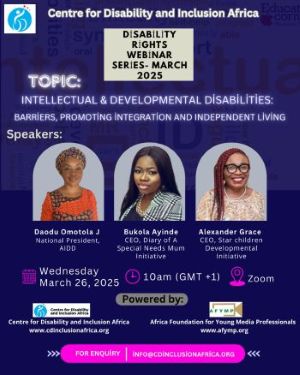
Despite the above, a good grasp of issues and demands associated with PIDD can aid a better inclusion, integration and promote independent living of such people. The above and many others are some of the submissions made s by speakers and other stakeholders present at a virtual town hall meeting “Disability Rights and Webinar Series’’ which is a monthly event of Centre for Disabilities and Inclusions Africa tagged “Intellectual and Developmental Disabilities: Barriers, promoting integration and Independent living”
Grace Alexander Williams
The first speaker, Grace Alexander after her introduction speech asked society to learn and understand PIDD if the society truly seeks integration. According to her “PIDD requires a multifaceted approach that cuts across education, social, employment and community needs” Furthermore “Access and rights should be accorded to PIDD” Grace Alexander mentioned.
Beyond the above, “Advocacy and awareness in several formats are essential if PIDD must live a fulfilling life” Said Grace Alexander.
Bukola Ayinde
Bukola Ayinde, an advocate of PIDD and lead for Special Needs mum demanded more reasonable accommodation for PIDD and orientation of the society at large to make any meaningful progress. According to her “As a mum of special needs child-IDD. O have seen enough to say that Nigeria and many developing countries still have a long way to go”.
Daodu Omotola Joko, the national President of Association of Intellectual and Developmental Disabilities on her side believes that the knowledge gap still exists for many in differentiating between persons with Intellectual Disabilities and Developmental Disabilities even though they are both merged under the same cluster. “We must educate the society as well as policy drivers to push for knowledge sharing within the ecosystem’’.
Yetunde Salimon, a PIDD therapist on her part challenged therapists to be up and doing in the profession but more importantly, some need to upgrade their skills. “According to her, PIDD therapists are doing great work and it actually requires passion. But continuous development will aid better value delivery for PIDD”.
Some of the participants in the two hall meeting, Mrs Agboola, who is the special Adviser to Ekiti State Governor, on Special education and Inclusion as well as Hon Olanrewajiu Oladosu, Special Assistant to Osun State Governor made their personal contribution from the policy maker’s point of view. Beyond this, they brought goodwill messages and commend Centre for Disability and Inclusion Africa.
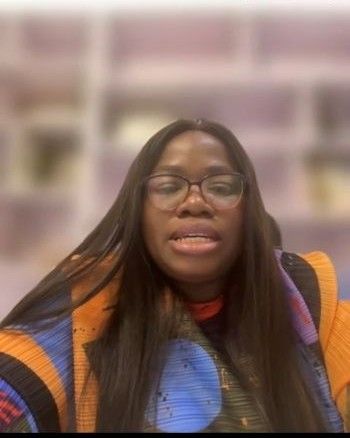
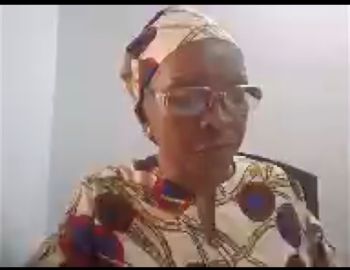
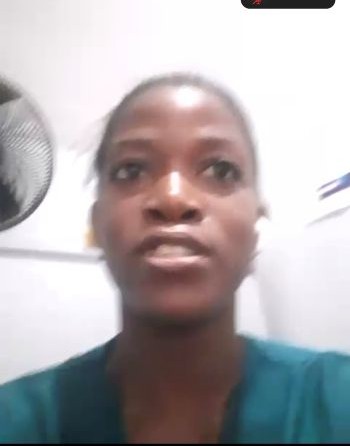
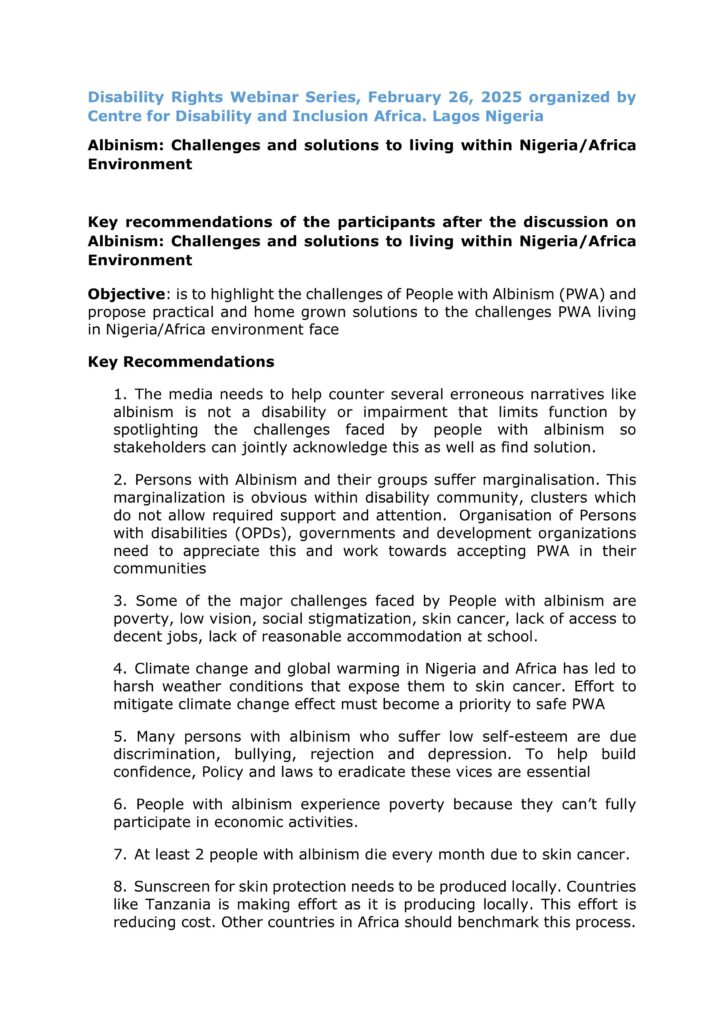
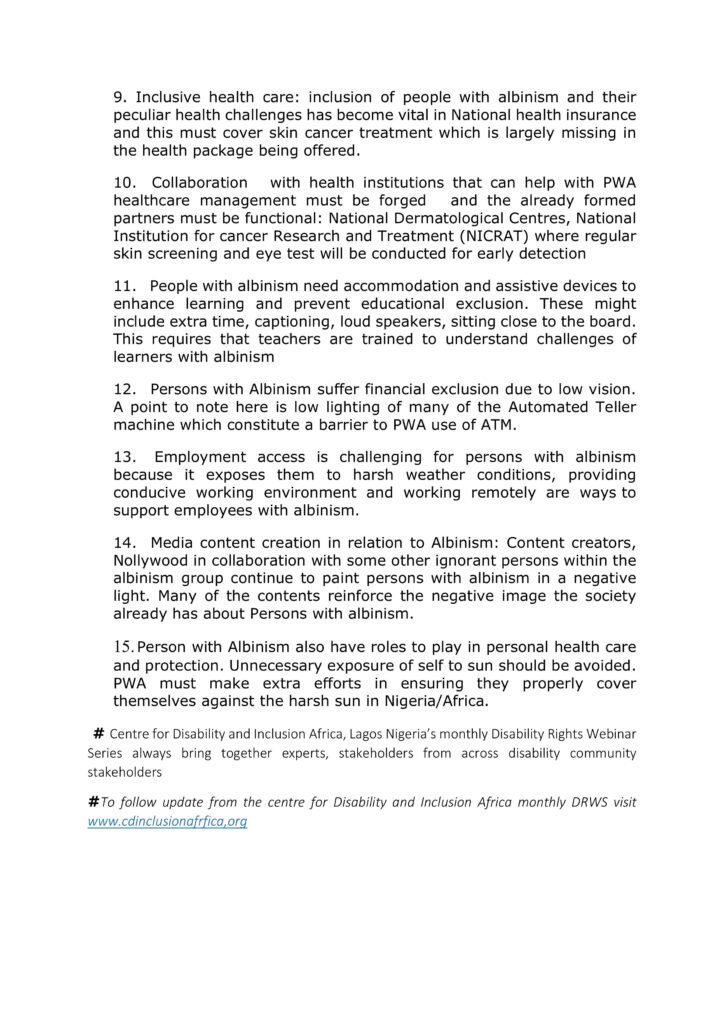
Albinism comes with different challenges and can be quite expensive to maintain. In many instances, rights of Persons with Albinism are being denied our of ignorance or a deliberate attempt.
At the centre for Disability and Inclusion Africa’s monthly Disability Rights Webinar Series which held on February 26, 2025. Stakeholders rose with key recommendations. Here below is the key issues raised