Inclusion demands

At October 2025 DRWS, experts warned “You cannot legislate inclusion and still fund exclusion.”

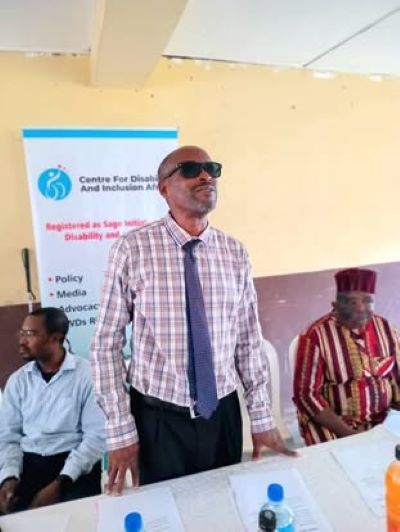
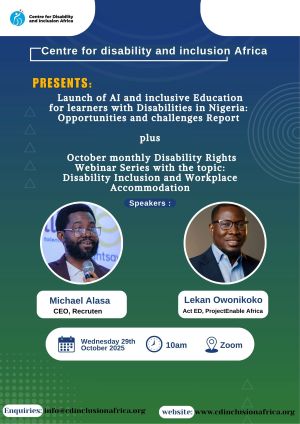
Centre for Disability and inclusion Africa’s October 2025 Disability Rights Webinar Series centred around National Disability Employment Awareness Month advocacy. The theme is “Disability Inclusion and Workplace accommodation?

A major concern of the organization is to advance the discourse on inclusive employment, showcasing success stories, and catalyzing action among stakeholders. Among the major objectives of this event are: To encourage employer’s public, private, non-profit to create equitable, accessible, and diverse workplaces as well as   to advocate for policy or institutional changes to reduce barriers and support reasonable accommodation and equal opportunity.

The event was preceded by the launch of ‘Ai and inclusive Education for learners with Disabilities in Nigeria report’. While opening the session, Busola Oladotun, the Senior Program officer of the Centre for Disability and Inclusion Africa maintained “The October edition of the monthly Disability Rights Webinar centered on workplace inclusion as part of National Disability Employment Awareness Month.

According to Busola. “The aim of this session is to establish a need for an equitable workplace so that persons with disabilities will overcome barriers such as stigma, discrimination, and inaccessible environments to excel academically and professionally”.

After this, Yinka Olaito, CDIA  Executive director, welcomed participants and charged them to give their 110% to the conversation of the day as the two speakers were well-suited to discuss the issue.

The first speaker, Olalekan Owonikoko, Acting Executive director of ProjectEnable in his speech maintained among others that Inclusion goes beyond compliance, leadership and policy are essential. There is need for inclusive career growth as well as a need to leverage technology as equalizer for a flexible work environment”
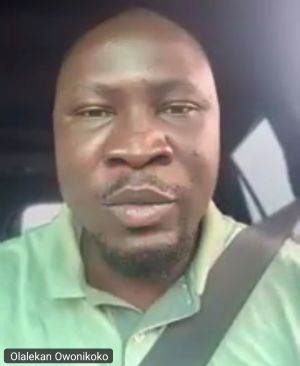
Olalekan Owonikoko

Owonikoko concluded “Building an inclusive, equitable, and accessible workspace is not charity or compliance but a strategic move

The second speaker, Michael Alasa, the CEO of Recruten consulting on his part stressed the need for workplace equity, diversity, accessibility and different sectors’ responsibilities in the game.
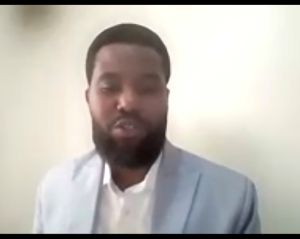
Michael Alasa

Michael Alasa in his call to action emphasized “Public sector should Integrate accessibility in policy design and infrastructure, Private sector mustmeasure and report inclusion outcomes while –Nonprofits: Practice representation, not advocacy alone. Finally, he advised all sectors must collaborate as inclusion cannot succeed if only one acts
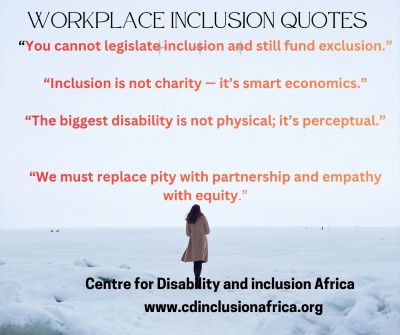
To read full event report click Here or here https://www.linkedin.com/feed/update/urn:li:ugcPost:7389981184891637762/?actorCompanyId=104643128
READ MORE
Inclusion in Nigeria

Disability Inclusion, media role

Knowing the role media plays in shaping the society and acting as the watchdog of it, the Centre for Disability and inclusion plays premium on ensuring the knowledge gap of the media (journalists and broadcasters) across Africa about disability inclusion is bridged.

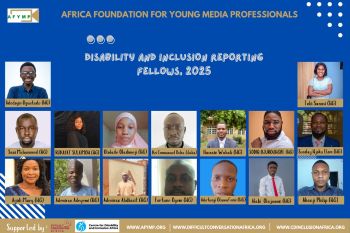
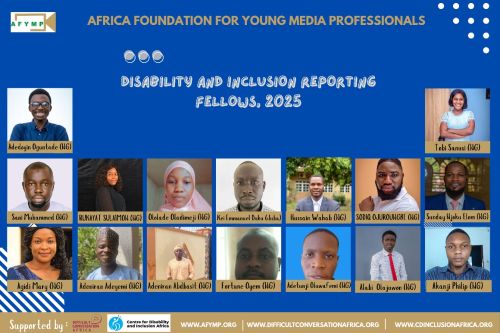
As a commitment to this, the Centre in collaboration with Africa Foundation for Young media Professionals runs a media fellowship- Disability and inclusion reporting. The media fellowship yearly selects about 20 media professionals across Africa, especially the early careers, which for us is strategic in positioning for the future.

The media fellowship always runs for 3-4 months. The process begins with a call for applications which is followed by a rigorous selection process where only the best are selected. Those who scale through this process begin their journey with intensive workshops where experts in the inclusive media space and how to use media to mainstream disability issues serve as faculty and mentors for the period that the fellowship will last.

Based on the above, we are happy to announce those who are successful and will be  part of the 2025 cohort. The initial fellowship workshop will be held from July 8, 2025 and the fellowship will run till November. In between participants will also be involved in story publishing and mainstreaming disability related issues(Policy, promotion of PWDs human rights etc)

READ MORE
CDIA Impact Story

Ekiti State heeds public outcry on PWDs Board establishment

Ekiti State had responded to disability and inclusion ecosystem demand for  an urgent need to establish a specialized board which will oversee Disability Inclusion matters in the state. We decided to wait until now before making any official comment on this because we were eager to see full implement of the board and effective take off of its activities

The board was constituted on October 7, 2024 and took effect immediately. The board has Dr Ogunlade Ebenezer, from Persons with Albinism Cluster as its Chairman. Official Gazeta release confirmed this.

The Office of Disability Affairs under the Governor Office supervision is “established to address the needs and rights of individuals with disabilities in Ekiti State, Nigeria. It aims to ensure that persons with disabilities have access to education, healthcare, social services, and are protected from discrimination. The board is responsible for implementing policies and programs to promote inclusion and accessibility for people with disabilities in the state.”

Members of the public will recall  that at our 7th February, 2024 Ekiti State PWDs Policy hangout a major demand we and all the Ekiti State Disability ecosystem made was a call for a reconstituted, functional disability Board where a Person with Disability should be the head instead of what was obtain then where the Executive order which established the existing commission  then allowed an Executive Secretary, who is a career officer to serve. As of then, the Executive Secretary was a woman without disabilities which many ecosystem members felt did not have full import of disability inclusion issues.

For this (board constitution and its effective running) development which we had monitored in the past 7 months and which we strongly believe is on a good start,: we are happy to have been part of those who raised their voices for this and its fulfilment for us is a cheery news. We must also commend the State Governor, His excellency Abiodun Oyebanji for being a listening leader.

READ MORE
#WheekchairNotLuggage

At CDIA January’s DRWS, experts call for sustainable efforts in behavioural change towards…

Centre for Disability and Inclusion Africa continues to use every platform to push for a better and inclusive society for all. Conversation and dialogue building with stakeholders remain one of the best ways to achieve meaningful progress.

January 2025 edition of Disability Rights Webinar Series (DRWS) was organized to step up conversation around ongoing corporate campaigns aimed at combating rights abuses of persons with disabilities with specific references to Physically-challenged persons in Nigerian Society.

Yusuf Olatunji

The campaign- #WheelChairNotLuggage challenged behavioural and attitudinal acts directed at this cluster which over the years had remained a concern to everyone. While the campaign has enjoyed massively the support of the media as it has become viral, more conversations are still needed, coupled with other physical activities.

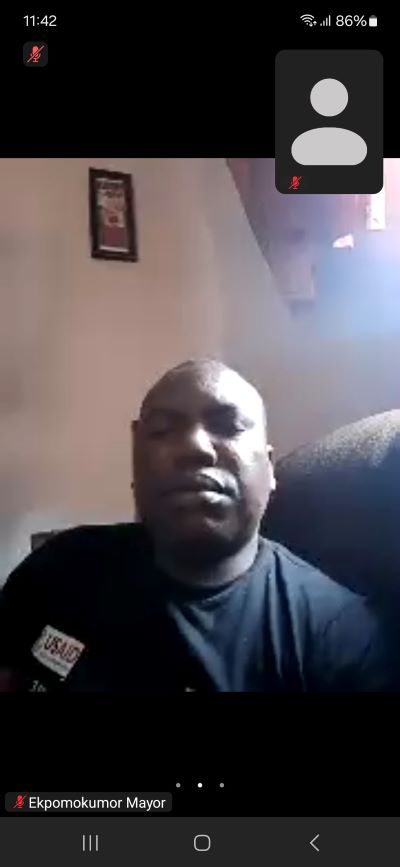
Comrade Mayor Ekpomomukor

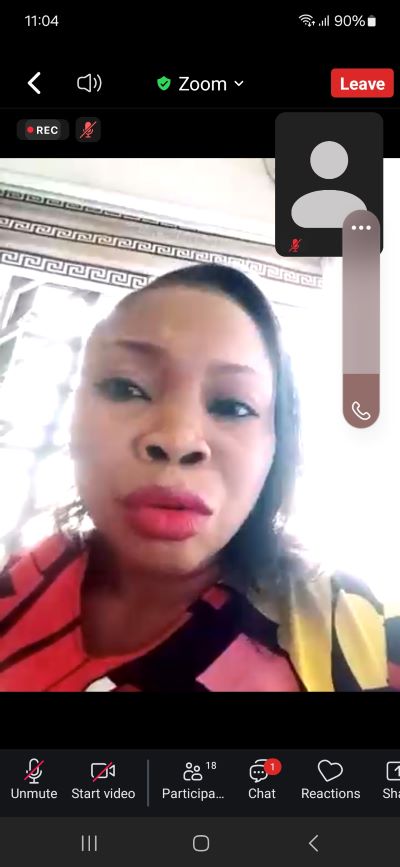
The four speakers in this January webinar were Susan Ihuoma (gender and Inclusion Advocate), Yusuf Olatunji (Accessibility Expert), Mayor Ekpomomukor (Senior Special Assistant to Bayelsa State Governor on General Duties as well as Chairman, Bayelsa state Chapter of Joint Association of Persons with Disabilities) and Mohammed Abba Isa9Senior Special Assistant to the President on Special Needs and Equal Opportunities)

Susan Ihuoma

A common and resounding echo that was reinforced by all the speakers was that there is need for behavioural change and stakeholders’ orientation, especially public transport operators. More importantly it was agreed that government and policy makers need to do more than they are currently offering.

Listen to the full conversation below

READ MORE
Inclusion demands

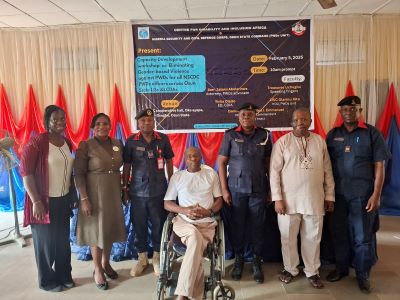
CDIA empowers 77 Nigeria Security and Civil Defence Corps PWDS Unit members

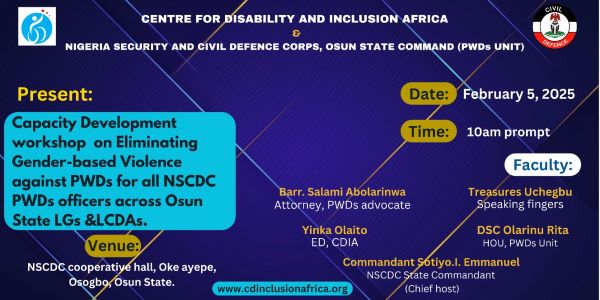
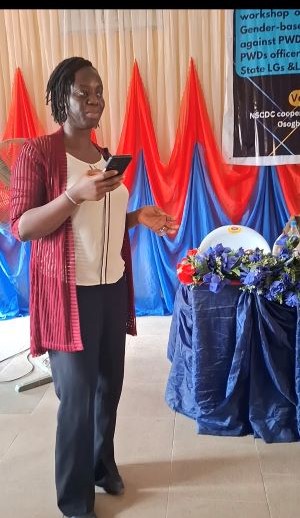
Centre for Disability and Inclusion Africa (CDIA) held a one-day capacity development workshop for Osun State Command of Nigerian Safety Civil Defense Corps (NSCDC) PWDs Unit officers on Eliminating gender based violence against Person with Disabilities (PWDs).

The training which took held on Wednesday, 5th of February at the NSCDC co-operative thrift Hall Oke-Ayepe, Osun state, had in attendance experts and advocates in the disability field as faculties such as, Yinka Olaito(E.D CDIA), Treasures Uchegbu and Barrister Salami Abolarinwa who joined via zoom.

While Opening the workshop, the representative of NSCDC state Commandant, Commandant Sotiyo I. Emmanuel appreciated the CDIA team for such a huge contribution to the state’s Officers. According to him “We honour such a huge sacrifice from CDIA as we are aware this is not funded but a commitment to make a change””. The Commandant then charged his officers to “Pay attention to the knowledge to be shared

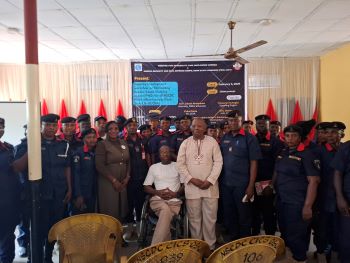
NSCDC Osun State Commandant representative, State head of training, state’s head of PWDs unit and CDIA team

The head of the PWDs Unit in the state’s Command DSC Rita Olarinu, also commended CDIA team for coming to Osogbo for the capacity Development workshop.

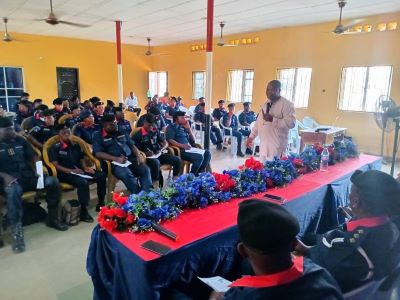
Yinka Olaito took the first session of the lecture titled “Strengthening Inclusive Society Through Disability Knowledge” Yinka Olaito explained the different types of disabilities and their categories.  He also stated there are 7 recognized clusters of persons with disabilities in Nigeria namely; The physically challenged, Albino, Dwarf, Visually impaired, hearing impaired, Intellectually challenged and Speech impairment. 

He also talked about the discrimination against PWDs and terms that should be used and not be used. For example, we should avoid the use of words like deaf and dumb or should call a Visually impaired person blind. Then as officers, when attending to PWDs,  they should describe who they are as a person as well as a warm person 

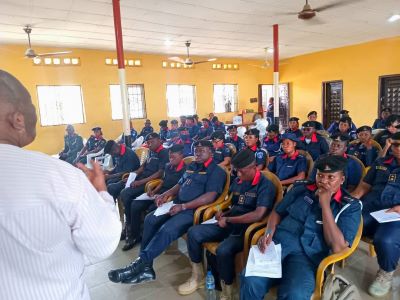
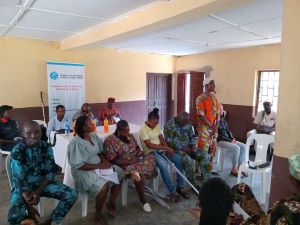
Cross section of some of the participating Officers

n his second lecture titled” Introduction to Gender Based Violence (GBV), Yinka olaito explained the different kinds of gender based violence where he listed psychological violence, physical violence, sexual violence amongst other.  Also stating the causes of GBV such as poverty, conflict and crisis and so on.

Yinka Olaito noted that Gender Based Violence is on the rise especially against PWDs but many cases are not reported because of getting justice.  He charged officers to make sure people get justice whenever cases are reported and not shun them up. Because when the victims don’t get justice, it creates more room for oppression.

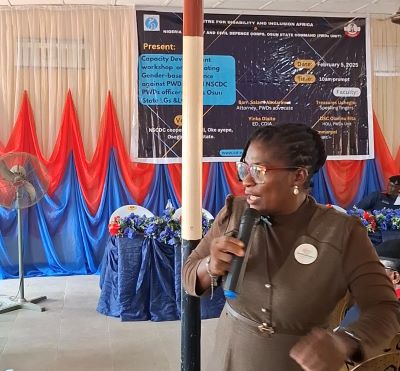
Treasures Uchegbu took the third session. The lecture was titled; Gender-Based Violence Against Person with Disabilities”” She made it clear during the lecture that women with disabilities are the major victims of GBV. From sexual harassment, forced marriage, Rape and psychological violence. 

Treasures explained that when women/girls with disabilities encounter any of these forms of GBVs, many of them never get justice.  When a person with disability reports a rape case, they get responses like ” you should thank God someone slept with you” and this makes them more vulnerable to their oppressors and also put the victim into depression. She highlighted that some women with disabilities are forced into marriages they do not want because their parents feel “they are doing them a favour.

Treasures stated during the lecture that PWDs have a mind and rights of their own and they shouldn’t be seen as lesser humans and their opinions should be respected.

Treasures Uchegbu

At the end she urged officers to give attention to PWDs and communicate with them often. She also shared a sign language booklet to participants of the workshop.

Legal Framework and Best Practices for Promoting and Enforcing PWDs’ Rights session was  taken virtually by Barr. Salami Abolarinwa. He shared extensively on the laws guiding the rights of PWDs and legal procedures around it.

Busola Oladotun, the project officer for CDIA explained the policies for PWDs

Busola Oladotun

During the questions and answers session, one of the participants asked that in a case where a Visually impaired person is the victim of GBV, how can we be sure he/she recognizes the oppressor? Yinka Olaito answered that most Visually impaired person’s uses their sense of smell to Identify people.

Closing the workshop, DSC. Olarinu Rita who is the Head of Unit for the PWDs desk NSCDC Osun State thanked the CDIA team for the eye opening workshop. She acknowledged that there were things she got to know for the first time through the workshop and she assured that officers are going to make sure they will be zero tolerance for Gender Based violence in each of their districts.

The 77 Officers who participated in the trade were selected from all the 33 Local Governments and LCDAs across Osun State.

READ MORE
Inclusion demands

Ogun state 2017 disability law and gaps, Intellectual disabilities top most neglected

As part of the centre’s advocacy drive to ensure no one is left behind, there is constant engagement at local and state levels with different stakeholders: Policy, government, disability ecosystem among many.  

Ogun state has been one of the states in the South West Nigeria that passed Disability law early. As far back as 2017, the law had been signed into law even before the Discrimination Against Persons with Disabilities Acts 2018 was passed.

But unfortunately, the law had gathered dust on the shelf of the few who have access to it. Bo efforts had been made to implement it. Due to a concern of ours, we managed to get a copy of this law and we did discover it can be called an outdated law with several gaps in between. The above informed the organization to hold an event around this to mark International day of Persons with Disabilities.

Dr Michael, Ogun State JONAPWD chair welcome address

The theme of the event “Ogun State Disability law review, a conversation on way forward” brought together several actors and stakeholders within the disability inclusion ecosystem in the state. All the cluster leaders within the state were fully represented in the event as they shared woes after woes of stigmatization, exclusion, stereotypes, abuses of many kinds.

Cluster leaders during Panel/Sharing session

The event has a keynote address which examines the present law and the challenges it possesses to inclusion in this age. The welcome address was done by the state chairman of Joint Associations of Persons with Disabilities in the state, Dr Michael Elobor, who believed “The continuous neglect of PWDs in the state needs urgent attention.

The keynote Speaker, Yinka Olaito, who is the Executive Director of the centre, pointed out some gaps in the 2017 Ogun state disability law.

 The lacuna includes the ambiguity, vagueness and unenforceable quality of the 2017 Ogun State Disability Law on housing, employment, health Provision, education, Transportation and inclusive procurement.

A represntative of cluster lead for Intellectual disabilities clsuster (Mrs. Abiodun) Sharing level of neglect for the clsuter

Cluster

The law showed the ignorance of the lawmaker as there was no proper categorization of disabilities and impairments(Clusters). The intellectual disability and challenges of people with albinism.

 Disability Agency

 The law made no mention of any agency. Though a subtle mention of çommission’ without real definition was included. In many instances, the Ministry of Women Affairs and Social Development is saddled with an oversight function of a possible trust fund to be created for Persons with Disabilities in the state.

Punitive measure and affirmative actions

The law was not explicit on clear process of getting justice

Punishment in some cases were in some cases too light or too harsh.

After Yinka Olaito’s speech, representatives of each cluster heads: Albinism, National Association of the Blind, Deaf, Intellectual Disabilities, Dwarf, Physical impaired, Persons with Leprosy shared experiences.

Ope, a PIDD believes making Sign Language compulsory can help in bridging the gaps

Recommendation

 He proposed the establishment of special courts that can speed up investigation, prosecute violators of the provision.

Nigeria Local Disability Inclusion   Policy

This policy will push for accountability of disability and Inclusion matters in local Government Governance.

Barriers and Challenges

Each cluster began to identify peculiar challenges and barriers in their cluster.

 blind: unemployment, lack of braille, inaccessible transportation, insufficient school for the blind.

Persons with Albinism: stigmatization and lack of skin care creams

Persons with Leprosy: Stigmatization reinforced by cultural myths and stereotypes, lack of treatment.

Physical Disability:  expensive transportation, extra cost for wheelchair, expensive medical care as a result of bedsore, difficulty in attending school due to inaccessible school building and discrimination of student with disability, difficulty in getting accessible houses as landlord reject persons with physical disabilities, Females suffer rape and sexual violence, health facility and rebuilding in accessible.

Centre’s program officer, Busola

Intellectual Disability Cluster: Lack of awareness about intellectual disability, expensive healthcare due to lack of health insurance and unavailability of trained health workers due to migration, unemployment, Job loss due to care for children with intellectual disability, Lack of specialized school for children with intellectual disability in ogun State.

Deaf Cluster: Communication barrier and lack of interpreter at the hospital, lack of teachers, discrimination during employment processes.

Political Exclusion: PwDs are excluded from standing as political aspirants

The event held at Justice Fati Lami Recreation Centre for the Disabled, Oke- Ilewo Abeokuta Ogun state

Check Newspaper report here

READ MORE
Inclusion demands

Inclusive Society needs good policy, leaders with political will

There is no gainsaying that over a billion population counts. The capacity of this population is immeasurable as we have the best of creative geniuses among them. Unfortunately, the global south that has the majority of this population continues to be indifferent about their total integration into the society.

While it is on record that governments, political leaders in the global south had signed different charters created to protect the rights of persons with disabilities. In addition, some also have state and national laws documented to ensure inclusion of this population. But the general outlook does not show much has been accomplished in proper integration of the population. Charity model, continues to be the very notable model that is being applied at the detriment of human rights model that can speed up efforts.

As a concerned organization, we are continuously in the forefront of stepping up conversation around disability and inclusion issues. We do know, the dream of achieving an inclusive society in the global south may take a long while, that is why we refused to give up, we have developed collaborative efforts with other stakeholders across the continent that are yielding fruit so we can move faster.

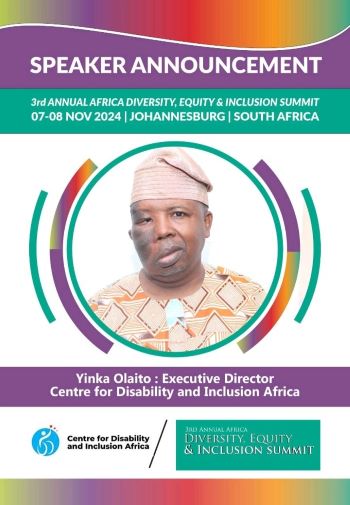
African Diversity, Equity and Inclusion conference is a yearly event put together by African Insights to raise conversation around disability and inclusion matters in Africa. Our Executive director, again this year joined other speakers in Johannesburg South Africa between November 7-8, 2024.

Yinka Olaito spoke on the topic “Role of policy, leadership in ensuring a disability inclusive society”. Yinka Olaito began by acknowledging the fact that some African countries are truly making efforts just that those efforts are at snail speed which does not run at the present reality the society demands. Yinka said “it is critical to incorporate disability inclusion policies and strategies in all spheres of the society for sustainable and inclusive socio-economic development”.

But to achieve this, there is a constant need for leaders, and leadership to make sure there is enough will to scale through all the processes that can make that work. In terms of leaders., parents and close family must show good leadership in the way they care and talk to persons with disabilities. They need to build confidence in them from home. An impaired person needs love and like every other person, they thrive in an atmosphere of love.

 Apart from home front leadership needs, policy makers, governments at various levels need to be courageous in challenging stereotypes, myths as well as follow through the demands of all the laws and protocol that will be mutually beneficial leading to an inclusive society all can be proud of.

The absence of the above has shown in the level of mammoth challenges persons with disabilities face in our society.

True leaders should not be afraid of failure as they may not get it right once. A strong passion for learning, unlearning and relearning what works along the line will guarantee a better society we all desired.

From home, work places, schools, health and legislative environments, conscientious efforts must be made if we must all enjoy the benefits of a sustainable and inclusive development in our societies.

Right policies that will give access to equal economic opportunities and resources need leaders who are focused and determined to bring changes. Yinka said “We all know that statistics out there have shown that society gets better when it fully maximizes the potential of everyone, the disabled communities have the best of creative and innovative individuals with sound opportunities to make the changes we desire. I n his final remark, Yinka Olaito challenged everyone who has a voice to continuously speak up for a disability-friendly environment

READ MORE
Digital Rights

16 African Journalists trained on Disability and Inclusion reporting

The global landscape and demand for inclusion in every sphere is putting pressure on every profession to play its roles. Journalism, media play vital roles in serving as catalyst for development as well as a channel of change orientation. If the world must get it right, journalists, broadcasters need to be ahead of all in information sharing which will strengthen inclusion protocols.

It is very clear that if journalists, broadcasters remain in the dark concerning any area, the hope of society of excelling in that area is slim. Disability and inclusion reporting is a technical area that requires knowledge and strong ability of media practitioners to communicate and break down issues in this area will make a great difference especially in Africa where the orientation about persons with disabilities related to ‘god is punishing the individual or the parents who gave birth to one.

A session on partnership and collaboration led by Treasures Uchegbu

The approach of many to persons with disabilities had largely been influenced by charity or humanitarian outlook. The media industry has a major role in dispersing such stereotypes as well as traditional beliefs that are not empowering.

Given the above scenario, Africa Foundation for Young Media Professionals(AFYMP) in conjunction with Centre for Disability and Inclusion Africa continues to organize yearly fellowship on Disability and Inclusion Reporting fellowship which spans six months beginning with 2  day intensive workshop where experts are brought together to expose participants(broadcasters, journalists across Africa) to fundamental of such reporting. This is often followed by mentoring as well as story publishing to affirm authenticity of knowledge gain.

2024 Disability and inclusion reporting started with a call for applications to select about 16 journalists, broadcasters. The call for application attracted over 200 submissions. The two days’ workshop (organized in hybrid form) was held at University of Ibadan Hotels. While welcoming the participants who had expressed willingness to learn, engage with relevant information that can help them become effective; Yinka Olaito, Executive director of AFYMP charged participants to place a premium on every section of the training as every section means so much if they will gain enhanced knowledge.

T

A session on essential of data to Disability and Inclusion reporting led by Disability and inclusion Consultant , Dr Toyn

he two days had experts from the industry exposed the participants fundamental and etiquette of disability and inclusion reporting, urgency, importance of data, language use, partnership and collaboration building, from awareness to action, group presentation etc

Feedback from the seven in-persons’ participants indicated that the simplicity of the session through breakdown of technical knowledge made a lot of difference. Another participant expressed her appreciation by saying “I used to carry the erroneous belief that PWDs are cursed or inhuman but with this training I had come to understand PWDs are as humans as every other person on street and that their rights are human rights as well”,

READ MORE
Disability and inclusion media traing

KFC and Debola Daniel, discriminations against PWDs in Nigeria must stop- Yinka Olaito

“To be a disabled in Nigeria is to be undesirable, unwelcome and unaccepted. As I’ve said before, it is lonely, it is a lonely, scary and isolated place”- Debola Daniels, a PWD

“Being disabled often rolls over my spirit, leaving behind a trail of shattered dignity and forgotten humanity. Nowhere more so than in Nigeria.”- Debola Daniel

The experience of Debola Daniel, a mobility impaired person who uses wheelchair. on March 26, 2024 continues to characterised discriminations many persons with disabilities experience in Nigeria. This is so for especially many with no voice or connection. Debola Daniel happened to be a passenger at Murtala Muhammed Airport this day and while waiting for his flight, he and his family made the choice of going Kentucky Fried Chicken(KFC) within the premise. But according to him, which he made a thread of on his X(twitter) account, a female manager of the service restaurant did not allow him in saying “No wheel chair allowed”.

From March 26, 2024, Debola Daniel had gained media front-page prominence, the Federal Airport Authority of Nigeria(FAAN) had wielded the big stick by closing the fast food brand because such behaviour contravenes discrimination against person with disabilities law in Lagos state among others. On his part, the executive director of the centre, Yinka Olaito, had through his media appearances and campaign against such inhuman treatment of Debola Daniel, which is just a fraction of many voiceless and unknown persons with disabilities in Nigeria go through.

While on TVC news, Yinka Olaito said the inhumane treatment, discrimination against persons with disabilities is very pervasive and grossly under reported. According to him “The point is there are many Debola Daniels among PWDs in Nigeria that experienced such discrimination daily. The fundamental or root cause of this is ignorance of laws as well as charity, humanitarian approach to PWDs rights. This must stop”.

Noting that many stakeholders are guilty in this area not even the government and its agencies are left out. For instance, Yinka Olaito said Debola Daniel’s flight  was delayed (this had become a regular occurrence with no penalty). Also that the elevator was not working made him look at the option of going to KFC.

Speaking on Wave FM Port Harcourt on the same issue, Yinka Olaito said “Government and its agencies must lead by example by making all its buildings accessible”.

Yinka Olaito concluded “Nigerians are good people with good interpersonal, cordial relationships with high sense of respect for their neighbours as well as a high regard for inclusiveness. Whatever had gone wrong must be corrected now”” He also called on the National Commission for Persons with Disabilities to scale up its work too in this area

READ MORE
Inclusion in Nigeria

Review disability law, PWDS engagement & promote rights, Ondo PWDs charged govt

Persons with disabilities in Ondo state affirmed the deceased former Governor, Rotimi Akeredolu did a lot to alleviate the challenges faced by different PWDs clusters when compared to previous governors, but the challenges and existing gaps are still obvious remain if the state must ensure global rights and aphorism ‘Equal rights. equal dignity’.

It is very clear gaps still exist in the state between persons with disabilities and those who are not. The gap also varies. For those in urban centres like Akure, many organizations, especially financial institutions are making efforts to ensure life is bearable for PWDs. 

Abiodun Olusegun, chair Ondo JONAPWD chair

Thanks to constant engagement made by the Disability Board members in the state with leaders of this sector. Beyond this, in many cases, rights of PWDs are flagrantly being disobeyed out of ignorance or deliberate act of state actors as well as persons without disabilities especially in rural areas.

The above formed part of the conversations at Ondo state PWDs Stakeholders Policy dialogue organized by the Centre on Thursday February 8, 2024 in Akure Ondo state.

Princess Folasade Arise, Chair, Ondo State Disability Agency Board

The programme, organized in a panel session outlook had Princess Folasade Arise, Ondo State Chairperson, Disability Board, Abiodun Olusegun, Joint Association of Persons with Disability, Ondo State Chair, Busayo Ademeko, Women leader JONAPWD Ondo state and Sola Idowu, JONAPWD secretary-general. Ondo State chapter as panellists. The Nigeria Security and Civil Defence Corps, Ekiti state Command PWD desk lead was also present to discuss gender-based violence facing women with disabilities and what the NSCDC is doing to combat this.

Many of the points emphasised at the meeting bothers on education, health, financial inclusion, democratic rights, PWD engagement and need to review existing disability law in the state so as to ensure all its protocols are followed.

Below are some of the issues raised

Below are some of the conversations

Key Recommendations

1-Promote stakeholder engagement to increase accessibility and opportunity for PWD. Few progresses made by the Ondo state Government in terms of employment however there are several other barriers. 

2 Accessibility and assistive technology infrastructures should be improved: roads, bridges and ATM machines not accessible to PWD use.

3-Education-Special schools need urgent attention. Most of the schools lack special needs teachers and infrastructure. It is important that the Ondo state ministry of education be notified. Many textbooks are still in printing form hence many visually-impaired persons are still being left out

4-Health: Many persons with albinism continue to suffer skin cancer and are dying in droves because of their skin texture. Government can help improve production of skin care product that can help

5–Women with Disability of marriageable age suffer stigma and discrimination, increase public orientation and sensitization of the public about disability.

6- Need to strengthen synergy and teamwork among PWD community to accelerate progress in Ondo state

7-Establishment of multi stakeholder’s engagement and dialogue among stakeholders especially those that are hostile to the PWDs in Ondo state such as NUTRW, Health workers etc.

8-Self-awareness and leadership development:  self-awareness and personal grooming literacy programs for girls and women with disability have become highly essential to improve many young women with disabilities self-esteem. This may reduce sexual exploitation and abuse.

9- Democracy and rights to vote: Rights to vote for albinos are being violated as BVAs machines being used by Independent National Electoral Commission(INEC) is not allowing this cluster to vote

10. Review or Amendment Ent of Disability law in the state: there is urgent need to review Disability law in Ondo state is outdated and is due for review.

Cross section of Participants

READ MORE
  • 1
  • 2