Disability and multidimensional Poverty

Beyond Survival: Advancing Dignity, Rights and Economic Inclusion

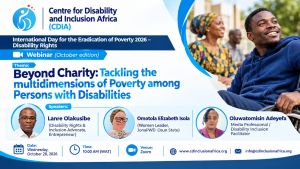
The Centre for Disability and Inclusion Africa (CDIA) convened the October 2026 edition of its Disability Rights Webinar Series to examine the multidimensional nature of poverty among persons with disabilities and explore sustainable pathways towards inclusion, dignity, and equal opportunity.
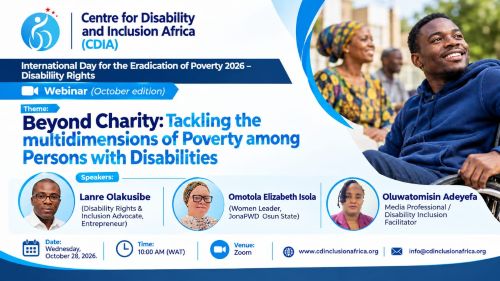
Facilitated by Busola, the webinar brought together disability rights advocates and inclusion practitioners, including Janet (Omotola Elizabeth Ishola), Lanre Olakusibe, and Tomisin Adeyefa, to discuss how poverty extends beyond financial hardship to encompass barriers to education, healthcare, decent work, social protection, accessible housing, justice, food security, and civic participation.

Rethinking Poverty Through a Rights-Based Lens

A central message from the discussion was the need to move beyond charity-driven interventions towards a rights-based approach that addresses the structural barriers perpetuating poverty among persons with disabilities.

Janet emphasised that exclusion is often reinforced by inaccessible environments, discriminatory institutions, limited economic opportunities, and negative social attitudes. She called for stronger enforcement of disability rights legislation, accessible education, inclusive employment, transparent empowerment programmes, and reliable data to identify those being left behind.

Her message was clear: persons with disabilities deserve equal rights, meaningful opportunities, and the conditions to live with dignity, not simply assistance to survive.

Sharing a personal experience, Lanre Olakusibe recounted being denied a job interview because the building was inaccessible. His experience illustrated how physical barriers can prevent qualified individuals from accessing employment before their abilities are even considered.

He outlined five priorities for reducing disability-related poverty: accessible education and skills development; decent work and employment opportunities; strengthened disability-inclusive social protection; accessible housing and transportation; and the meaningful participation of persons with disabilities in decision-making.

From Temporary Assistance to Sustainable Empowerment

Building on these priorities, Tomisin Adeyefa highlighted the importance of transforming charitable support into structured, accountable, and sustainable empowerment initiatives.

While acknowledging that charity can provide an essential safety net, she stressed that it must be complemented by clear objectives, monitoring, mentorship, and measurable outcomes. She also advocated targeted skills-development programmes linked to employment opportunities, alongside government incentives, such as tax relief, for businesses that employ persons with disabilities.

Participants further raised concerns about weak government channels for poverty reduction, the risk of empowerment programmes being managed by individuals without the necessary accountability, and the importance of transparent implementation.

Rita also emphasised the need to prioritise children with disabilities, noting that early support can foster confidence, independence, and positive attitudes towards participation from a young age.

Building an Inclusive Future Through Collaboration

The webinar concluded with a call for coordinated action among government institutions, the private sector, civil society organisations (CSOs), and organisations of persons with disabilities (OPDs). Participants stressed that effective poverty eradication requires persons with disabilities to be involved not merely as beneficiaries, but as active partners in designing, implementing, and evaluating solutions.

As follow-up actions, CDIA will continue sharing opportunities, including international scholarships for persons with disabilities, through its social media platforms, while webinar recommendations and the session recording will be shared with relevant stakeholders and interested participants.

The October edition reinforced an important principle: disability-inclusive poverty eradication must address systemic barriers, uphold rights, and expand opportunities for meaningful participation. Through sustained collaboration, accountability, and inclusive policies, CDIA remains committed to advancing a society where persons with disabilities can exercise their rights, realise their potential, and participate fully in all aspects of life.
READ MORE
Inclusion demands

Denied, Humiliated, excluded: The Cost of Being Visually Impaired in Nigeria

In Nigeria, losing your sight too often comes with something far worse than blindness: the loss of dignity. Across exam halls, hospital corridors, and government offices, visually impaired citizens are routinely denied basic accommodations, shamed for seeking help, and systematically shut out of opportunities that others take for granted.

This is not a story of personal tragedy or misfortune—it is a damning indictment of a system that treats disability as a nuisance, not a matter of rights.

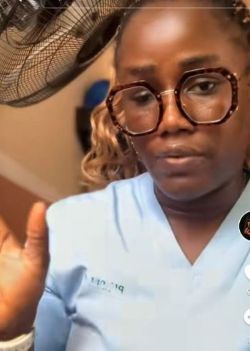
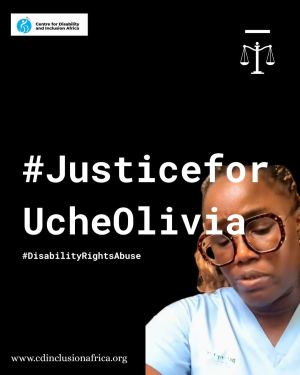
Uche Olivia, A Visually Impaired Nurse Alleges Discrimination at Federal Neuropsychiatric Post Basic Mental Health Nursing School, Enugu

Uche Olivia, a registered nurse licensed in 2022, says she experienced this cruelty firsthand. Diagnosed in October 2024 with optic nerve atrophy—a condition causing severe vision loss—she was determined to specialize in mental health nursing. But her ambition collided with a rigid, unaccommodating system.

In a video that went viral in 2025, Uche alleged that the Federal Neuropsychiatric School of Post-Basic Mental Health Nursing, Enugu, denied her reasonable accommodations during its entrance examination. She had formally requested large-print question papers, a reader, or extra time—and followed up days before the exam.

On the morning of the test, Uche arrived before 8:00 a.m., only to find that accreditation began two hours later, and the exam itself did not start until about 5:00 p.m.a reflection, she says, of a system that thrives on waste and disorganization.

Despite repeated reminders to examiners of her condition, no accommodations were provided. When she sought help during the exam, an examiner allegedly told her: “If you knew you were not able to read, why did you come to school or apply?” The encounter left her in tears.

Later, when Uche met with the provost and offered to present her medical documentation, she claims she was dismissed and advised to: “Answer the ones you can see, leave the ones you cannot.”

Humiliated and discriminated against, Uche is now seeking admission to a more inclusive institution while urging authorities to investigate the barriers faced by persons with disabilities across Nigeria’s education system.

At the time of publication, the Federal Neuropsychiatric School had not responded to repeated requests for comment.

Nigeria’s Law is Clear

The law leaves no room for ambiguity: denying visually impaired candidates accommodations is illegal.

The 1999 Constitution guarantees equal educational opportunities and prohibits discrimination. The Discrimination Against Persons with Disabilities (Prohibition) Act, 2018 goes further, mandating inclusive education and reasonable accommodations in all learning and assessment processes.

Candidates are entitled to Braille or large-print papers, audio or electronic formats, approved scribes, extended exam time, quiet venues, and the use of assistive devices. Denial of these accommodations is not merely administrative it is a punishable offense.

“Keeping quiet without punishment is inappropriate. Today it is Uche Olivia, tomorrow it can be another person,” said Susan Ihouma Kelechi, a disability advocate.

Voices of rage, Advocates and Experts React

Leaders of the Joint National Association of Persons with Disabilities (JONAPWD) condemned the school’s treatment of Uche.

Abdullahi Usman, National President, described it as “a display of ignorance in a federal institution. The law is explicit about reasonable accommodations for visually impaired candidates. We will investigate and ensure the highest authorities act.”

State chairpersons echoed the sentiment. Ondo State’s Olusegun Abiodun called it “inhuman treatment” and demanded swift action. Bayelsa State’s Mayo Ekpomomukor said: “Everyone has the right to education. The school must apologize and implement policies to prevent future injustices.”

Yusuf Olatunji and Susan Kelechi, both leading disability advocates condemn the act as a sign of a system that continued to be rigid when the whole world is moving fast in its inclusion journey. “How do we continue to deny visually-impaired and other PWDs their rights and assume nothing is wrong” both of them echo.

Dapo Taiwo, National President of Association of Assistive Technology Professionals berate the school, if act still took place in 2025, as there is no legitimate reason when every institution can receive help necessary from relevant organizations so they can better serve their potential students”

Disability advocates and lawyers, including Felix Areo and Salami Abolarinwa, emphasized the legal obligations schools owe. Areo, visually impaired himself, said: “This sends the wrong signal from a federal institution. Denial of accommodations should be challenged legally, and oral exams or assistive measures should have been options.”

Barrister Abolarinwa cautioned that some details needed verification but added: “Even with missing information, there is a clear element of discrimination and denial of rights against Uche Olivia. She was not given a fair chance as the law demands.”

Government Officials Speak Out

Special Assistants on Disability Inclusion in Osun and Bayelsa states, including Oladosu Olatunbosun and Mayo Ekpomomukor, criticized the federal institution’s actions. Princess Folashade Arise, Ondo State Chairperson for Welfare of Persons with Disabilities, expressed frustration: “Why are we still discussing discrimination and abuse of rights in this age? It is disheartening and base.”

Who Must Act and Why It Matters

Visually impaired Nigerians face routine exclusion from exams and professional assessments. Educational institutions must institutionalize disability support, professional bodies must enforce clear accommodation protocols, and regulators and ministries must stop issuing hollow circulars. The National Commission for Persons with Disabilities must act decisively.

The media, too, has a role: disability must be reported as a rights issue, not charity.

A candidate asking for Braille, assistive technology, or extra time is not seeking an unfair advantage they are demanding fairness. Until Nigeria treats inclusive assessment as central to education, claims of progress remain hollow. Disability is not inability. Exclusion is.

READ MORE
Inclusive Accommodation in Nigerian higher Institutions

From Access to Inclusion: Nigeria Universities Must Uphold Disability Rights

Inclusive accommodation within Nigeria’s university system is not an act of charity it is a fundamental human right. Once an institution makes the decision to admit a student with a disability, that decision must automatically translate into full inclusion across academic, social, and residential life. Any form of exclusion or denial of these rights is unacceptable in this day and age and must be firmly discouraged.

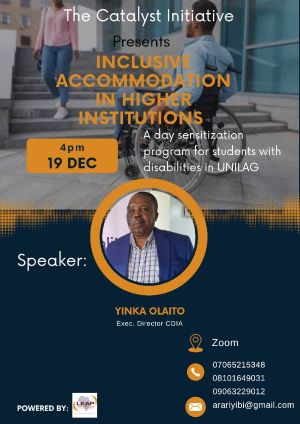
These were some of the key concerns raised by Yinka Olaito, Executive Director of the Centre for Disability and Inclusion Africa (CDIA), during a stakeholders’ meeting convened for students with disabilities at the University of Lagos by The catalyst initiative. The meeting, themed “Inclusive Accommodation in Nigeria’s Higher Institutions,” brought together students, advocates, and disability cluster leaders, with Olaito serving as the lead speaker.

Advocating for Accessible Campus Accommodation

The session focused on the urgent need to improve accessibility and inclusion for students with disabilities within university hostels and campus infrastructure. Discussions explored practical steps such as the establishment of disability-focused units or groups within institutions to address accommodation gaps, policy failures, and systemic barriers.

Olaito emphasized the importance of:Clear and enforceable inclusive accommodation policies, strong legal and institutional frameworks and disability awareness and sensitivity training for university staff and students

Participants were encouraged to assert their rights, demand accountability from university authorities, and work collectively toward the establishment of functional disability desks across campuses. A key outcome of the discussion was a call for the formation of a unified association representing students with disabilities within the university system.

Inclusive Education and Legal Frameworks

Speaking on inclusive education in Nigerian universities, Olaito underscored that students with disabilities have an equal right to access, participation, and dignity. He highlighted the need for coordinated institutional policies, accessible facilities, and the removal of physical, academic, social, and digital barriers that continue to limit participation.

He also pointed participants to existing legal instruments including the Discrimination Against Persons with Disabilities (Prohibition) Act, 2018, as well as relevant international conventions ratified by Nigeria—as powerful tools students can use to advocate for their rights.

The Reality of Disability Accommodations on Campus

Assessing the current state of accommodations in Nigerian universities, Olaito noted that provisions remain largely below acceptable standards. Essential supports such as accessible learning materials, assistive technologies, extended examination time, and disability-friendly hostels are either inadequate or completely absent in many institutions.

He further stressed the importance of disability awareness training to help staff and students better understand the diverse needs across different disability clusters. Anti-discrimination policies, inclusive student activities, and clear reporting mechanisms for rights violations were identified as critical steps toward meaningful inclusion.

Strengthening Disability Structures in Universities

Olaito also called for the institutionalization of disability inclusion through the creation of disability desks and the appointment of dedicated inclusion officers within universities. These structures, he noted, are essential for providing sustained support and ensuring compliance with national and international disability rights standards.

Contributions from student leaders added further depth to the discussion. Ajibade Oluwaseyi, a former president of the National Association of Nigerian Visually Impaired Students, spoke on ongoing efforts to establish a unified association for all students with disabilities at the University of Lagos. Falola, representing students with mobility challenges, emphasized the need for stronger representation and awareness for physically challenged students.

The session concluded with a call for participants to complete a questionnaire and provide feedback to help guide future advocacy and programming.

The Way Forward: Collaboration and Collective Action

In outlining next steps, Olaito emphasized the importance of collaboration in establishing a strong and representative Students with Disabilities Association at the University of Lagos. He reaffirmed CDIA’s commitment to working closely with students and university authorities to achieve this goal.

READ MORE
#WheekchairNotLuggage

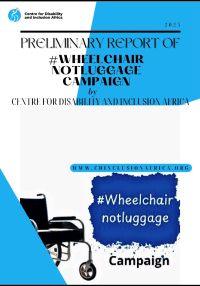
CDIA launches preliminary report on #WheelchairnotLuggagecampaign

As part of its commitment to protect rights abuses of persons with disabilities in Nigeria, with a special focus on physical-mobility cluster who are wheelchair users, The Centre for Disability and Inclusion Africa had officially launched its preliminary on its national campaign launched in January 2025 tagged #Wheelchairnotluggage.

As our community will recall the major essence of the campaign is he campaign seeks to confront ongoing human rights abuses experienced by individuals with mobility challenges, particularly those using wheelchairs. Core Issues Addressed CDIA highlights widespread discriminatory practices in Nigeria’s transport sector, including: Refusals to transport wheelchair users. Inhumane treatment by transport personnel. Extra fees charged for wheelchairs, as though they were baggage.

The legal foundation of the campaign was centered around The campaign anchors itself in Nigeria’s Discrimination Against Persons with Disabilities (Prohibition) Act, 2018, which clearly prohibits such discrimination CDIA’s Executive Director, Yinka Olaito, emphasized: “A wheelchair is a personal mobility aid, not luggage… Refusing to transport someone with a wheelchair or treating it as excess baggage is a violation of their rights, and offenders may face criminal charges.”

While the campaign is still ongoing, you may want to read present key outcomes as well as future outlook of the campaign in this link. Besides, we still ask that you support the campaign next action steps/activities

READ MORE
Inclusion in Nigeria

Disability Inclusion, media role

Knowing the role media plays in shaping the society and acting as the watchdog of it, the Centre for Disability and inclusion plays premium on ensuring the knowledge gap of the media (journalists and broadcasters) across Africa about disability inclusion is bridged.

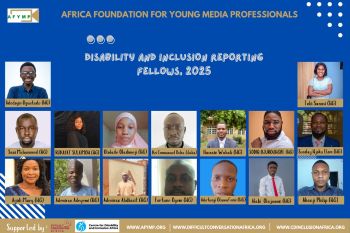
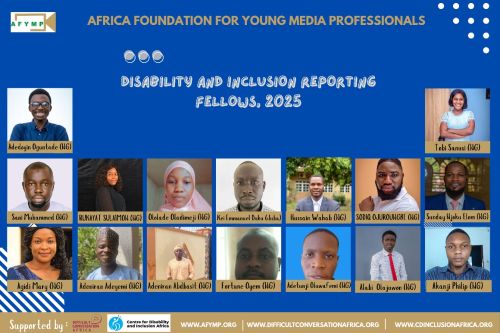
As a commitment to this, the Centre in collaboration with Africa Foundation for Young media Professionals runs a media fellowship- Disability and inclusion reporting. The media fellowship yearly selects about 20 media professionals across Africa, especially the early careers, which for us is strategic in positioning for the future.

The media fellowship always runs for 3-4 months. The process begins with a call for applications which is followed by a rigorous selection process where only the best are selected. Those who scale through this process begin their journey with intensive workshops where experts in the inclusive media space and how to use media to mainstream disability issues serve as faculty and mentors for the period that the fellowship will last.

Based on the above, we are happy to announce those who are successful and will be  part of the 2025 cohort. The initial fellowship workshop will be held from July 8, 2025 and the fellowship will run till November. In between participants will also be involved in story publishing and mainstreaming disability related issues(Policy, promotion of PWDs human rights etc)

READ MORE
Inclusion demands

Young PWDS unemployment rate, can inclusive job fair help?

The ratio of young persons with disabilities unemployment status is very high. In a world where social justice and leaving no one behind have become a mantra, why is that the country continues to tactically allow the exclusion to continue? The cost of this exclusion and continued lack of attention will have a huge boomerang on everyone in no distant time.

We all know some of the factors that are responsible for young people with disabilities lack of unemployment trajectory. A substantial 63% of persons with disabilities lack education or training and related employability skills. There is fire on the mountain top and no one seems to care like Asa rhythms go.  But the remaining population who even has such opportunities is constantly faced.

Many young PWDs’ face to face experience with employers often end in disaster as several recruitment teams will be meeting some of these special people in real life on a formal basis.

Many young PWDs have complaints about the attitude of recruitment committee members which is often betrayed by shocks shown on the faces of the recruit team whenever they have any serious encounter with PWDs experts/potential applicants. It has been proven not many of these recruitment team members have had good exposure and knowledge of potentials of an average qualified PWDs job applicants except hose they have met on the street that are begging.

Trust Inonse, a radio producer who is also a communications expert shared that he once submitted a proposal to hand a corporate organization’s communications brief.

According to Trust, because his proposal was solid, the management called for a virtual chat which he passed. Following that, he was asked to do a virtual presentation which he scaled and rated the best among potential consultants. But the major problem began when he was supposed to meet the final decision maker in the appointment of the consultant for the brief.

According to him, everyone agreed he did best and positioned as someone who could do the job but the CEOI said he was finding it hard to accept Trust Inonse might have the energy to attend the demand of completing the assignment, and that was how he lost the brief. For him and many other brilliant young PWD professionals, this has become a regular experience

A major solution that is bridging the employment gap which a few inclusive-driven employers and any other talent recruitment agencies are now being promoted across the globe is inclusive job/career fair. This is still at the ignition state in Nigeria is the Inclusive career or job fair or other related events and program.

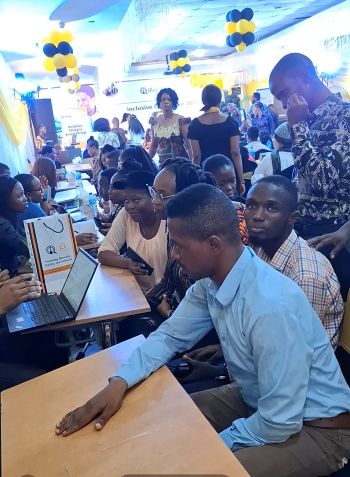
A recent Inclusive career, hiring event in Lagos organized by BlackSkills and SightSavers Nigeria

With an inclusive career fair, a relaxed atmosphere with a mind to know or build conversation and communications between potential young persons with disabilities’ job applicants and potential employers I s established. 

Both can have the opportunity of asking relevant questions that can lead to greater mutual relationships in no distance time.  I had an opportunity to attend one recently in Lagos Nigeria and my interaction with potential young PWDs qualified professionals who are applicants was positive, many or the participating talent recruitment agencies, corporate organizations as well as organizers were happy with outcomes.

But beyond the above solution, literacy rate, employment policy implementation and a possible incentive to corporate organizations who are deliberate about inclusive hiring will help.

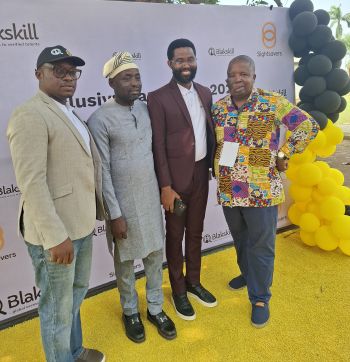
Yinka Olaito and leaders of the organizing team of an inclusive career fair in Lagos- Sightsavers Nigeria and BlackSkills

The government continued to find solutions by implementing policies and programs to address youth unemployment, such as the Nigerian Youth Employment Action Plan (NIYEAP). The Nigerian government had also collaborated with the United Nations Development Programme (UNDP) to develop the Nigeria Jubilee Fellowship programme. On a final note we all need to understand that youth unemployment has a devastating impact on both individuals and society, leading to increased militancy, violent crimes, kidnappings, restiveness, and socially delinquent behaviour

Report from a recent Inclusive Career fair organized by BlackSkills and SightSavers Nigeria

READ MORE