#JusticeforUcheCampaign

The Closure. Impact of the #JusticeforUche Campaign

The Centre for Disability and Inclusion with mixed feelings is bringing a closure to #JusticeforUcheCampaign. Between January and June 2026, the Centre for Disability and Inclusion Africa (CDIA) led the #JusticeforUche campaign, a strategic advocacy initiative that transformed the experience of one visually impaired nurse into a nationwide conversation on disability rights, institutional accountability, and inclusive education in Nigeria.

The campaign was launched after Uche Olivia, a registered nurse with visual impairment, publicly alleged that she was denied reasonable accommodation during an entrance examination for a post-basic mental health nursing programme. Her account highlighted a challenge faced by many persons with disabilities: exclusion from educational and professional opportunities due to inaccessible systems and practices.

CDIA responded by positioning the issue not as an isolated grievance, but as a broader human rights concern linked to the Discrimination Against Persons with Disabilities (Prohibition) Act in Nigeria. The campaign sought to demand justice for Uche, raise public awareness of the legal obligation to provide reasonable accommodation, influence institutional reform, and mobilise citizens, disability organisations, media stakeholders, and policymakers around the cause of inclusion.

The campaign achieved significant visibility and engagement. More than 14 million stakeholders were reached, generating over 40 million impressions across media platforms. An estimated 96% of frontline media houses in Nigeria provided coverage, including national newspapers, online publications, radio stations, and television networks across the South and West of the country. This extensive coverage amplified the campaign’s message and contributed to its rapid spread across digital platforms.

@uchey_olivia

#tiktokviraltrending #viraltiktokvideo #visualimpairment #disabilitytiktok #discrimination the sad thing about fighting for a particular cause in Nigeria, is the fact that as long as it doesn’t have a direct effect on other Nigerians, they do not care if the system gets fixed. But they also forget that, people are one mistake, one carelessness, and one failed system away from becoming persons with disability.

♬ original sound – Uchey_Olivia
@uchey_olivia

#tiktokviraltrending #viraltiktokvideo #visualimpairment #disabilitytiktok #discrimination I was discriminated against and refused, reasonable accommodation as a person living with disability, during an examination in a city in Nigeria. I tried to seek for Justice and this is the story on how far it has been. At the end of the day, in Nigeria, if you want to fight a bad system, you have to first fight your fellow Nigerian. It has been a sad experience.

♬ original sound – Uchey_Olivia

As public attention intensified, the Forum of Lawyers with Disabilities became involved and indicated readiness to pursue legal action against the institution at the centre of the allegations The FederalNeuoro-Psyschaitric Post Basic Mental Health Nursing School Enugu.

 This development prompted efforts toward a noted lobbying effort to appease to the victim through direct engagement with the victim which was turned down.. However, the legal process was later complicated by the withdrawal of a key witness and Uche’s subsequent admission to an academic programme outside Nigeria, which affected the prospects for court proceedings.

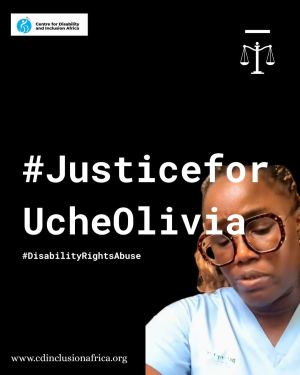
Despite these challenges, the campaign delivered important outcomes. It significantly increased national awareness of disability discrimination and the importance of reasonable accommodation. Through coordinated media engagement, opinion articles, interviews, and digital storytelling, the narrative shifted from sympathy for an individual to a demand for systemic reform. The hashtag #JusticeforUcheOlivia became a rallying point for disability advocates and citizens who shared similar experiences and called for institutional accountability.

The campaign also strengthened the public understanding that disability inclusion is fundamentally a rights issue, not a charity initiative. It provided an evidence-based platform for engaging policymakers and educational institutions on compliance with disability legislation and reinforced CDIA’s position as a leading voice for disability policy, advocacy, and inclusive media in Africa.

Several lessons emerged from the campaign, including the need for stronger institutional responsiveness, sustained coalition-building, and closer examination of barriers that may discourage witnesses and vulnerable individuals from pursuing justice.
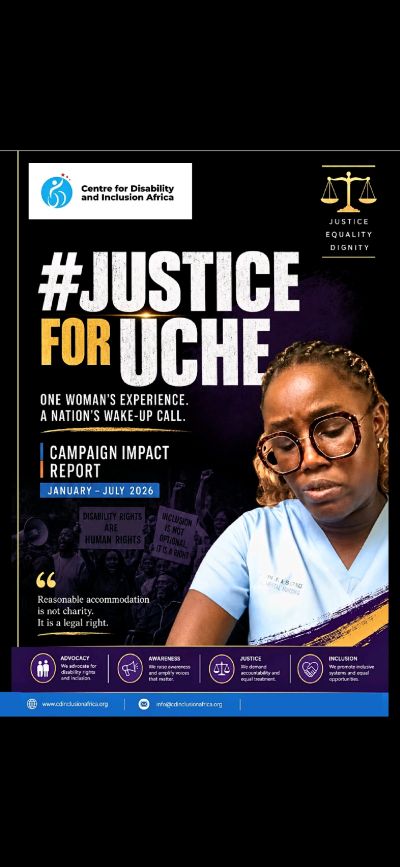
Read full report here or click this link https://www.linkedin.com/feed/update/urn:li:activity:7484961742993940480/

Overall, #JusticeforUche stands as a powerful example of how strategic communications and advocacy can elevate a single voice into a movement for national reflection and reform. While long-term policy outcomes are still evolving, the campaign has already made a meaningful contribution to advancing disability inclusion and reinforcing the principle that equal opportunity requires accessible systems, reasonable accommodation, and accountable institutions.
READ MORE
Inclusion demands

Denied, Humiliated, excluded: The Cost of Being Visually Impaired in Nigeria

In Nigeria, losing your sight too often comes with something far worse than blindness: the loss of dignity. Across exam halls, hospital corridors, and government offices, visually impaired citizens are routinely denied basic accommodations, shamed for seeking help, and systematically shut out of opportunities that others take for granted.

This is not a story of personal tragedy or misfortune—it is a damning indictment of a system that treats disability as a nuisance, not a matter of rights.

Uche Olivia, A Visually Impaired Nurse Alleges Discrimination at Federal Neuropsychiatric Post Basic Mental Health Nursing School, Enugu

Uche Olivia, a registered nurse licensed in 2022, says she experienced this cruelty firsthand. Diagnosed in October 2024 with optic nerve atrophy—a condition causing severe vision loss—she was determined to specialize in mental health nursing. But her ambition collided with a rigid, unaccommodating system.

In a video that went viral in 2025, Uche alleged that the Federal Neuropsychiatric School of Post-Basic Mental Health Nursing, Enugu, denied her reasonable accommodations during its entrance examination. She had formally requested large-print question papers, a reader, or extra time—and followed up days before the exam.

On the morning of the test, Uche arrived before 8:00 a.m., only to find that accreditation began two hours later, and the exam itself did not start until about 5:00 p.m.a reflection, she says, of a system that thrives on waste and disorganization.

Despite repeated reminders to examiners of her condition, no accommodations were provided. When she sought help during the exam, an examiner allegedly told her: “If you knew you were not able to read, why did you come to school or apply?” The encounter left her in tears.

Later, when Uche met with the provost and offered to present her medical documentation, she claims she was dismissed and advised to: “Answer the ones you can see, leave the ones you cannot.”

Humiliated and discriminated against, Uche is now seeking admission to a more inclusive institution while urging authorities to investigate the barriers faced by persons with disabilities across Nigeria’s education system.

At the time of publication, the Federal Neuropsychiatric School had not responded to repeated requests for comment.

Nigeria’s Law is Clear

The law leaves no room for ambiguity: denying visually impaired candidates accommodations is illegal.

The 1999 Constitution guarantees equal educational opportunities and prohibits discrimination. The Discrimination Against Persons with Disabilities (Prohibition) Act, 2018 goes further, mandating inclusive education and reasonable accommodations in all learning and assessment processes.

Candidates are entitled to Braille or large-print papers, audio or electronic formats, approved scribes, extended exam time, quiet venues, and the use of assistive devices. Denial of these accommodations is not merely administrative it is a punishable offense.

“Keeping quiet without punishment is inappropriate. Today it is Uche Olivia, tomorrow it can be another person,” said Susan Ihouma Kelechi, a disability advocate.

Voices of rage, Advocates and Experts React

Leaders of the Joint National Association of Persons with Disabilities (JONAPWD) condemned the school’s treatment of Uche.

Abdullahi Usman, National President, described it as “a display of ignorance in a federal institution. The law is explicit about reasonable accommodations for visually impaired candidates. We will investigate and ensure the highest authorities act.”

State chairpersons echoed the sentiment. Ondo State’s Olusegun Abiodun called it “inhuman treatment” and demanded swift action. Bayelsa State’s Mayo Ekpomomukor said: “Everyone has the right to education. The school must apologize and implement policies to prevent future injustices.”

Yusuf Olatunji and Susan Kelechi, both leading disability advocates condemn the act as a sign of a system that continued to be rigid when the whole world is moving fast in its inclusion journey. “How do we continue to deny visually-impaired and other PWDs their rights and assume nothing is wrong” both of them echo.

Dapo Taiwo, National President of Association of Assistive Technology Professionals berate the school, if act still took place in 2025, as there is no legitimate reason when every institution can receive help necessary from relevant organizations so they can better serve their potential students”

Disability advocates and lawyers, including Felix Areo and Salami Abolarinwa, emphasized the legal obligations schools owe. Areo, visually impaired himself, said: “This sends the wrong signal from a federal institution. Denial of accommodations should be challenged legally, and oral exams or assistive measures should have been options.”

Barrister Abolarinwa cautioned that some details needed verification but added: “Even with missing information, there is a clear element of discrimination and denial of rights against Uche Olivia. She was not given a fair chance as the law demands.”

Government Officials Speak Out

Special Assistants on Disability Inclusion in Osun and Bayelsa states, including Oladosu Olatunbosun and Mayo Ekpomomukor, criticized the federal institution’s actions. Princess Folashade Arise, Ondo State Chairperson for Welfare of Persons with Disabilities, expressed frustration: “Why are we still discussing discrimination and abuse of rights in this age? It is disheartening and base.”

Who Must Act and Why It Matters

Visually impaired Nigerians face routine exclusion from exams and professional assessments. Educational institutions must institutionalize disability support, professional bodies must enforce clear accommodation protocols, and regulators and ministries must stop issuing hollow circulars. The National Commission for Persons with Disabilities must act decisively.

The media, too, has a role: disability must be reported as a rights issue, not charity.

A candidate asking for Braille, assistive technology, or extra time is not seeking an unfair advantage they are demanding fairness. Until Nigeria treats inclusive assessment as central to education, claims of progress remain hollow. Disability is not inability. Exclusion is.

READ MORE
#WheekchairNotLuggage

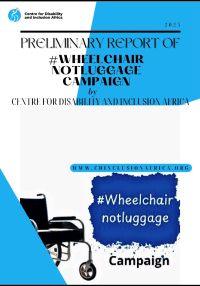
CDIA launches preliminary report on #WheelchairnotLuggagecampaign

As part of its commitment to protect rights abuses of persons with disabilities in Nigeria, with a special focus on physical-mobility cluster who are wheelchair users, The Centre for Disability and Inclusion Africa had officially launched its preliminary on its national campaign launched in January 2025 tagged #Wheelchairnotluggage.

As our community will recall the major essence of the campaign is he campaign seeks to confront ongoing human rights abuses experienced by individuals with mobility challenges, particularly those using wheelchairs. Core Issues Addressed CDIA highlights widespread discriminatory practices in Nigeria’s transport sector, including: Refusals to transport wheelchair users. Inhumane treatment by transport personnel. Extra fees charged for wheelchairs, as though they were baggage.

The legal foundation of the campaign was centered around The campaign anchors itself in Nigeria’s Discrimination Against Persons with Disabilities (Prohibition) Act, 2018, which clearly prohibits such discrimination CDIA’s Executive Director, Yinka Olaito, emphasized: “A wheelchair is a personal mobility aid, not luggage… Refusing to transport someone with a wheelchair or treating it as excess baggage is a violation of their rights, and offenders may face criminal charges.”

While the campaign is still ongoing, you may want to read present key outcomes as well as future outlook of the campaign in this link. Besides, we still ask that you support the campaign next action steps/activities

READ MORE
CDIA Impact Story

CDIA named Disability Inclusion NPO of the year in Africa for 2025

The Centre for disability and Inclusion Africa has been named  leading Disability Inclusion Nonprofit in  Africa for 2025

Iin a press release by the global organization behind the award- Acquisition International, United kingdom, the organization congratulates all the organizations that made up its 2025 winner lists after a rigorous process

According to the award coordinator, Melissa Bremall, Acquisition International’s winners are each deserving winners of their recognition. Melissa Bramall commented on the success of this unsung heroes as they are featured in the prestigious Non-Profit Awards winners list and publication. Melissa shared: “We’re proud to recognise those who play a part in improving this world and the lives of our fellow beings. It’s such an honour to celebrate their successes and learn from their stories. Congratulations again.”

The executive Director of the centre, Yinka Olaito, believes that the organization behind this keenly contested and global award is sincere and goal oriented in its mission. This 2025 is the fifth edition of a keen, open and very thorough process in making decisions with regards to  its selection of the finalists drawn from hundreds of thousands of nonprofits across the globe every year.

On what this award means to the center for Disability and Inclusion Africa, Yinka affirmed “This is an affirmation of the center’s activities and commitment to see Africa continent becoming totally inclusive as well as a sustainable development driven continent”

The organization will continue to be dogged in its drive to be goal driven with the support of its stakeholders. Yinka Olaito then used the occasion to ask the disability inclusion ecosystem to remain resolute despite global budget cuts and withdrawal if we hope to sustain the changes already made. “No one says this is going to be easy, those who still believe in an inclusive society must be more determined by hanging in there” Yinka Olaito said

About The Award

Acquisition International is excited to announce the return of the Non-Profit Organisation Awards in 2025 for a fifth consecutive year!

This prestigious programme is designed to honour and celebrate the exceptional work carried out by non-profit organisations worldwide. From local grassroots charities to large international foundations, these awards shine a spotlight on those who dedicate themselves to improving lives, fostering positive change, and advancing social good.

With a dynamic and ever-evolving global landscape, the non-profit sector continues to play a vital role in addressing pressing issues, such as poverty alleviation, healthcare access, education, and environmental conservation.

The global non-profit industry is vast, with more than 10 million organisations operating across various categories, including humanitarian aid, environmental advocacy, cultural promotion, health services, education, and social welfare. In recent years, the sector has experienced significant growth, driven by rising awareness of social issues, increased funding opportunities, and technological advancements.

According to the Nonprofit Finance Fund, 75% of non-profits have reported increased demand for their services, reflecting their growing importance in modern society. The global charitable giving market alone is projected to exceed $500 billion by 2026, underscoring the sector’s expanding reach and influence. Looking ahead, the non-profit sector is poised for further growth, with key trends shaping its future. 

READ MORE
CDIA Impact Story

Ekiti State heeds public outcry on PWDs Board establishment

Ekiti State had responded to disability and inclusion ecosystem demand for  an urgent need to establish a specialized board which will oversee Disability Inclusion matters in the state. We decided to wait until now before making any official comment on this because we were eager to see full implement of the board and effective take off of its activities

The board was constituted on October 7, 2024 and took effect immediately. The board has Dr Ogunlade Ebenezer, from Persons with Albinism Cluster as its Chairman. Official Gazeta release confirmed this.

The Office of Disability Affairs under the Governor Office supervision is “established to address the needs and rights of individuals with disabilities in Ekiti State, Nigeria. It aims to ensure that persons with disabilities have access to education, healthcare, social services, and are protected from discrimination. The board is responsible for implementing policies and programs to promote inclusion and accessibility for people with disabilities in the state.”

Members of the public will recall  that at our 7th February, 2024 Ekiti State PWDs Policy hangout a major demand we and all the Ekiti State Disability ecosystem made was a call for a reconstituted, functional disability Board where a Person with Disability should be the head instead of what was obtain then where the Executive order which established the existing commission  then allowed an Executive Secretary, who is a career officer to serve. As of then, the Executive Secretary was a woman without disabilities which many ecosystem members felt did not have full import of disability inclusion issues.

For this (board constitution and its effective running) development which we had monitored in the past 7 months and which we strongly believe is on a good start,: we are happy to have been part of those who raised their voices for this and its fulfilment for us is a cheery news. We must also commend the State Governor, His excellency Abiodun Oyebanji for being a listening leader.

READ MORE
Inclusion in Nigeria

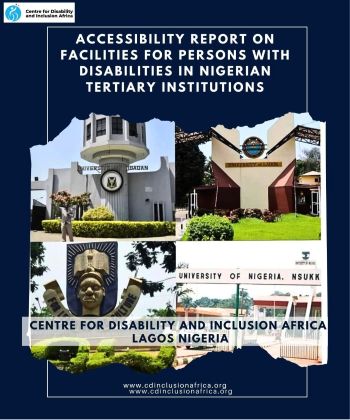
CDIA to launch Accessibility report of Nigerian Tertiary Institutions

The Centre for Disability and Inclusion Africa is set to launch its Accessibility Reports on Nigerian Tertiary Institutions facilities for Students/Persons with Disabilities.

The report process which covers sample of all the tertiary Institutions within six geo-political zones of Nigeria is now ready for release on Wednesday April 30, 2025.

The launching will run consecutively with the organization’s monthly Disability Rights Webinar Series of April, 2025.

The Executive Director, Yinka Olaito, said he was happy at the development as the report showed some of the fundamental issues the organization had often raised with regards to educational rights of persons with disabilities in Nigeria and how facilities available are making this seem impossible.

According to Yinka “Even though this report is a pilot study that covered all the accessibility basics as well as the first in Nigeria that covered the six geo-political zones Tertiary Institutions, we do hope it will serve as a pointer to what needs to be done urgently”.

The report which revealed a lot about the lack of preparedness of the majority of Tertiary institutions in Nigeria to accommodate students/persons with disabilities did also affirm that many of the institutions have disability friendly policies on Paper among others.

READ MORE
Albinism challenges in Nigeria

Albinism challenges in Nigeria, Stakeholders raise concerns at CDIA event

“Albinism is a genetic condition that causes a lack of melanin, the pigment that gives colour to the skin, hair, and eyes. It can affect people of all races and genders”

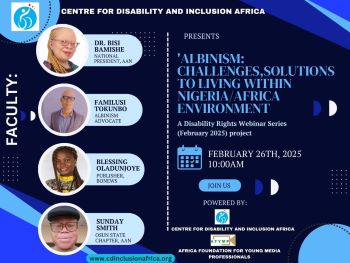
In its monthly ‘Disability Rights Webinar Series’(DRWS) for February 2025, the focus of the centre’s discussion is on ‘Albinism: Challenges and Solutions of Living in Nigeria/Africa Environment’. This has become necessary as many persons with Albinism in Nigeria continue to suffer several humiliations, human rights abuse that bother on segregation, negative labelling. But more importantly, the associated health challenges of persons with Albinism took the centre stage in the discussion.

The February DRWS has four main speakers, Dr Bisi Bamishe, National President of Association of Albinism of Nigeria, Blessing Oladunjoye, Publisher of Bonews whose media organization is very passionate about persons with albinism, Sunday Smith, albumin advocate and Chairman Osun state Chapter of Albinism Association of Nigeria as well as Familusi Totunbo, an Ekiti state based Albinism Advocate.

Other persons who contributed to the discussion was Ishola Omotola, Women leader of Joint Association of Persons with Albinism, Osun State chapter as well as National Treasurer of Albinism Association of Nigeria

Welcoming the participants, Busola Oladunkoye, Program Officer of The centre emphasized the importance of the conversation and appreciated everyone who showed up for the meeting.

Taking the first session, Blessing Oladunjoye shared her experience covering several cases of Persons with Albinism health challenges which had claimed many of the lives challenged Government to show more commitment. “The cluster needs open show of support and not just speeches” Blessing Oladunjoye said.

Blessing Oladunjoye, Bonews

Sunday Aghanti Smith, who spoke on other issues like a need for concerted efforts to make living in Nigeria and Africa bearable for person with Albinism. Dr Bisi Bamishe on the other hand eulogized “Being a person with Albinism is costly to maintain, anytime io travel abroad, all my funds are expended on items that can sustain my life and not clothes”

Familusi Tokunbo on the other hand talked about basic school teachers’ awareness of challenges of pupils with Albinism. To him “My school teachers in basic level were not aware of associated challenges of eye-sight issue I faced and many times they punish me for not having updated class notes, Meanwhile I did not see what she wrote on the black board” For Familusi Tokunbo “If we mmust ensure decebt work for Persons with Albinism, remote work can be considered so as to prevent exposure to sun in Nigeria””

Familusi Tokunbo

On her part, one of Ishola Omotola’s concerns has to do with the movie industry helping to strengthen stereotypes and negative biases against persons with Albinism. To her, it is not only film and movie makers, skit and content creators are also part of the larger society that push negative narrative against the cluster

Ishola Omotola

Dr Bisi Omotal, on her part narrated several or her personal challenges as a Persons with Albinism and call on Government to quickly move from talk to action. She talked extensively of several ongoing initiatives of the association with cancer institute and several other Federal Government Agencies. to her, the earlier Nigeria find home grown solutions like other nations in Africa such as Tanzania among other the better it is for Persons with Albinism to live a decent life. Dr bisi Bamishe said “Albinism maintenance is not cheap, anytime i travel, I spend more or cream and other skin protective items than on clothes like any other person””

Dr Bisi Bamishe, National President, Albinism Association of Nigeria , speaking at the venet

READ MORE
Disability and rights to work

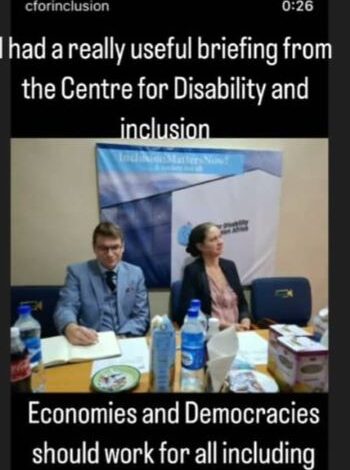
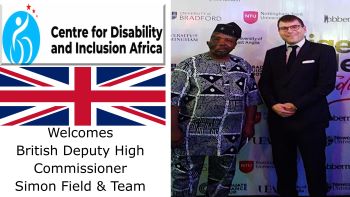
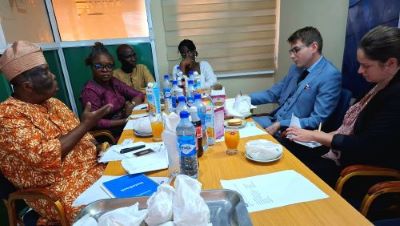
CDIA hosts British Diplomatic team, discusses inclusive health, democracy and sustainable Society

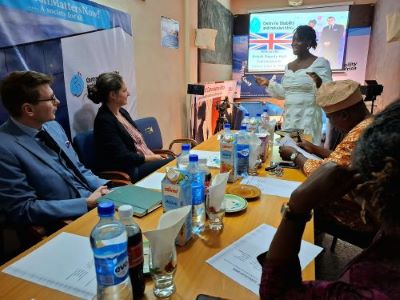
In its bid to amplify Challenges faced by Persons with Disabilities in Nigeria, build collaborative network with international community around its work, Centre for Disability and Inclusion Africa (CDIA) hosted British High Commission’s diplomatic team in Lagos Nigeria

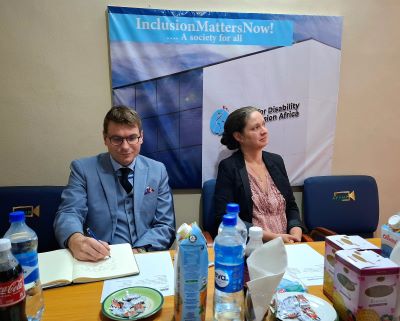
The team which was led by Deputy Head of Mission Simon Field and included Kathrine Femandes, Second-secretary(Political), in the British High Commission in Lagos visited the CDIA corporate headquarters on December 18th, 2024.

Busola Oladotun

The program Officer, Busola Oladotun, while welcoming the team appreciated the efforts of the team to learn more the centre does. In his welcome address, Yinka Olaito, the executive Director of the centre, praised the British government and its officials for their consistency, strong desire that the world we live in becomes inclusive where each person’s potentials are maximized.

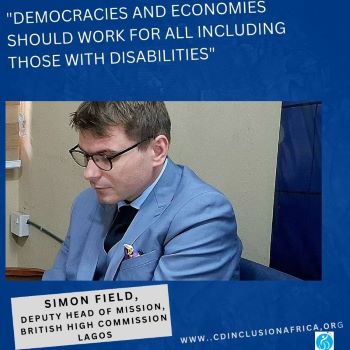
Simon Field, the Deputy Head of British Mission in Lagos, after introducing his team shared that their mission is to understand what CDIA is doing and more important to charge the centre to remain focused and consistent in its work. According to His Excellency Simon Field “The society becomes better place to live if everyone irrespective of disabilities status is given a chance to live at their maximum potential”

Yinka Olaito, sharing some of the outstanding results the centre had achieved

After this, Yinka Olaito, took the diplomatic team through a  presentation on what the centre had done and where it is going. According to Yinka Olaito “ The organization is poised to make meaningful changes and this had driven the management to work conscientiously around its focal points: Advocacy, PWDs rights, Inclusive media”

He further stated “The organization had in the past eighteen months of its standing alone from (became a corporate entity) its parent’s organization- Africa Foundation for Young Media Professionals, had achieved several milestones”.

These according to him include reaching over 16 Million target audience, raised its voice against financial exclusion of PWDs rights, accessibility of Nigeria Airports, championed PWDs rights as well as contributed to enactment of Disability Bill in Osun sate Nigeria.

Simon Field and Kathrine Femandes( British Deputy Head of Mission and Second -secretary-Political at Deputh British High Commission Lagos)

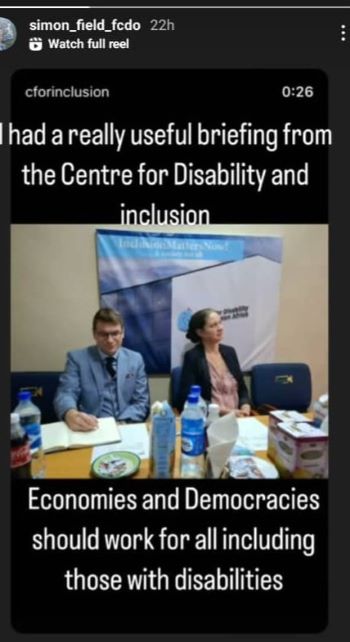
In his remark after the Presentation, Simon Field stated “ I had a really useful briefing from the Centre for Disability and Inclusion Africa. Economies and Democracies must work for all including those with Disabilities

Group picture with CDIA team

READ MORE
Inclusion in Nigeria

How to Mainstream Disability and Inclusion in the Media and its content

Persons with Disabilities(PWDs) and Disability issues suffer   different types of discrimination compared to persons without disability. Disability inclusion implies that attention is given to disability issues and Persons with Disabilities. 

Discrimination against persons with disability in the media takes different forms(We and a sister organization is doing a lot helping newsrooms to adjust, from very little representation of Persons with Disabilities in Nigeria Newsroom, to little coverage of disability issues. There is also the use of stigmatizing and inappropriate language in news reports.

The problems do not stop there, there is lack of knowledge and low training among journalists, even though our commitments here are changing the landscape. More than the above, there is also a clear low enthusiasm among journalists and media entrepreneurs  who consider disability and inclusion reporting not a very lucrative and profitable expedition.

Some of the above have contributed to the low media literacy about disability and exclusion in the media as well as media contents.

The following are tips to mainstream disability inclusion in media and ensure a disability inclusive media house plus media contents.

1.   Intentionally increase coverage of disability issues by setting smart goals for coverage of disability issues.

2.    Readiness and willingness to cover and showcase great and impactful disability activities   by promoting the rights and dignity of persons with disability as well as their success stories.

3.   Constant and strategical newsrooms members training around on specialized disability skills: Disability etiquette, proper language use, disability interviewing techniques.

4.   Creation of a disability desk in the Newsroom. Hiring of PWD reporters, PWD experts to amplify their voices and perspective

5.   Make reasonable accommodations for staff with disabilities. In media content production, there is a need to use simple language for persons with cognitive impairment.

6.   When in training session, ensure the use large fonts for audience with low vision as well as Use high contrast colours for   persons with colour blindness

7.   For your audio visual contents, incorporate Caption for your hearing impaired news consumer audience.

8.   During your major bulletins, incorporating a sign language interpreter which allows hearing0impaired audience news items consumers to follow/enjoy

9.   When it’s a show that include journalists and guest, it is ideal to provide image descriptions of guests for audience with bvisual-impairment

10, Do not always forget to mention the name of your guest so visually impaired viewers can relate

N.B First Published on Nigeriagrassrootnews

READ MORE
  • 1
  • 2