
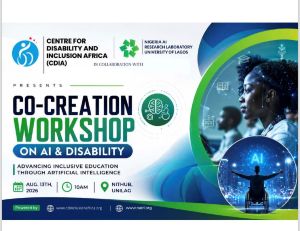
AI and Disability: Co-Creating the Future of Inclusive Education in Nigeria
The Centre for Disability and Inclusion Africa, in conjunction with the Nigeria Artificial Intelligence Research Laboratory (NAIRL), University of Lagos, on Wednesday 13th August, 2026 convened a co-creation workshop on “AI and Disability: Advancing Inclusive Education through Artificial Intelligence.” The event provided a platform to share findings from the Centre’s 2025 research, “Artificial Intelligence and Inclusive Education for Learners with Disabilities in Nigeria: Opportunities and Challenges ” while bringing together stakeholders to shape practical next steps.
The workshop marked an important transition from research to action. The Centre for Disability and Inclusion Africa presented the rationale, objectives, scope and methodology of the study, alongside its key findings and recommendations. The presentation highlighted both the opportunities artificial intelligence presents for learners with disabilities and the need to ensure that emerging technologies are designed, developed and deployed with inclusion at their core.
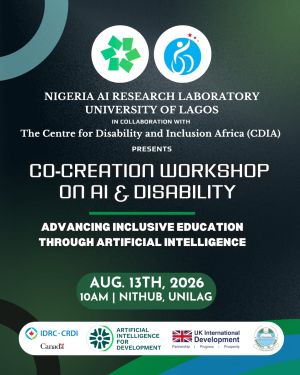
A question-and-answer session enabled participants to interrogate the findings, share experiences and identify issues requiring deeper attention. More importantly, the workshop moved beyond discussion into co-creation, recognizing that sustainable progress in inclusive education cannot be achieved by any single institution or sector.
Participants were organised into four working groups, bringing together diverse perspectives from parents and caregivers of learners with disabilities, AI developers and technologists, education policymakers, and special education practitioners and professionals. This deliberate mix ensured that conversations reflected the lived experiences of learners and families, the realities of education systems, the possibilities of technology, and the policy and professional environments required to support implementation.
Working collaboratively, the groups examined the research recommendations and considered a critical question: What are the most important actions that must happen next to translate these recommendations into meaningful change?
The discussions generated practical recommendations and proposed action steps focused on strengthening collaboration, improving accessibility, building capacity, promoting responsible and inclusive AI development, supporting evidence-based policy, and ensuring that learners with disabilities remain central to the design of solutions intended for them.
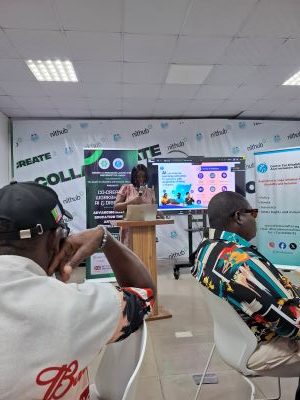
Busola Oladotun, Senior programme lead, CDIA
The workshop reinforced a fundamental principle: inclusive AI must be created with, not simply for, people with disabilities. Parents, educators, policymakers, technologists and disability advocates each hold essential pieces of the solution. Bringing these perspectives together creates opportunities to develop technologies and policies that respond to real educational needs while avoiding new forms of exclusion.
As Nigeria continues to explore the transformative potential of artificial intelligence, inclusion must remain a deliberate priority. The findings of the 2025 research provide an important evidence base; the co-creation workshop added collective insight, lived experience and practical direction.
A communication outlining the outcomes, recommendations and proposed action steps from the co-creation process will be made available in the coming days.
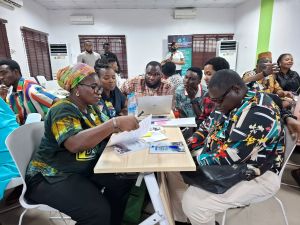
Co-creation sub group discussion
The journey towards truly inclusive education is ongoing. Through research, collaboration and co-creation, stakeholders can help ensure that artificial intelligence becomes not another barrier, but a powerful tool for expanding opportunity, participation and learning for persons with disabilities across Nigeria.