
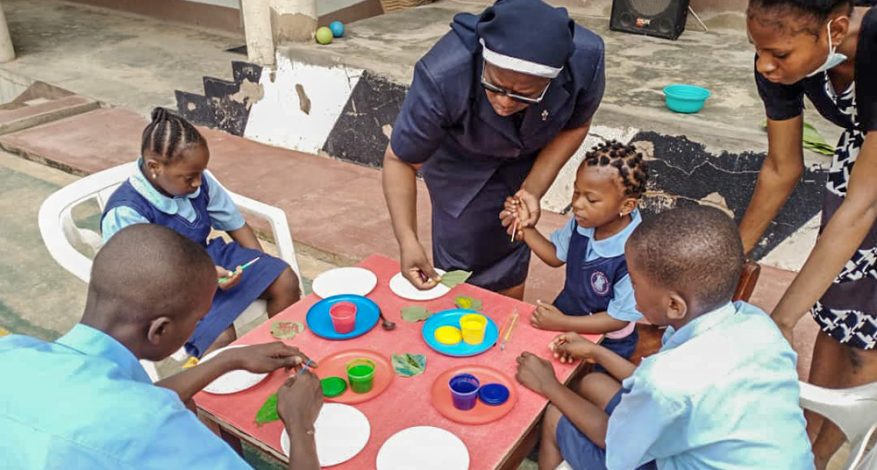
The Urgent Need for Inclusive Education
A nation’s progress is ultimately measured by how well it develops the potential of all its citizens, not just the privileged or the visible. As the global economy becomes more knowledge-driven and competitive, every country must harness its full human capital to remain relevant. Yet in Nigeria, millions of people particularly persons with disabilities remain on the margins of the education system, cut off from opportunities that could transform not only their lives but the nation’s future.
This is not merely a policy gap. It is a moral, social, and economic emergency. Across communities, many persons with disabilities continue to face barriers that go far beyond physical limitations. Too often, the challenge is not disability itself, but society’s response to it. Children stay home because classrooms are inaccessible. Young people withdraw because they are stigmatized. Families struggle because schools lack basic accommodations. In many cases, the message spoken or unspoken is painfully clear: “You do not belong here.”
The consequences are profound.
When learners with disabilities cannot access education, their confidence erodes, their talents remain hidden, and their economic independence becomes harder to achieve. Families, in turn, shoulder avoidable financial and emotional strain. Society loses innovators, professionals, entrepreneurs, and leaders whose contributions could strengthen national development.
Exclusion is not a victimless oversight. It is a national loss.
Reports over the years have consistently highlighted a troubling reality: a vast majority of schools and training centres lack essential accessibility features. Ramps, adaptive learning tools, assistive technologies, and inclusive teaching strategies remain the exception rather than the norm. For many learners, the obstacle is not the curriculum but the doorway, not the lesson but the environment.
This is why inclusive education is not an optional reform or a charitable gesture. It is justice in practice.
Inclusive education recognizes that learners are diverse — in ability, learning style, pace, and need. It ensures that all students learn together in environments designed to support difference rather than punish it. Properly implemented, it benefits everyone. Learners with disabilities gain confidence, skills, and social integration. Other students develop empathy, collaboration skills, and a deeper understanding of human diversity. Schools become more innovative. Communities become more cohesive.
Inclusion strengthens society as a whole.
Importantly, Nigeria is not operating in a vacuum. The country is a signatory to frameworks championed by the United Nations, including the United Nations Convention on the Rights of Persons with Disabilities, which affirms education as a fundamental right. National disability legislation echoes similar commitments. On paper, the principles are clear. In practice, however, progress remains uneven and painfully slow.
Declarations do not change lives. Implementation does.
If inclusive education is to move from rhetoric to reality, three priorities are unavoidable. First, infrastructure must become non-negotiable. Schools cannot claim to be centres of learning while physically excluding students. Accessibility features and inclusive learning materials must be embedded in planning, funding, and regulation not treated as afterthoughts.
Second, teacher preparation must evolve. Educators are the backbone of inclusion. Without adequate training in adaptive instruction, differentiated learning, and classroom diversity, even well-intentioned policies will falter. Third, societal attitudes must shift. Stigma, myths, and harmful cultural assumptions continue to discourage enrolment and participation. Communities must actively reject narratives that equate disability with inability.
Nigeria’s development ambitions economic growth, innovation, social stability cannot be achieved while a significant portion of the population remains excluded from foundational opportunities. A country that sidelines millions of citizens is not merely being unjust; it is undermining its own future. Inclusive education is not about accommodating a minority. It is about unlocking national potential.
The urgency is clear. The benefits are undeniable. The responsibility is collective. Inclusive education in Nigeria cannot wait. Delay deepens inequality. Action expands possibility. The choice before us is simple: build a society that works for everyone, or accept the cost of leaving millions behind. History will judge which path we chose.
N.B The Article was culled from Nigeria Grassroot News Online newspaper
#Kingsley Ndem is a Special Education student and disability inclusion advocate based in Nigeria.