
CDIA Advances conversation around SRHR of Women with Disabilities in Nigeria
Advancing Sexual and Reproductive Health Rights for Women with Disabilities in Nigeria: CDIA hosts International Journalist, researcher, Niamh Ní Hoireabhaird
The Centre for Disability and Inclusion Africa (CDIA) recently welcomed Irish researcher and journalist Niamh Ní Hoireabhaird to discuss the challenges, opportunities, and policy priorities for improving sexual and reproductive health (SRH) services for women with disabilities in Nigeria.
Strengthening the Conversation on Disability-Inclusive Healthcare
At the Centre for Disability and Inclusion Africa (CDIA), we believe that achieving disability inclusion requires more than policy commitments—it demands meaningful conversations, collaborative research, and sustained advocacy that place the voices of persons with disabilities at the centre of decision-making.
As part of our commitment to advancing disability rights in Africa, CDIA recently hosted internationally recognised Irish researcher and journalist Niamh Ní Hoireabhaird for an insightful discussion on sexual and reproductive health rights (SRHR) for women with disabilities in Nigeria. CDIA also arranged three women with disabilities to have an extensive interviews about their experiences, abuses and possible solutions and way forward
The meeting provided an important opportunity to exchange perspectives on the realities facing women with disabilities, identify gaps in healthcare delivery, and explore how research, media, and advocacy can work together to promote more inclusive health systems.
Why Sexual and Reproductive Health Rights Matter
Despite growing attention to disability inclusion, many women and girls with disabilities in Nigeria continue to encounter significant barriers when accessing sexual and reproductive healthcare. These include inaccessible health facilities, limited access to disability-friendly information, communication challenges, negative attitudes from healthcare providers, and widespread misconceptions about the sexuality and reproductive choices of persons with disabilities.
These barriers contribute to unequal access to essential health services and often exclude women with disabilities from programmes and policies designed to improve maternal health, family planning, and reproductive wellbeing.
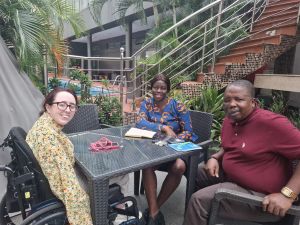
Niam with CDIA team
At CDIA, we recognise that ensuring equal access to sexual and reproductive health services is fundamental to achieving the rights, dignity, and full participation of women with disabilities in society.
The Role of Research and Media in Driving Change
Our discussion with Niamh Ní Hoireabhaird highlighted the importance of evidence-based research and responsible journalism in shaping public understanding of disability rights.
Research provides the evidence needed to influence policy reforms, while journalism helps amplify lived experiences that are too often overlooked. Together, they create opportunities to challenge harmful stereotypes, encourage informed public dialogue, and promote accountability among institutions responsible for delivering inclusive healthcare.
The conversation also reinforced an important principle: women with disabilities must be recognised not merely as beneficiaries of development programmes, but as leaders, experts, and advocates whose lived experiences should inform research, policy, and service delivery.
Building Partnerships for Inclusive Health Systems
CDIA remains committed to working with researchers, journalists, healthcare professionals, development partners, organisations of persons with disabilities, and policymakers to strengthen disability-inclusive healthcare across Nigeria and Africa.
International collaborations such as this foster knowledge exchange, generate evidence for advocacy, and support the development of policies that respond to the realities faced by women with disabilities.
As conversations around disability inclusion continue to evolve globally, partnerships that bridge research, media, and advocacy will remain essential in advancing equitable healthcare systems that leave no one behind.
Looking Ahead
The Centre for Disability and Inclusion Africa appreciates the opportunity to engage with Niamh Ní Hoireabhaird and values her interest in understanding the experiences of women with disabilities in Nigeria.
Together, through research, collaboration, and sustained advocacy, we can help create a future where every woman with a disability enjoys equal access to comprehensive, accessible, and respectful sexual and reproductive healthcare.
At CDIA, we will continue to champion inclusive policies, amplify the voices of persons with disabilities, and work with partners across Africa and beyond to ensure that disability inclusion remains central to health and development.