
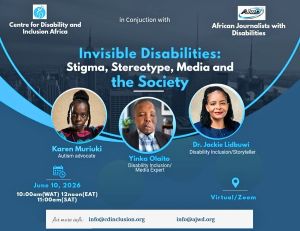
Invisible Disabilities, Media Must Drive Inclusion for the Society Through Responsible Journalism
The Centre for Disability and Inclusion Africa (CDIA), in collaboration with African Journalists with Disabilities (AJWD), convened a powerful edition of its monthly Disability Rights Webinar Series titled “Invisible Disabilities, Stigma, Stereotypes, Media, and Society.” The session brought together media professionals, disability advocates, and lived experience experts to deepen understanding of invisible disabilities and the critical role of journalism in shaping inclusive narratives across Africa.
Invisible disabilities—such as autism, fibromyalgia, chronic pain conditions, autoimmune diseases, and mental health-related conditions—took centre stage in the discussion. Speakers emphasized that these conditions are often misunderstood, misclassified, or entirely overlooked because they are not immediately visible, despite significantly impacting daily living, education, employment, and social participation.
Opening the session, Yinka Olaito, Executive Director of CDIA and Africa Lead of AJWD, underscored a persistent gap in media reporting on disability. He noted that many invisible disabilities are wrongly grouped under broad intellectual disability categories, calling for more nuanced, informed, and respectful reporting. He highlighted that “not all disabilities are visible,” and stressed that over 66% of chronic conditions fall within invisible categories, including neurodivergence (such as autism and ADHD), chronic pain disorders, autoimmune diseases, and mental health conditions. He further emphasized the media’s responsibility to educate the public, challenge misconceptions, promote empathy, and influence inclusive policy and societal attitudes.
Olaitao also highlighted the power of storytelling platforms such as documentaries, podcasts, video essays, and personal blogs in amplifying lived experiences. He called for urgent action to amplify authentic voices, challenge stereotypes, promote accessibility, and embed disability rights within everyday journalism.
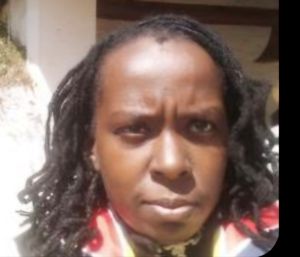
Karen Muriuki, an autistic self-advocate from Kenya, delivered a compelling presentation on disability etiquette in journalism. She called for mandatory disability awareness training in mainstream media houses, stressing that harmful language and misrepresentation continue to fuel stigma. Karen emphasized that autism and other neurodivergent conditions are often wrongly framed as medical defects rather than dimensions of human diversity, reinforcing exclusion in society and the workplace.
She advocated for structured training on appropriate language use, respectful reporting, and deeper understanding of hidden disabilities to ensure dignified representation in media narratives.
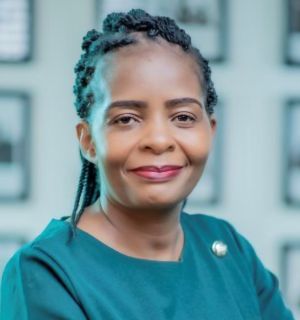
Dr. Jacqueline Lidubwi, a disability media and strategic communications expert, highlighted the transformative role of journalism in shaping public perception and policy. She noted that media professionals “hold the pen that shapes societal reality,” warning that stereotypes in reporting can create systemic barriers for persons with disabilities. She emphasized the need to move beyond tokenistic or pity-based storytelling towards human-centered narratives that reflect dignity, rights, and everyday lived experiences.
Dr. Lidubwi further urged media institutions to adopt inclusive newsroom structures and ensure representation of journalists with disabilities within editorial processes. She also highlighted the psychological burden placed on persons with invisible disabilities who are often forced to repeatedly validate their lived experiences.
The webinar was introduced by Busola Oladotun of CDIA, who welcomed participants to this special edition of the series, noting its alignment with global autism awareness advocacy and broader disability inclusion goals.
Collectively, the speakers reinforced a shared message: media is a powerful driver of inclusion. When used responsibly, it can dismantle stereotypes, amplify marginalized voices, and advance disability rights. However, when misused, it reinforces exclusion and invisibility.
The Centre for Disability and Inclusion Africa reaffirmed its commitment to working with journalists, advocates, and institutions to promote ethical, informed, and inclusive disability reporting across the continent.
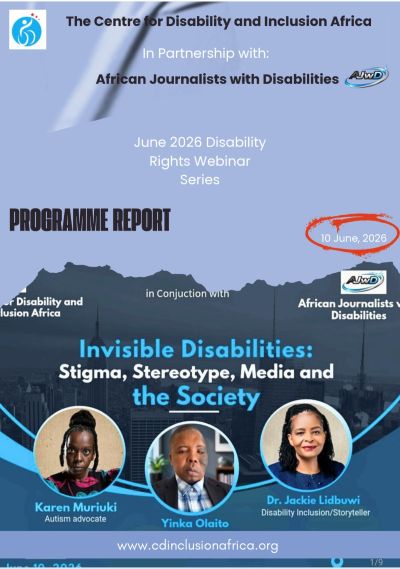
If you missed or June 2026 Disability Right Webinar series, read full report here
https://www.linkedin.com/feed/update/urn:li:ugcPost:7477372898454859776/?actorCompanyId=104643128