
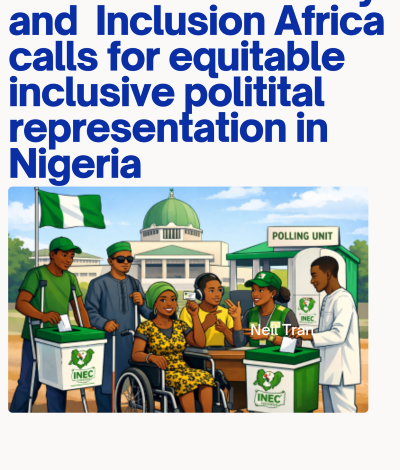
CDIA calls for Inclusive Political Representation in Nigeria as APC begins Review
Nigeria’s democracy continues to evolve, yet one critical question remains unresolved: What is the hope of the marginalized in our political system? From women and youth to persons with disabilities and other marginalized groups, political power in Nigeria is still concentrated in the hands of a narrow elite. It is this reason that Centre for Disability and inclusion Africa released an advocacy video calling on the All-Progressives Congress (APC) and other political parties reignited this conversation, urging political actors to move from tokenism to genuine inclusion.
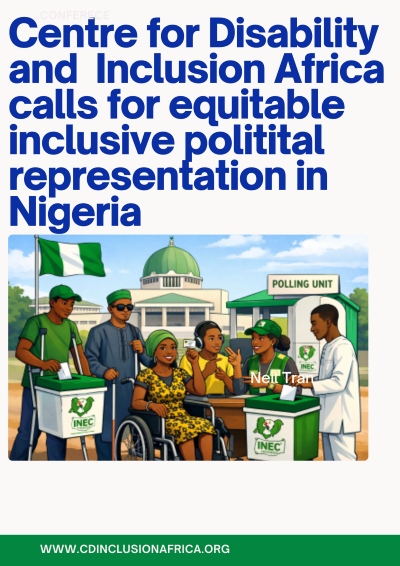
The Representation Deficit
Despite being Africa’s largest democracy, Nigeria ranks poorly in inclusive political representation. Women constitute nearly half of the population but occupy less than 5 per cent of elective positions nationwide. Youth, who make up over 60 per cent of the population, are largely excluded from party leadership and decision-making spaces. Persons with disabilities (PWDs), in Nigeria population is
A major concern of the Centre for Disability and Inclusion Africa is that democracy without inclusion is incomplete. Elections alone do not guarantee representation if political parties fail to deliberately open their structures to diverse voices.
Political Parties as Gatekeepers
Another concern of the centre is the central role political parties play in shaping inclusion. In Nigeria. The Centre for Disability and inclusion Africa strongly believes Political parties are the gatekeepers of political power. They control candidate selection, nomination fees, internal zoning arrangements, and campaign support.
A noted perceived injustice by the Centre is that many parties continue to prioritize wealth, godfatherism, and entrenched power blocs over competence, diversity, and lived experience. High nomination fees alone exclude women, young people, and PWDs long before elections begin. Internal party processes often lack transparency, making it difficult for under-represented groups to compete fairly.
The call on APC and other parties is therefore strategic: without internal party reform, inclusive governance will remain a slogan rather than a reality.
Inclusion Is Not Charity It Is Democracy
The centre for Disability and Inclusion Africa in this call and advocacy message is that inclusive representation should not be treated as political charity. Marginalized groups are not asking for favors; they are demanding their democratic rights.
Inclusive political representation must strengthen governance by: bringing lived experiences into policymaking, improve trust between citizens and the state, produce laws that reflect social realities as well as enhance national cohesion and legitimacy. When persons with disabilities are included, public infrastructure and services become more accessible for everyone.
The basis we stand on: Legal promises and low Political Will
Nigeria’s Constitution and electoral laws recognize equality and non-discrimination. The Discrimination Against Persons with Disabilities (Prohibition) Act, the Not-Too-Young-To-Run Act, and the National Gender Policy all point towards inclusion. However, laws without political will remain ineffective. It is our concern then that as All Progressive Congress begins its South West constitutional review, the reserved slots for for women, youth, and PWDs must be balanced and that PWDs must be supported beyond tokenism
Looking Ahead: From Advocacy to Action
As Nigeria prepares for future elections, inclusive political representation must move to the center of democratic reform. Civil society, media, and voters all have roles to play in holding political parties accountable.
A major responsibility in achieving this lies with political parties themselves. If APC and other parties are serious about national development, they must recognize that exclusion weakens democracy, while inclusion strengthens it.
Nigeria cannot continue to govern a diverse society with a narrow leadership base. Inclusive political representation is not optional it is essential for justice, legitimacy, and sustainable development.
Inclusive democracy is not about adding more seats at the table; it is about ensuring the table belongs to everyone.